

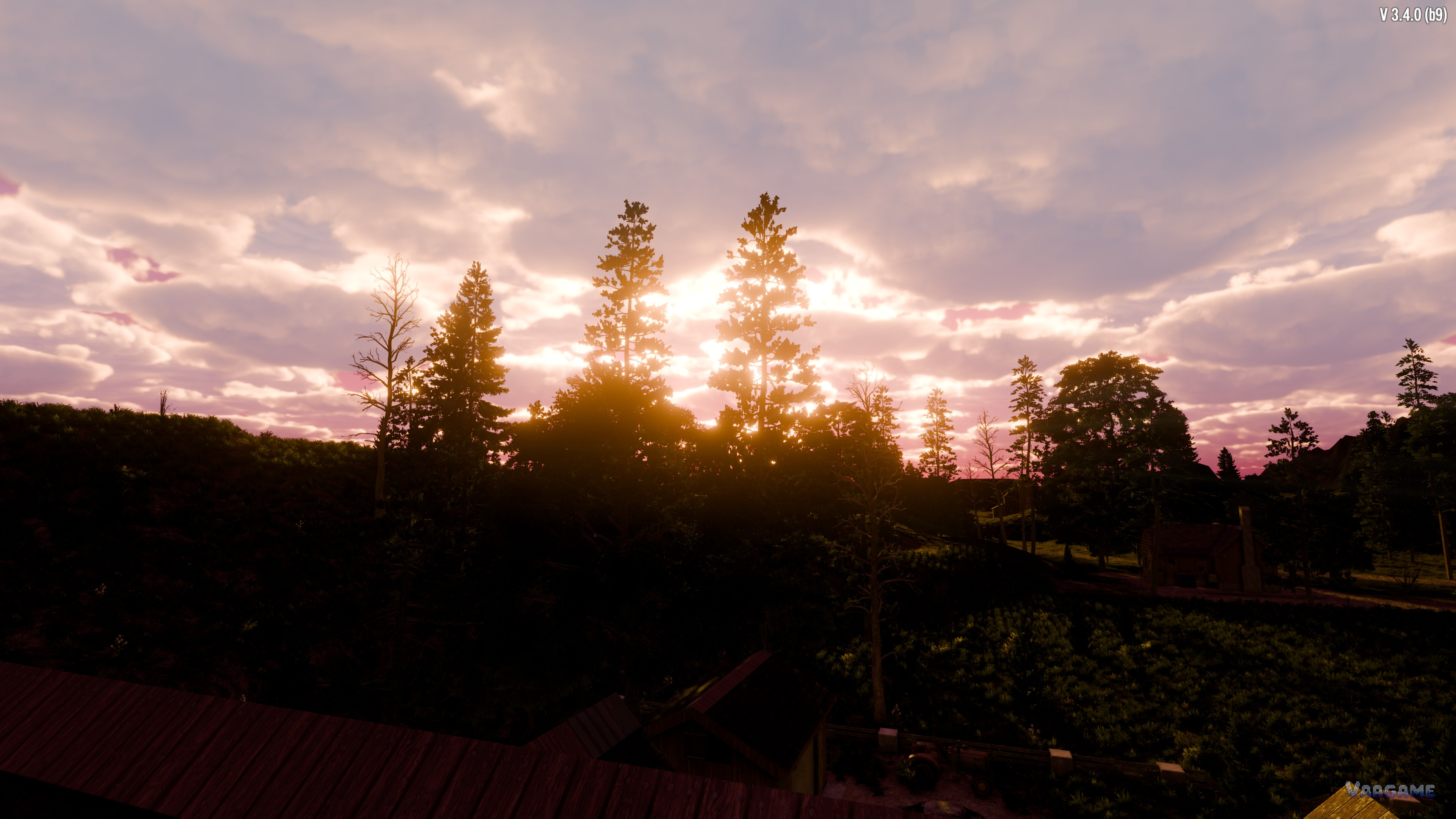
7 Days to Die, called 七日杀 by players in China, is a zombie survival sandbox that rewards patience, planning, and a willingness to learn from your first few deaths. This guide explains what you are actually buying, what long-time players praise and complain about, what kind of PC runs it comfortably, and how to make your first week survivable. It is written for version V3.4.0 Stable, released on 26 October 2026, with a small hotfix on 28 October 2026.
What the game officially is
7 Days to Die is developed and published by The Fun Pimps. It entered Early Access on 13 December 2013 and reached its 1.0 release on 25 July
2024. The store description presents it as a first-person blend of zombie survival horror, tower defence, and role-playing, set in a voxel world where almost everything can be broken, looted, or rebuilt. The world is large, with five biomes and a maximum world size of 100 square kilometres, more than 500 recipes, more than 800 items, and more than 1,300 building blocks, according to the store page and fact summary checked on 2 November 2026.
The core loop is simple to describe and hard to master. By day you scavenge towns and points of interest, gather wood, stone, and food, complete trader quests, and improve your base. At night zombies run and become far more dangerous. Every seventh night a blood moon horde hunts you in force. There is no formal final boss: the blood moon, special infected such as radiated and demolisher-type zombies, zombie bears, and zombie dogs fill that role, and this guide does not invent a boss the game does not have.
You can play solo, cooperatively with friends, or in competitive servers where other players can raid bases. Solo play still requires an online connection through Steam. The game has sold more than 20 million copies according to its store page, and its interface supports 14 languages including Simplified Chinese, though there is no Chinese voice acting or subtitles. There is no official Chinese name on the Chinese store page, which still lists the English title, so this guide uses the English name and notes the community nickname where helpful.
First-person zombie survival sandbox with building, looting, crafting, and tower defence
Five biomes, a large generated or fixed Navezgane world, and trader quests
Blood moon horde every seventh night, with no formal final boss
What players actually say: the good and the bad
On Steam the game holds a Very Positive lifetime rating, roughly 84 to 87 percent positive across about 183,000 reviews as checked on 2 November
2026. That lifetime figure hides an important split: recent reviews trend noticeably more negative than the lifetime score. A fair beginner guide should say so plainly, because a new player who only reads old praise will be surprised by the arguments happening in the community right now.
On the positive side, reviewer madisonv044 wrote on 1 May 2021 that they play with their son and grandsons and simply love the game, a reminder that its cooperative, generational appeal is real. Reviewer Saigon gave it 9 out of 10 in April 2014 after 50 in-game days, describing survival itself, food, water, scavenging, repairs, and building by day, and shelter, security, and stealth by night. Both reviews are old, and that matters: they praise a loop that has survived many redesigns, not the exact current build.
On the negative side, reviewer Max posted a Not Recommended review on 23 August 2025 with 1,802.8 hours on record, calling the game a treasure up to around Alpha 16 and now a good-looking game they no longer enjoy, with a long list of removed or simplified systems. A veteran review posted on 7 August with thousands of hours argued the game has drifted from an open sandbox toward a directed quest and magazine progression loop, and asked for the sandbox freedom back. Most recently, reviewer DownloadedABear wrote on 27 October 2026, citing 1,100 hours in the text, that they would not return until overhaul mods updated, and complained about undisclosed AI-generated art and cosmetic monetisation after the Behaviour Interactive acquisition of The Fun Pimps in March 2026.
A note on sourcing: the Steam review pages consulted for this guide show each reviewer's recommendation and, where stated, their hours, but the verified-purchase badge did not come through in the text extraction available here, so verified-purchase status for these individual picks is recorded as unconfirmed rather than asserted. The reviews above were chosen because they are substantive and specific, not jokes or meme reviews, and because together they show both why people stay for thousands of hours and why some veterans have stopped recommending it. Source pages: the Steam Community review pages for app 251570.
For a new player, the practical takeaway is balanced. The survival and building loop is genuinely unusual and long-lived, which explains the lifetime score and the huge concurrent player counts, roughly 26,000 to 33,000 players online around 1 November 2026, with a historic peak of 124,449. At the same time, long-time players are genuinely divided about the direction of recent updates, so buy for the loop as it exists today, ideally on sale, rather than for a promised future feature such as bandits, which remain in development for a future V4.0 with no release date.
Lifetime: Very Positive, about 84 to 87 percent, about 183,000 reviews, checked 2 November 2026
Recent reviews trend more negative, including complaints about AI art disclosure and repeated system rework
Price checked 2 November 2026: 44.99 dollars list, 24.74 dollars at 45 percent off; the sale end date was not verified, so do not assume it lasts
What PC do you need, and what does recommended really mean
The official minimum calls for Windows 10 64-bit, a 2.8 GHz quad-core processor, 8 GB of memory, a graphics card with 2 GB of video memory, DirectX 11, and 15 GB of storage. The official recommended specification raises that to a quad-core processor above 3.2 GHz, 12 GB of memory, and 4 GB of video memory, with the rest unchanged. Those numbers are modest by modern standards, but they do not tell the whole story for this game.
In practice, 7 Days to Die is heavy on processor work and on memory during large horde nights, when many zombies pathfind at once. That is why the jump from 8 GB to 12 GB of system memory and from 2 GB to 4 GB of video memory matters more than it looks on paper, and why players report stutter on horde nights even on machines that meet the minimum. If your machine only meets the minimum, expect to lower view distance and shadow settings, and expect the first blood moon to be the real performance test, not the quiet first day.
Storage is the easy part: 15 GB is small, and any modern solid-state drive will load towns and points of interest far more comfortably than an old hard drive. If you are buying or upgrading for this game specifically, prioritise memory and a solid processor before chasing a flagship graphics card, and keep your expectations honest about horde-night performance.
Minimum: 2.8 GHz quad-core, 8 GB memory, 2 GB video memory, 15 GB storage
Recommended: above 3.2 GHz quad-core, 12 GB memory, 4 GB video memory
Horde nights stress processor and memory most, so recommended memory is the meaningful upgrade
Value hardware picks for playing on PC
Affiliate disclosure: this section names products whose purchase links on this site carry the site affiliate tag vaagame20-20, so the site may earn a commission if you buy through those links, at no extra cost to you. No prices are stated here, because prices change and this guide does not maintain daily price tracking; check the linked product page before buying. Only products with a confirmed Amazon ASIN in the site gear registry are named below, and no unconfirmed substitute is offered.
For a mouse-first survival game, the Logitech G305 LIGHTSPEED in black, ASIN B07CMS5Q6P, is the value pick: wireless, light, and well suited to long looting sessions where a cable dragging across a desk gets annoying. If you prefer a heavier wired mouse with more buttons for inventory and hotbar habits, the Logitech G502 HERO, ASIN B07GBZ4Q68, is the step-up pick from the same registry. For hearing zombies through walls and at night, the SteelSeries Arctis Nova 1 in black, ASIN B0B8Q4CR52, is the registry headset pick. For a first mechanical keyboard that survives long sessions, the original wired Redragon K556 RGB, ASIN B01NAI2TXC, is the registry keyboard pick, and it must not be confused with the SE, PRO, or HE variants, which are different products.
Value mouse: Logitech G305 LIGHTSPEED Black, ASIN B07CMS5Q6P
Step-up mouse: Logitech G502 HERO, ASIN B07GBZ4Q68
Headset: SteelSeries Arctis Nova 1 Black, ASIN B0B8Q4CR52
Keyboard: original wired Redragon K556 RGB, ASIN B01NAI2TXC, not SE, PRO, or HE
Check price on Amazon: Logitech G305 LIGHTSPEED (Black) — See at Amazon
Check price on Amazon: Logitech G502 HERO — See at Amazon
Check price on Amazon: SteelSeries Arctis Nova 1 (Black) — See at Amazon
Check price on Amazon: Redragon K556 RGB (original wired only) — See at Amazon
Your first steps, in order
Start in the Forest biome if you can choose, finish the starter quests, and let them show you the nearest trader. Those quests teach crafting, give you early skill points, and point you toward a safe trading hub. Do not wander into a large town on day one with no weapon, no food, and no shelter plan: the game rewards a small, completed loop far more than a brave, empty-handed tour.
Before the first night, make a stone axe, a wooden club or spear, and a bow with arrows if you can, gather wood, stone, and plant fibre, and take over a small house or similar structure you can block up. Keep food and water in mind from the first hour, because hunger and thirst quietly drain your stamina and movement long before they kill you. Sleep through nothing: the night is for staying quiet, crafting, and sorting loot, not for exploring in the dark.
From day two onward, the routine is trader quests, looting, and a little base work each day, with one eye on the seventh night. Read every magazine and book you find, because crafting recipes and quality tiers come from magazines, not from skill points. Skill points, one per level up to level 300, buy attributes and perks, which is a separate system, and confusing the two is the most common beginner mistake.
Mistakes new players keep making
The first mistake is building a beautiful base before understanding zombie pathing. Zombies path toward you along the easiest route, and they will dig or smash through weak points rather than politely use your front door. A small, upgraded, well-placed fighting position beats a large, thin-walled mansion every time in the first two weeks. The second mistake is saving all ammunition for later and then dying with a full backpack: use the right tool for the fight in front of you, and save only what you genuinely cannot replace soon.
The third mistake is spreading skill points across every attribute at once. Attributes get more expensive as they rise, and the strongest Mastery effects sit at attribute ranks 6 to 10, so a scattered character stays below the interesting part of every tree. Pick one combat identity first, take the general perks anyone can use, such as Pack Mule, Lucky Looter, Master Chef, and Living Off The Land, and only dip into a second tree for something specific you have decided you want.
What V3.4.0 changed, and what comes next
Version V3.4.0 Stable, released 26 October 2026, added backpack and container search bars with category filtering, and a way to recover a lost or stuck drone from traders. Four items changed alongside the new backpack capacity, including Night Stalker Volume 4, Steroids, Chicken Nuggets, and the full Fireman's Almanac set. A hotfix on 28 October 2026 fixed multiplayer crashes on shared old quests and a locked-slot reset. No public experimental branch update was available as of 29 October 2026.
Looking ahead, V4.0 is in development with a separate team and is centred on bandits, with no release date announced. Treat that as a future update trigger, not a promise for your current playthrough, and do not buy or plan around bandit content that does not exist yet. Mods are active on community hubs, but they are version-sensitive, and a major infrastructure change in V3.0 broke mods in a documented way, so check any mod against your exact stable version before installing it.