
At a glance
The short version
- Game
- Ghost of Yotei
- Guide type
- Real Life Locations
- Read time
- 8 min read
- Last updated
- Nov 7, 2026
Quick answer
Six of its places are real and visitable: Mount Yotei, Matsumae Castle, Lake Shikotsu, the Ishikari River, Noboribetsu Hell Valley, and Otaru.
Guide details
Swipe horizontally to view all columns.
| Place | In the game | From Sapporo | Entry |
|---|---|---|---|
Mount Yotei | The mountain itself, centre of Ezo | About 2 hours by train to Kutchan | Free to view |
Matsumae Castle | Matsumae, seat of the Matsumae clan | About 3.5 hours by bus from Hakodate | 360 yen |
Lake Shikotsu | Lake Shikotsu, a Speaking with the Land spot | 55 minutes by bus from New Chitose Airport | Free |
Ishikari River | Ishikari River and Ishikari Plain | In Sapporo, north bank | Free |
Noboribetsu Jigokudani | The Oni's Jigoku Fortress valley | About 1 hour 15 minutes by train, then bus | Free |
Otaru | Otaru Beach and Otaru Hills | 30-45 minutes by train | Free |
1. Mount Yotei
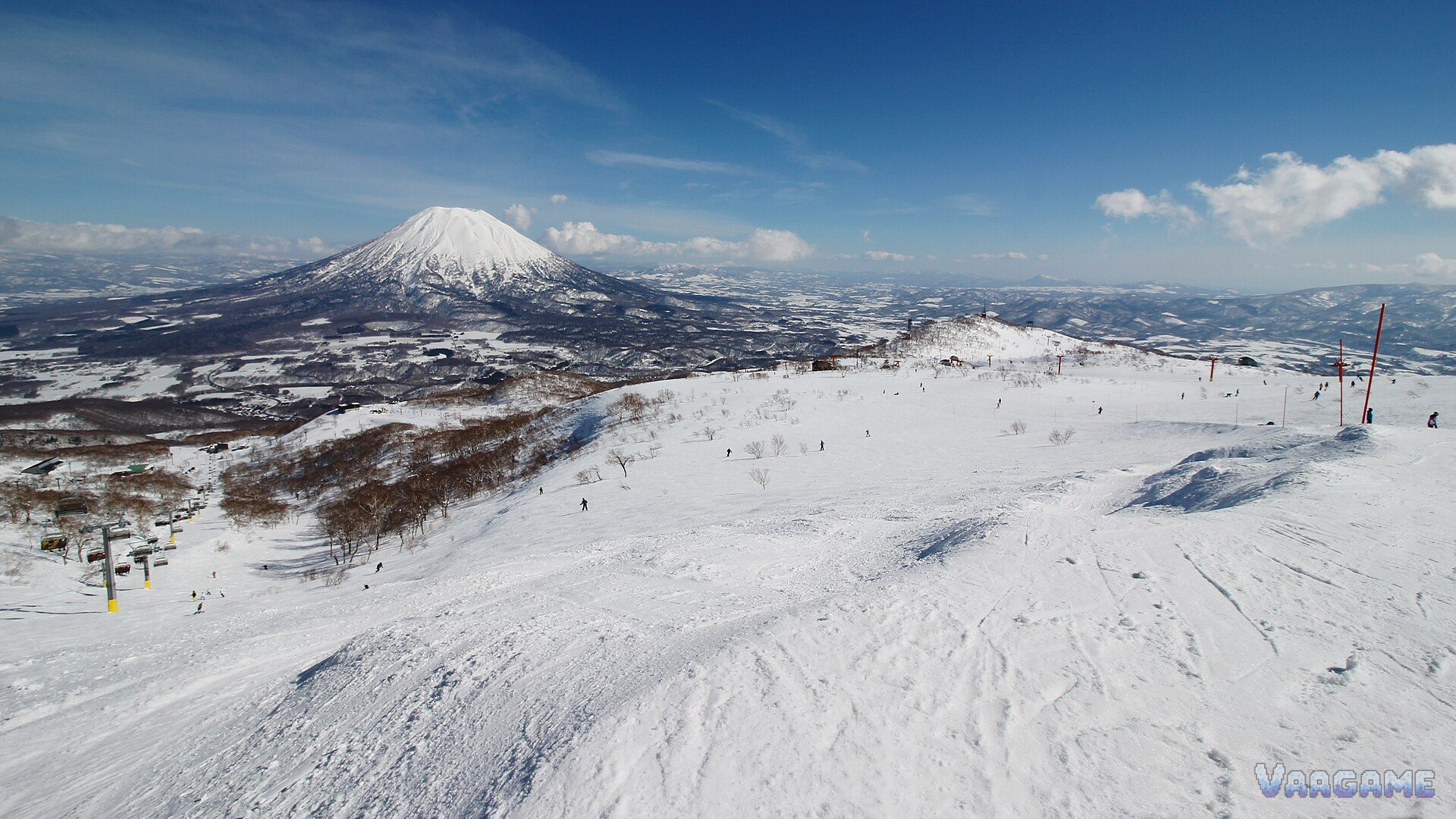
In the game, Mount Yotei is the landmark you never lose. Atsu's home stands in the Yotei Grasslands at its foot, and the mountain stays in view across all six regions of Ezo. The game is named after it, and the opening shots frame Atsu against its cone.
In real life, Mount Yotei is a 1,898-metre active stratovolcano, nicknamed Ezo Fuji for its near-perfect cone. It stands in Shikotsu-Toya National Park, about 50 km southwest of Sapporo. From Sapporo, take the JR Hakodate Main Line to Kutchan Station, about 2 hours, then a taxi to the Hirafu trailhead, about 15 minutes and roughly 3,000 yen. A cheaper way: ride one stop to Hirafu Station, 5 minutes and 210 yen from Kutchan, then walk about 30 minutes (2 km) to the trailhead.
Viewing the mountain is free, and for most visitors that is the right plan. The summit hike takes 9 to 10 hours return with 1,710 metres of ascent, on four routes, and it is a climb for fit, prepared hikers only. Do not start it in winter, and do not start it late in the day. The best views are from the Niseko and Hirafu resort area, from Kutchan town, and from the roadside Niseko View Plaza.
2. Matsumae Castle
In the game, the Matsumae are the one real clan in Ezo. They hold the southern Oshima Coast, guard the border for the shogunate, and cross Atsu's path again and again, as allies and as enemies. Their seat is Matsumae, at the southern tip of the map.
In real life, Matsumae Castle is the northernmost Japanese-style castle in Japan and the only traditional castle in Hokkaido. The keep standing today is a reconstruction of the 1854 Fukuyama Castle, at 144 Matsushiro, Matsumae-cho. It sits in Matsumae Park, which holds more than 10,000 cherry trees. From Kikonai Station, take the Hakodate Bus to Matsushiro, 95 minutes, then walk 5 minutes (400 m) to the castle. From Hakodate Station there are 3 direct buses a day, about 3 to 3.5 hours each way.
The castle museum is open 9:00 to 17:00, last entry 16:30, from April 10 to December
10. Admission is 360 yen for adults and 240 yen for elementary and junior high students. A combined ticket for the castle and the Matsumae clan residence costs 620 yen for adults. Do not plan a winter visit: the castle is closed from December 11 to April 9, every year.
3. Lake Shikotsu
In the game, Lake Shikotsu is one of the Speaking with the Land spots. You find the bowing signpost on the eastern shore, about halfway down the lake, and Atsu bows to the water. It is one of the first special places you can reach from her home in the Yotei Grasslands.
In real life, Lake Shikotsu is a caldera lake in Chitose, inside Shikotsu-Toya National Park. It is 363 metres at its deepest, the second deepest lake in Japan, and about 40 km around. The water is so clear and cold that the lake never freezes. From New Chitose Airport, take the Hokkaido Chuo Bus to the Shikotsuko stop, 55 minutes, then walk 1 minute to the shore. By car it is about 40 minutes from the airport and about 1 hour from Sapporo.
The lakeshore is free to walk, any hour. There is a visitor centre, campgrounds, and onsen at the lakeside town. The catch is the bus: only 4 to 6 buses a day run between the airport and the lake. Check the return time before you go, or you will wait hours for the next one. If you rent a car, the lake pairs well with the Mount Yotei viewpoint on the same day.
4. Ishikari River
In the game, the Ishikari Plain is one of the six regions of Ezo, and the Ishikari River is another Speaking with the Land spot. Atsu follows the river to its split to hunt the Oni, and the wide, flat plain is where the game's horseback riding feels most open. The river's Ainu name means a greatly meandering river.
In real life, the Ishikari River is 268 km long, the longest river in Hokkaido and the third longest in Japan. Its basin covers 14,330 square km. It rises on Mount Ishikari, 1,967 m, flows through Asahikawa and Sapporo, and reaches the Sea of Japan at Ishikari Bay. The easiest place to see it is the riverbed north of Sapporo, reached by local bus or rental bike from the city centre.
There is no ticket and no opening hour: it is a river, open all day. A half-day cycling tour from Sapporo covers about 30 km along the river, with stops at the riverbed and the Sweden Hills viewpoint. Do not try to see the whole river in one trip. Pick one access point, the Sapporo north bank, and treat the rest as a reason to come back.
5. Noboribetsu Jigokudani (Hell Valley)
In the game, the Oni's Jigoku Fortress sits in a steaming valley, and the mist-shrouded fortresses of Ezo take their look from this place. PlayStation's own Hokkaido tour lists Hell Valley as the model for the game's fortress country and the Oni's domain. You walk into the valley on a boardwalk, and the ground hisses under your feet.
In real life, Jigokudani is an explosion crater about 450 m across, covering about 11 hectares, left by eruptions of Mount Hiyori. About 10,000 tons of hot spring water surface here every day, and that water feeds every bath in Noboribetsu Onsen below. From Sapporo, take the JR limited express to Noboribetsu Station, about 1 hour 15 minutes, then the Donan Bus up to Noboribetsu Onsen, about 15 to 20 minutes and 350 to 450 yen. From the onsen bus terminal, the valley entrance is a 5-minute walk.
Entry is free and the valley is open 24 hours. The boardwalk loop takes about 10 minutes, and the observation deck is lit until about 23:00. Parking costs 500 yen. The sulfur smell is strong, and the ground off the path is hot and unstable, so stay on the boardwalk. Go early in the morning if you want the steam to yourself: tour buses start arriving around 10:00.
6. Otaru
In the game, Otaru Beach and Otaru Hills sit where the Ishikari River meets the sea, on the western edge of the Ishikari Plain. It is the coast road out of the plain, and the place where the game's map turns from river farmland to open water. The real Otaru is the port that grew up at exactly that river mouth.
In real life, Otaru is a port city on Ishikari Bay, about 30 to 45 minutes from Sapporo by JR train, 800 yen one way. From Otaru Station, the canal is a 10-minute walk downhill. The canal was completed in 1923, when cargo ships unloaded straight into the stone warehouses along its banks. Today those warehouses hold shops, restaurants, and glass workshops, and the gas lamps along the water come on at dusk.
Walking the canal is free, any hour. Allow 20 to 30 minutes for the main stretch, longer if you take the canal cruise, about 40 minutes. The canal and Sakaimachi Street together take 2 to 3 hours on foot, and that is a full half day. Do not try to add Noboribetsu to the same day by public transport: the two towns sit in opposite directions from Sapporo.
Prices and hours, checked November 7, 2026
Swipe horizontally to view all columns.
| Place | Admission | Hours |
|---|---|---|
Mount Yotei viewpoint | Free | All day; climb June to September only |
Matsumae Castle museum | 360 yen adult, 240 yen student | 9:00-17:00, April 10 to December 10 |
Lake Shikotsu | Free | All day; buses 4-6 a day |
Ishikari River | Free | All day |
Noboribetsu Jigokudani | Free; parking 500 yen | Open 24 hours |
Otaru Canal | Free; cruise about 40 minutes | All day |
A three-day route from Sapporo
Day 1, Sapporo base: morning in Otaru, canal and Sakaimachi Street, 2 to 3 hours on foot. Afternoon back in Sapporo, north bank of the Ishikari River, about 30 km by bike for a half-day loop.
Day 2, Noboribetsu: JR limited express to Noboribetsu Station, about 1 hour 15 minutes, bus up to the onsen town, Hell Valley boardwalk, then a bath in town. Full day, back in Sapporo for dinner.
Day 3, rental car: Lake Shikotsu in the morning, bus from the airport if you are not driving, then west to the Niseko area for the Mount Yotei viewpoint in the afternoon. This day needs a car.
Matsumae, separate trip: 2 days from Hakodate. Day 1, bus to Matsumae, castle and park. Day 2, morning in town, bus back. Do not fold it into the Sapporo three days.
If you only have half a day
Sapporo to Otaru by train, 30 to 45 minutes, canal and Sakaimachi Street, then the train back. That is the whole half day, and it is enough.
Or stay in Sapporo: the Ishikari River north bank and the city centre. No train, no bus timetable to fight.
Skip this
The Mount Yotei summit, unless you are a fit, prepared hiker with a full day and good weather. The view from below is the point for most visitors.
Matsumae in winter. The castle is closed from December 11 to April 9, and the buses run only a few times a day.
Trying to see the whole Ishikari River. It is 268 km long. One bank, one afternoon, is the right scale.
Play it before you go
This trip starts with the game itself. Ghost of Yotei is a PS5 exclusive, so you need the game, and a PS5, before any of the places above mean anything in person.
Bottom line: start in Sapporo, do Otaru and the Ishikari River on day one, Noboribetsu on day two, and Lake Shikotsu plus the Mount Yotei viewpoint on day three. Save Matsumae for a Hakodate trip. Prices and hours on this page were checked on November 7, 2026, and change with the seasons, so check the official site before you go.