

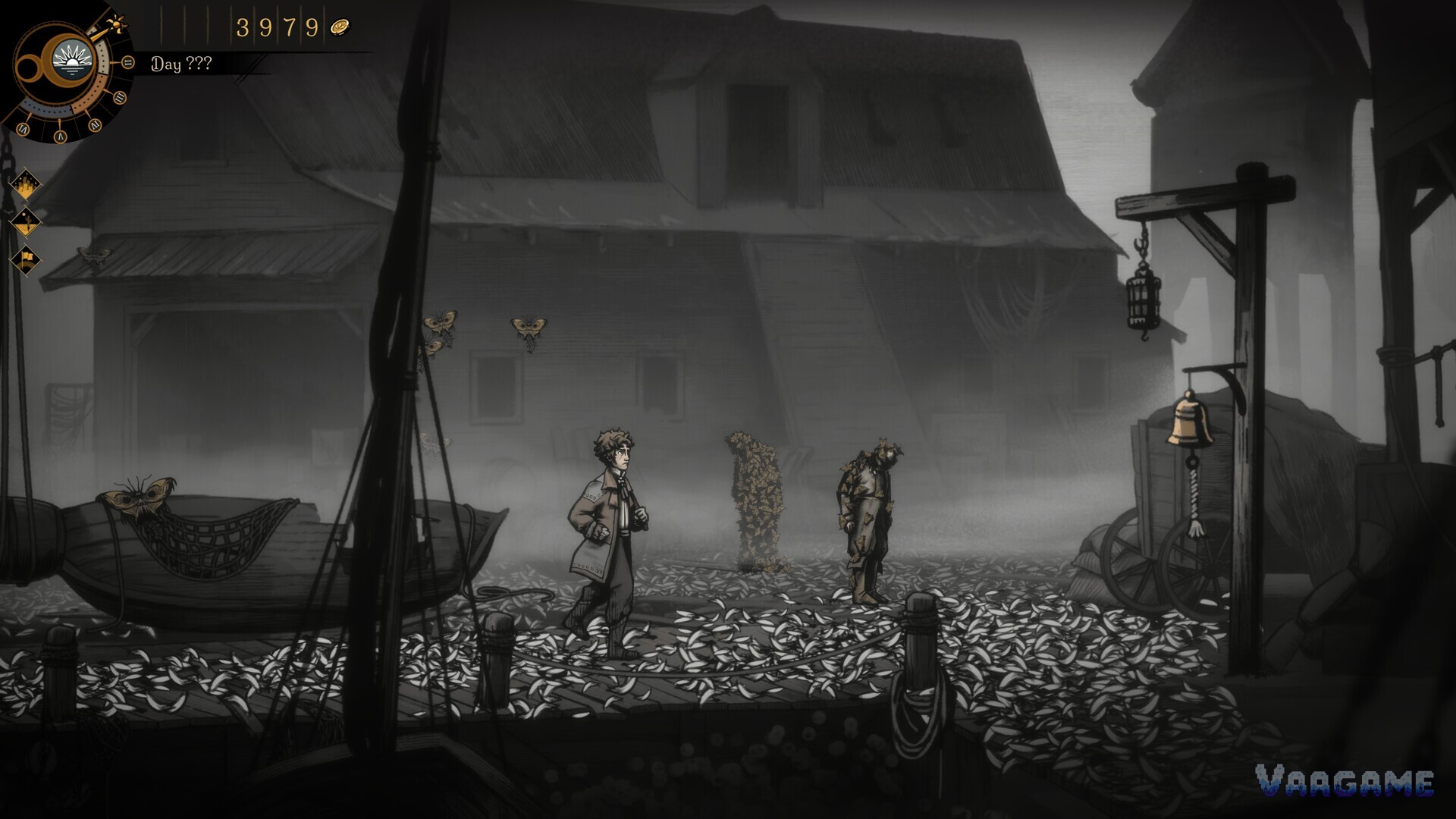
The time loop in Curse of Resthaven is not a reset button you press when you fail. It is the game. Six days after Ambrose arrives in Resthaven, a cosmic cataclysm destroys the island, and the fading guardian goddess sends him back to the moment of his arrival with his memories and experiences intact. Everyone else forgets. This guide explains what survives that rewind, what is wiped clean, how the goddess Boon Cards trade power for consequences, which skills are worth buying early, and how to decide when a loop should gather knowledge and when it should push a timeline toward its conclusion.
At a glance
Developer Hilltop Studios, publisher Digital Bandidos; released October 29, 2026
Platforms: PC, Mac, PlayStation 5, Xbox Series X|S; single-player narrative roguelite
$19.99 list, $17.99 with the 10% introductory offer ending November 12, 2026
The loop lasts six days; the full game requires concluding three separate timelines before the true ending unlocks
What carries over: memories and knowledge, permanent skill upgrades, and temporary goddess Boon Cards
Skill milestones: 15 skills, then 25 skills, each tracked by its own achievement
Last verified: October 30, 2026
1. How the six-day loop works
Every loop starts the same way: Ambrose arrives in Resthaven as its newly appointed governor, searching for his missing niece Amalia, who arrived months earlier to investigate the island. You have six days to interrogate residents, collect taxes as resource cards, trade with merchants, upgrade businesses, and send expeditions beyond the walls to retrace Amalia's steps. Then the cataclysm destroys the island, the goddess intervenes, and you are back at arrival. The days are a budget, not a countdown to beat: every conversation, trade and expedition costs part of it, and the loop forces you to choose which leads are worth a day.
The asymmetry is the point. You remember everything; the residents remember nothing. A secret learned on Day 5 of one loop can be used on Day 1 of the next, before the person who told it has any reason to trust you. A merchant's weakness discovered late can be exploited early. An expedition route that went wrong can be re-run with different cards. That is why the game is described as knowledge-first play: the loop does not ask you to get stronger in the usual sense first, it asks you to get better informed, and the permanent systems exist to support what you already know rather than to replace knowing it.
2. What carries over
Three things carry over, at three different speeds. Memories and knowledge carry over instantly and permanently: everything Ambrose learned stays learned, and that is the fastest progress in the game. Permanent skill upgrades accumulate across loops toward the tracked milestones. Goddess Boon Cards are temporary: powerful benefits from the island's goddess, balanced by grave consequences. Treat them as separate budgets: knowledge costs nothing to keep, skills cost currency and points to buy, and boons cost consequences to hold.
Memories and knowledge: every interrogation answer, motive, secret and shifting allegiance you uncover stays with Ambrose, and everyone else forgets
Permanent skill upgrades: skills you purchase stay purchased across loops, building toward the 15-skill and 25-skill milestones
Goddess Boon Cards: temporary cards accepted from the island's goddess, pairing powerful benefits with grave consequences, so each boon is a trade-off to judge, not a free bonus
Boons deserve a longer warning than the other two categories, because their wording invites a mistake. A boon that looks like a pure bonus is, by the game's own description, balanced by a grave consequence. That means the correct question is never whether a boon is strong; it is whether its consequence lands somewhere you can afford it in this particular loop. A boon whose drawback hits trading hurts a loop built around merchant deals. A boon whose drawback hits expeditions hurts a loop built around retracing Amalia's steps. Accept boons for the loop you are actually playing, not for a hypothetical best loop, and be ready to leave a strong boon on the table when its price falls on the one thing that loop needs most.
3. What resets
What resets is everything the town itself holds: the six days, the residents memories, and the day-to-day town state. That is why favor must be re-won, why a resident who trusted you yesterday treats you as a stranger today, and why a prospering town returns to its starting state. Do not mistake this for lost progress. The town resetting is what makes your knowledge valuable: you are the only person in Resthaven who knows what happened, and that monopoly on information is the leverage the whole game runs on.
4. Skills worth buying early
The skill system has two clear milestones: one achievement for purchasing 15 skills, and a second for 25 skills. Those are the only skill totals this guide states, because the full skill list is unverified and left as a gap. Buy by principle, not by a named build: buy skills that make your knowledge cheaper to use. Interrogation skills pay off in every loop, because interrogation is where knowledge comes from. Trade and expedition skills pay off only in loops built around those activities, so buy those second. Do not chase 25 as a first goal; chase skills that turn one loop's discoveries into the next loop's opening moves.
First: skills that improve interrogation and favor, because knowledge is the resource every other system spends
Second: skills that support the activity your current loop is built around, trading or expeditions, once that plan is set
Milestone check: 15 skills is the first tracked threshold, 25 skills is the second; use them as progress markers, not as shopping lists
Demo players: spend the demo's starting skill points on the same principle, not on the flashiest option, because early interrogation strength compounds across loops
5. Loop strategy: knowledge first, timelines second
A knowledge-first loop has a simple shape. Spend its early days on interrogation breadth: meet residents, win favor, and map who knows what. Spend its middle days testing one or two leads properly, each with a trade or an expedition attached, so the lead becomes verified knowledge rather than a rumor carried into the next loop. Spend its last days setting up the next loop: note which resident to approach first, which merchant to push, and which expedition to re-run with different cards. A loop played this way never feels wasted, even if it concludes nothing, because it ends with a sharper plan than it started with.
A push loop is different, and you should only play one when you know what you are pushing. The full game requires concluding three separate timelines before the true ending unlocks, with one achievement for the first timeline, one for the second, and a final achievement for the ultimate ending. Push a timeline when you understand its residents, motives and secrets well enough to answer for them, not when you are simply tired of gathering. The common beginner error is pushing the first available timeline with thin knowledge, then discovering the second timeline demands understanding the first properly. Knowledge-first loops look slower in the moment and are faster overall, because they prevent rework.
A final discipline ties the two loop types together: judge each loop by what it taught you, not by what it concluded. A loop that mapped three residents motives and verified one merchant secret is a good loop, even if no timeline advanced. A loop that concluded a timeline but taught you nothing new about the other two is a loop you will pay for later. The goddess gives you unlimited rewinds in structure but only six days at a time in practice, and the players who finish the game fastest are the ones who treat every rewind as a chance to start smarter, not as a chance to start over.
FAQ
Does everyone forget when the loop resets? Yes, except Ambrose. The residents memories reset along with the six days and the day-to-day town state, while Ambrose keeps his memories and experiences intact.
Are Boon Cards permanent? No. They are temporary cards accepted from the goddess, pairing powerful benefits with grave consequences. Permanent skill upgrades are the separate, lasting category.
How many timelines must I conclude? Three separate timelines, before the true ending unlocks. One achievement tracks the first timeline, one tracks the second, and a final achievement tracks the ultimate ending.
Should I buy skills as fast as possible? Buy deliberately instead. The tracked milestones are 15 skills and then 25 skills, but the goal is skills that make your knowledge cheaper to use, especially interrogation strength early, not a race to a number.
Related guides
Curse of Resthaven Beginner's Guide: First Loop, Trading, Expeditions and the Three Timelines
Curse of Resthaven Time Loop Guide: What Carries Over, Boons, Skills and Loop Strategy
Curse of Resthaven Trading and Town Management Guide: Prices, Merchant Secrets, Ships and Upgrades
Curse of Resthaven Expeditions and Cards Guide: Map, Companions, Campsites and Deck Building
Curse of Resthaven Investigation and Endings Guide: Interrogation, Favor, Three Timelines and the True Ending
Curse of Resthaven Achievements Guide: All 41 Achievements and How to Unlock Them
Next: the trading guide explains how taxes become gold through the price wheel and merchant secrets, and the expeditions guide explains the map, companions, campsites and deck building.