
At a glance
The short version
- Game
- Casualties: Unknown
- Guide type
- Survival Systems
- Read time
- 6 min read
- Last updated
- Nov 7, 2026
Quick answer
The game simulates limbs and the cardiovascular system: each limb is hurt and treated separately, blood loss is tracked over time, and the UNI-HEALTH panel shows heart rate, blood volume, temperature and oxygen.
Guide details
Swipe horizontally to view all columns.
| System | What the demo shows |
|---|---|
Body simulation | Limbs and the cardiovascular system, tracked per limb |
Health screen | UNI-HEALTH panel: heart rate with ECG trace, blood volume, temperature, oxygen |
Injury display | Body diagram marks injured limbs; click a limb to see its state |
Bandaging | Click and drag the dressing around the limb to bandage |
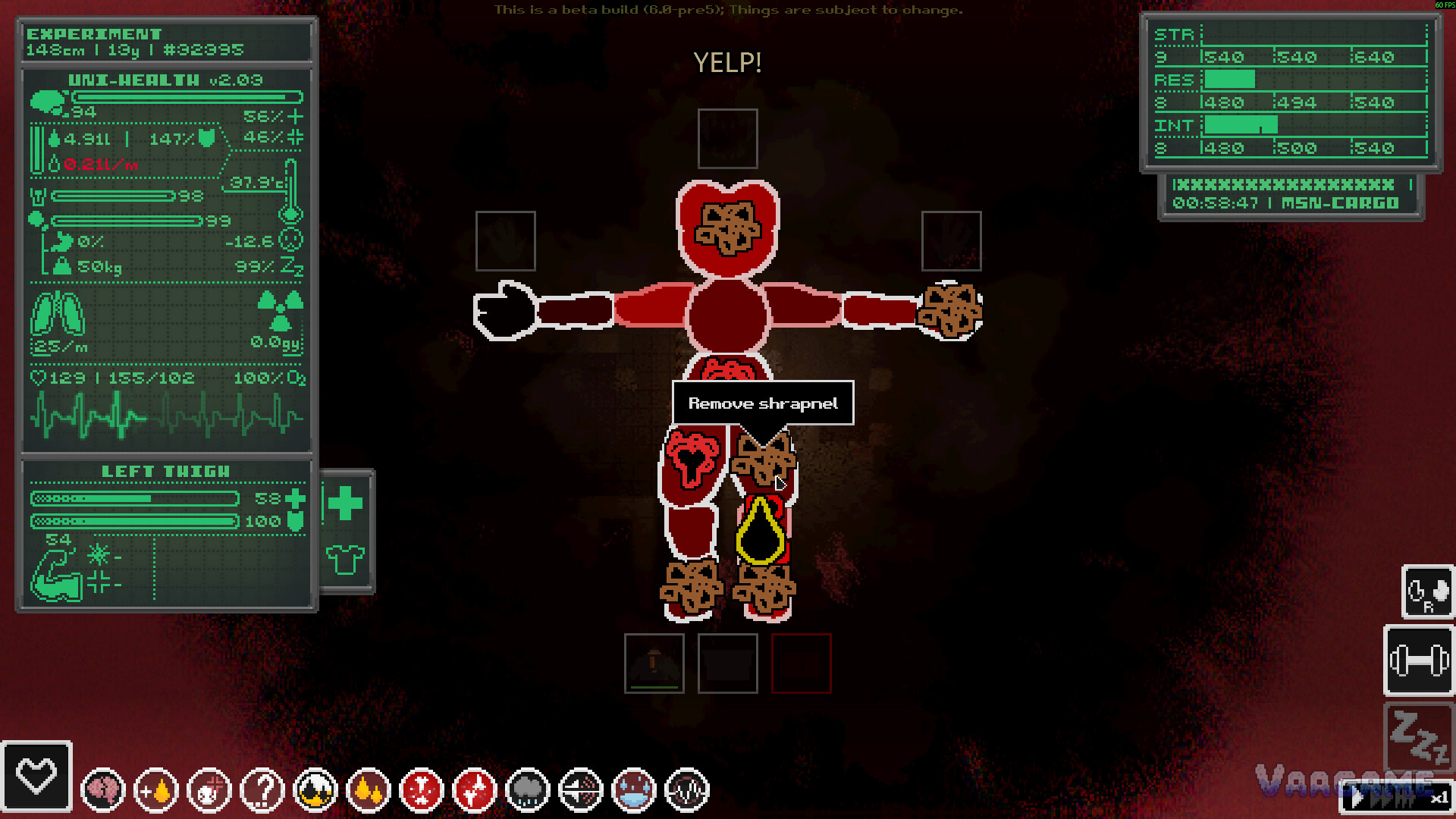
Shrapnel | Wounded limbs show a Remove shrapnel prompt |
Combat pen | One 100mL injector with three drugs: stimulant, epinephrine, oxyline |
The UNI-HEALTH panel: read it before you bleed
The left side of the health screen is the UNI-HEALTH panel, and it is the screen that tells you whether you are dying. It tracks heart rate with a live ECG trace, blood volume, body temperature, oxygen level, and a blood loss rate. The top right shows your character's attributes, STR, RES and INT, plus a mission timer for the cargo run. The bottom-left health panel stays on screen during play, so you can see trouble coming without opening the full screen.
Limbs: treat each injury where it is
The centre of the health screen is a body diagram, and injured limbs are marked on it: in the demo screenshot, the head, one hand and one thigh are all flagged at once, each with its own wound. Click a limb to see its state in the panel below, which shows that limb's condition on its own. There is no single wound to fix: a hurt hand and a hurt thigh are two separate problems, and each needs its own treatment.
Some wounds leave shrapnel behind. When a wounded limb carries shrapnel, the screen offers a Remove shrapnel prompt on that limb. Deal with it as part of treating the limb, not as an afterthought, because a wound with something still in it is not a treated wound.
Bandaging: drag the dressing around the limb
Bandaging in the demo is a hands-on action, not a button press. The screen tells you plainly: click and drag the dressing around the limb to bandage, and you do not have to use the entire bandage. The demo shows a plastic dressing being wrapped around the right hand while the panel reports the current blood loss rate. Do it as soon as you are safe enough to stand still: the blood loss rate keeps counting while you wait, and the screen will warn you when termination is imminent.
The combat pen: three drugs in one injector
The combat pen is a 100mL injector pen that instantly injects its contents into the body, and it carries three drugs at once. The descriptions below are quoted from the in-game text shown in the official demo screenshots, so they describe what the demo says, not what we assume.
Medical-grade stimulant, 60mL: gives you a very good kick for a pretty long while, and is generally safe to use. Overdose generally entails weakness, with a negligible crash.
Epinephrine, 15mL: pure adrenaline. Reduces pain for a while and has a low chance to restart the heart if it stops. Going over 40mL will cause fibrillation.
Oxyline, 25mL: a synthesised reagent that quickly reoxygenates the bloodstream when injected, also stabilising fibrillation and promoting hemoglobin production. It has explosive tendencies when mixed with stomach acid.
Read the doses before you inject. Epinephrine is the one with a hard limit stated in the game: over 40mL causes fibrillation, and oxyline is the drug the game says stabilises fibrillation. The pen is for stabilising a casualty in the field, not for replacing bandages and wound care.
What actually kills you: blood loss and the heart
The system gives you two clocks to watch. The first is blood loss: every untreated wound drains blood, the panel shows the rate, and a body with too little blood cannot keep going. The second is the heart: the ECG trace and heart rate on the UNI-HEALTH panel show how it is doing, and epinephrine is the drug the game ties to restarting a stopped heart. Keep bandages and the combat pen within reach, treat the fastest bleed first, and do not wait for the termination warning to start caring.
FAQ
Which injury do I treat first? The one losing blood fastest. Open the health screen, check each limb, and start with the worst bleed, then work through the rest.
What is in the combat pen? Three drugs in one 100mL injector: medical-grade stimulant (60mL), epinephrine (15mL) and oxyline (25mL). Doses and effects are quoted from the in-game text in the demo screenshots.
Does the demo show the whole medical system? No. The demo covers the first 5 of 11 floors, and the full game may add or change treatments, drugs and injuries. This guide will be updated after the November 9, 2026 launch.
Bottom line: in Casualties: Unknown, medicine is a skill, not a potion button. Read the UNI-HEALTH panel, treat each limb where it is hurt, bandage early, remove shrapnel, and know what is in your combat pen before you need it. Everything here comes from the demo; the full game launches November 9, 2026.