

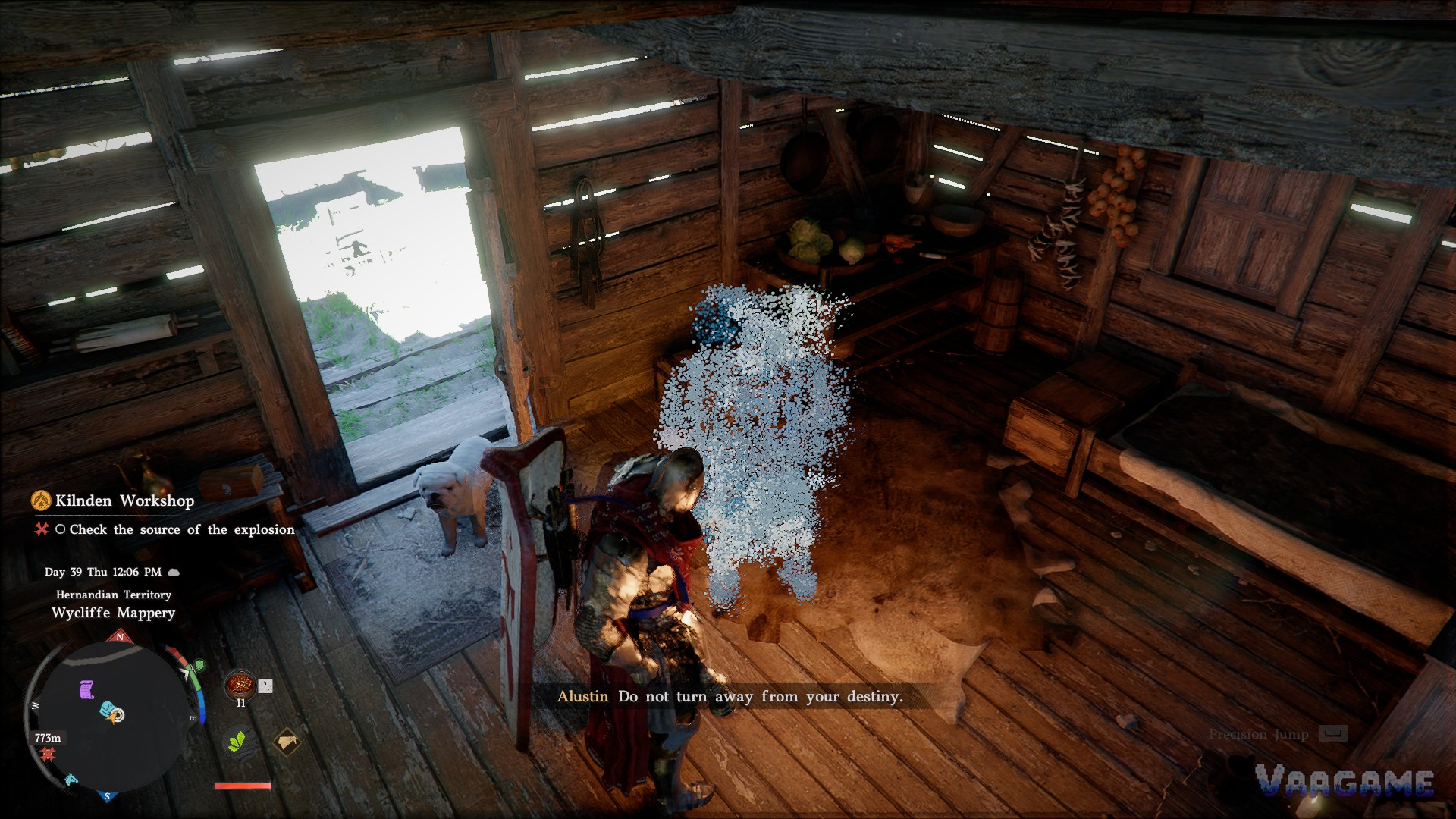
The four survival systems in Crimson Desert work as one loop: hunting and fishing gather living resources, gathering and crafting turn world materials into gear and goods, and cooking turns food into the supplies that keep you fighting. New players should learn the loop before chasing any single system, because a fighter who never cooks or crafts will run out of answers faster than a fighter who never finds a rare drop.
At a glance
Game: Crimson Desert Enhanced, by Pearl Abyss
Systems: Crafting, cooking, fishing, hunting
World: Pywel, with camps, towns, workshops and wild areas
Workshop anchor: Zargan Tankworks is the named blacksmith location
Recipe tables: None given: no verified complete recipe source exists
Reception snapshot: About 177,552 Steam reviews, about 83.7% positive, Very Positive (2026-10-26 snapshot)
Last verified: October 26, 2026
Quick answer
Learn the loop first: gather, craft, cook, then fight longer and travel further.
Cook and craft early, not when you are already empty: supplies are preparation, not rescue.
Use towns and workshops as hubs: Zargan Tankworks is the named blacksmith anchor, and camps support rest and dispatch.
No recipe quantities appear here on purpose: no verified complete recipe table exists, so follow in-game menus and prompts instead of a guessed list.
1. How the four systems fit together
Reviewers consistently praise Crimson Desert for its many systems, naming fishing, cooking and hunting among them, and the praise makes sense only when the systems are read as one economy. Hunting yields animal materials. Fishing yields catches from water. Gathering and crafting turn those materials, plus world resources, into gear and usable goods. Cooking turns food ingredients into prepared supplies. Each step feeds the next, and skipping one step starves the others.
The loop also explains why survival play feels different from pure combat play. A combat-only player spends resources. A survival player replaces them. Over a long session, replacement beats spending, which is why the crafting guide sits next to the growth guide in this column rather than as a side note.
Swipe horizontally to view all columns.
| System | Gives you | Feeds into |
|---|---|---|
Hunting | Animal materials from the wild | Crafting and cooking inputs |
Fishing | Catches from water | Cooking inputs |
Crafting | Gear and usable goods | Longer fights and travel |
Cooking | Prepared food supplies | Readiness for the next fight |
2. Crafting: what it is, and what it is not
Crafting turns materials you have gathered into things you can use: gear, goods and the supplies that support exploration and combat. Workshops and towns are the natural hubs for it, and Zargan Tankworks is the blacksmith location named in the verified fact pack. When you are unsure where a craft happens, check the workshop and town menus first rather than wandering the wild hoping for a prompt.
What crafting is not, in this guide, is a recipe book. No verified complete recipe table exists for this column, so this guide gives no material quantities, no ingredient counts and no step-by-step recipe list. Any guide that prints exact quantities without a source is guessing. The reliable recipe source is the game itself: its menus, prompts and workshop screens show what a craft needs at the moment you make it.
3. Cooking: the cheapest power in the game
Cooking is the survival system new players should learn second, right after basic gathering. Food ingredients come from hunting, fishing and the world, and prepared food becomes the supply you carry into the next fight or the next long trek. The habit matters more than any single dish: cook before you leave a hub, not after you are already hungry in the wild.
Cooking also connects to the camp and town economy. Camps support rest and dispatch tasks, including camp funds and donations, and towns such as Vellua hold a restaurant in the wider game economy. Do not confuse a restaurant visit with a crafting station: the point of the loop is that food, rest and preparation happen across several places, not one magic menu.
4. Fishing and hunting: slow systems that pay for patience
Fishing and hunting reward patience in a game that otherwise rewards speed. Both are gathering systems first: they convert time in the world into materials, and those materials only become power after crafting or cooking. A player who fishes for an hour and never cooks has gathered, not grown. A player who hunts and then crafts and cooks has completed the loop.
Hunting also connects to combat readiness in a practical way. Wild animals are part of the same world as enemy camps, and the bear quick-time event, fixed in update 2.03.00, is a reminder that wildlife encounters can turn into fights without warning. Hunt with an escape route and a fallback weapon ready, the same discipline the combat guide teaches for camps.
For water, remember the movement tools: Vaporwalker gear plus Water Stride lets you cross water, with jumping and gliding improved in 2.03.00. Water is not only a fishing ground; it is also a route, and a fishing spot with a water escape is safer than one backed against a cliff.
Fish and hunt with a purpose: name the craft or dish the material serves.
Cook what you gather before the next long trip.
Hunt with an escape route and a fallback weapon ready.
5. What new players should do first
First, gather while you travel: pick up world materials on routes you already walk instead of making special trips. Second, visit a town or workshop hub early, and confirm what crafting the menus offer there. Third, cook a small stock before your first long trek, and carry it as your baseline supply. Fourth, add fishing or hunting in short sessions, and immediately turn the yield into a craft or a dish so the loop closes.
Fifth, keep the economy honest. Camp funds, donations and dispatch tasks, including the Gold Bar Investment dispatch named in the fact pack, are part of the same preparation economy as crafting, and they reward players who plan ahead rather than react. The whole point of this guide is that preparation, done early and in small amounts, beats a heroic rescue attempt after everything is empty.
Gather on routes you already walk.
Confirm crafts in town and workshop menus first.
Cook a small stock before the first long trek.
Turn every fishing or hunting yield into a craft or dish.
FAQ
Does this guide give recipe quantities?
No, deliberately. No verified complete recipe table exists for this column, so quantities are confirmed in the game menus and prompts at the moment of crafting, not guessed here.
What should I learn first: crafting, cooking, fishing or hunting?
Learn the loop in order: gather while travelling, craft at a hub, cook before a long trek, then add fishing and hunting in short sessions that immediately feed a craft or dish.
Where is the blacksmith?
Zargan Tankworks is the blacksmith location named in the verified fact pack. Check its menus for what crafting it offers rather than assuming every workshop offers everything.
Is fishing or hunting just for fun?
No. Both are gathering systems whose materials only become power after crafting or cooking, so they pay off when the loop is closed, not when the catch is merely collected.
Related guides
Crimson Desert Growth Guide: Skills, Artifacts, and Builds for New Players
Crimson Desert Horses and Riding Guide: Mounts, Stables, and Faction Dispatches