

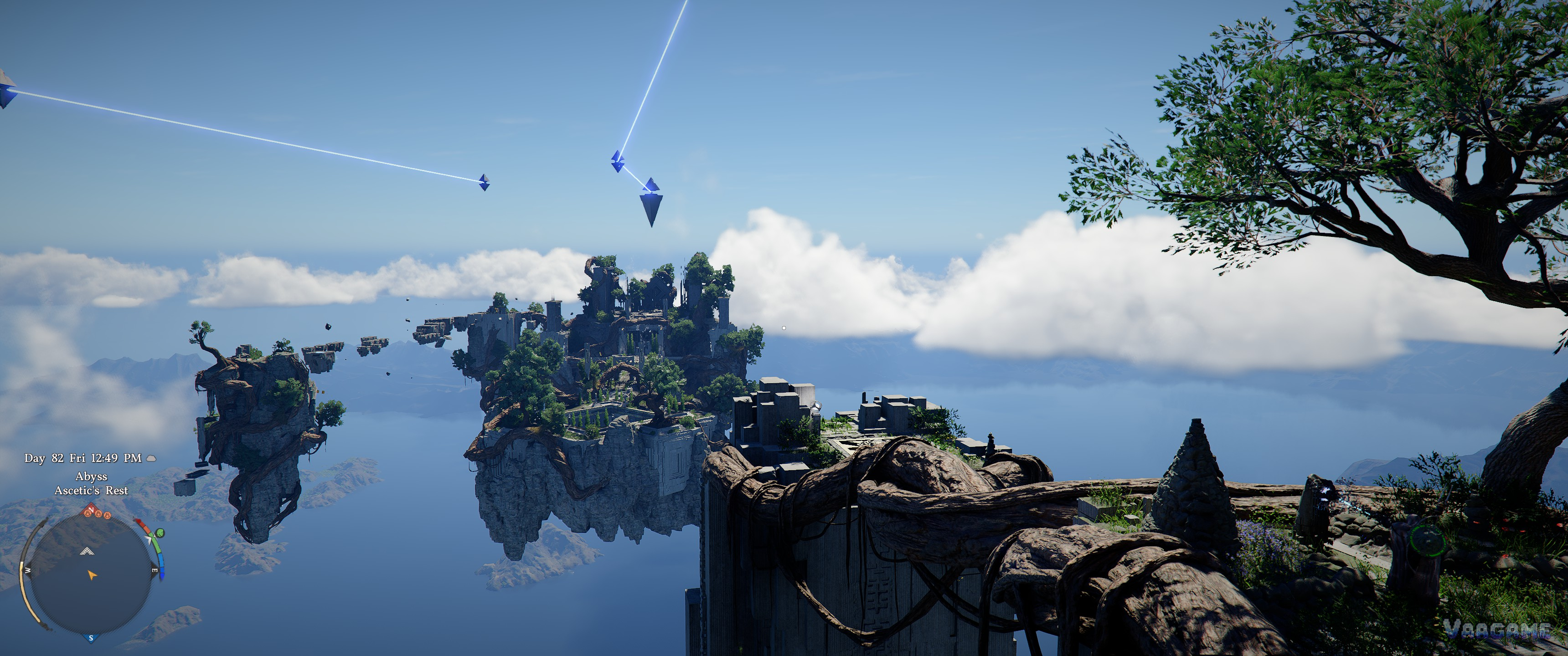
Growth in Crimson Desert means building a character whose skills, artifacts and habits fit together, and the scarcest resource is not power but choice: player reports say artifacts are too scarce to fully upgrade every character set, so you must pick a direction and commit to it. The Enhanced update supports that choice with reworked skill learning, Abyss Link as a skill resource, and resets per character.
At a glance
Game: Crimson Desert Enhanced, by Pearl Abyss
Playable characters: Kliff, Damiane, Oongka
Enhanced skill change: v2.00.00 on 2026-08-25: reworked learning, Abyss Link, per-character resets, 8 new Kliff skills
Skill menu help: Update 2.01.00 added skill-menu unlock prompts
Artifacts: Player-reported as scarce; not enough to max every character set
Achievements: 34 total, none hidden (official Steam schema, 2026-10-26)
Last verified: October 26, 2026
Quick answer
Pick one direction first: a focused set of skills and artifacts beats a thin spread across everything.
Use the Enhanced tools: Abyss Link is a skill resource, skills reset per character, and unlock prompts show what is newly available.
Treat artifacts as a commitment: player reports say they are scarce, so upgrade the set your build actually uses.
Plan ammo into any firearm direction: Damiane shells are ammo-hungry and Oongka bullets have no stable farm reported.
1. How skill learning works after Enhanced
Before Enhanced, skill learning was one more menu to wrestle with; after v2.00.00 it was reworked outright. The update introduced Abyss Link as the skill resource, added 8 new skills for Kliff, and allowed skills to be reset per character, which matters because Crimson Desert has three playable protagonists: Kliff, Damiane and Oongka. A reset on one character does not have to mean rebuilding another.
Update 2.01.00 then added skill-menu unlock prompts, and the Chapter 3 tutorial was revised in Enhanced as well. The practical routine is simple: finish the tutorial content, check unlock prompts whenever you return to the menu, spend Abyss Link on skills that fit your chosen direction, and reset rather than suffer a set that no longer fits. Resetting is a design feature, not a failure.
Finish tutorial content, then check unlock prompts on every menu visit.
Spend Abyss Link on your chosen direction, not on everything at once.
Reset per character when a set stops fitting the fights ahead.
2. Artifacts: scarce, powerful, and worth choosing carefully
Artifacts are the long tail of a build: the special gear that shapes what a character can do beyond base weapons and skills. The honest constraint comes from players, not from a marketing line. A detailed long review by player Marbas38, cited in the fact pack, lists artifact scarcity among its criticisms, and the player-reported warning is specific: there are not enough artifacts to fully upgrade every character set.
That scarcity changes strategy. Do not upgrade evenly across Kliff, Damiane and Oongka and hope for the best. Pick the character you actually play most, upgrade the set that supports that character direction, and keep the rest for later. A half-upgraded everything is weaker in practice than one committed set, because fights test a complete toolkit, not a collection.
3. Entry-level build directions, without invented numbers
A build here means a direction, not a spreadsheet. The table below gives four entry-level directions, each built from verified pieces only: weapon families named in the achievement list, the named combat mechanics, and the player-reported ammo warning. No damage percentages, stat thresholds or gear scores appear, because none are verified.
Choose by how you like to fight, then let skills and artifacts follow that choice. A melee-forward player should spend first on close-range skills and the artifacts that support them. A firearm-aware player must budget ammo from day one. A player who loves movement should build around Vaporwalker, Water Stride and ambush angles. The wrong choice is not a weak direction; it is no direction at all.
Swipe horizontally to view all columns.
| Direction | Leans on | Watch out for |
|---|---|---|
Melee-forward | Sword, shield, spear or two-handed weapons; Body Slam | Closing distance without a Spirit plan |
Firearm-aware | Firearms; Focused Charged Shot for heavy aimed hits | Ammo: Damiane shells are hungry, Oongka bullets lack a stable farm |
Movement and ambush | Ambush angles; Vaporwalker and Water Stride routes | Open ground with no escape route planned |
Balanced learner | One weapon plus one skill chain, grown slowly | Spreading artifacts across all characters at once |
4. Growth traps players report, stated as reports
Three player-reported traps deserve a place in any honest growth guide. First, artifact scarcity, covered above: do not plan as if every set can be maxed. Second, the post-camp experience gap: players report that once camps are cleared, there is no stable experience source left, so growth slows unless you plan side content before clearing everything. Third, faction tasks tied to random mounted encounters become painful late, when high-stamina gliding and fast travel mean almost nobody rides anymore; update 2.01.00 improved mount-task retry recovery, but the random-encounter mechanism itself remains a warning point.
None of these traps is presented as an official rule. They are player reports, and the fix in each case is planning: upgrade one set, pace camp clearing against side content, and do mounted faction tasks while riding is still a normal part of travel.
5. A first-week growth plan
Week one has a simple shape. Play the tutorial and Chapter 3 material, pick one direction from the table, and spend Abyss Link only on skills that serve it. Check unlock prompts each time you open the skill menu. Upgrade artifacts for your main character first. Do mounted faction tasks before fast travel replaces riding.
Then measure the result by feel, not by a spreadsheet: can you chain two or three learned skills without running dry on Spirit, and does your fallback work when ammo or position fails? If both answers are yes, the build is working. If not, reset per character and adjust one thing at a time.
Pick one direction, spend Abyss Link on it, and check unlock prompts.
Upgrade artifacts for your main character first.
Do mounted faction tasks while riding is still normal travel.
FAQ
Can I reset skills in Crimson Desert?
Yes. Enhanced v2.00.00 allows skills to be reset per character, so a bad set on Kliff does not force a rebuild on Damiane or Oongka.
What is Abyss Link used for?
Abyss Link is the skill resource introduced in Enhanced v2.00.00, spent on learning skills in the reworked system.
Can I fully upgrade every character artifact set?
Player reports say no: artifacts are scarce and not enough to max every character set, so upgrade your main direction first.
Which build should a new player pick?
Pick by how you like to fight, not by a damage table, which this guide deliberately omits as unverified. Melee-forward is the simplest first direction; firearm-aware and movement builds need ammo and route planning from the start.
Related guides
Crimson Desert Exploration Guide: Pywel, Horses, Gliding, and Fast Travel
Crimson Desert Crafting, Cooking, Fishing, and Hunting Guide