

I arrived in Cusco short of breath, and the shortness of breath was the first honest thing the city gave me. At about 3,400 metres, the air thinned out my stride before I had seen a single ruin, and my feet learned a slower rhythm on the cobbles while my head was still running ahead, full of Lara Croft. In Shadow of the Tomb Raider, Lara walks into the Peruvian jungle looking for Paititi, a hidden city that has kept itself apart from the world for centuries, and the game team went to Machu Picchu and consulted historians to make that invented city feel built rather than sketched. I had come with that hidden city in my head, and Cusco answered it with something stranger: a city that had never been hidden at all, only layered, stone over stone, until a walker could no longer tell where one history ended and the next began. The game gave me a place to look for. The real valley gave me places that had never needed finding, only looking at properly.
A Wall That Carried Another Faith
The first building I stopped in front of was Santo Domingo, its stone facade rising over Qorikancha, the Golden Enclosure, the temple of the sun god Inti. The Inca had built a rounded wall of dark stone fitted so tightly that no mortar was needed, and the Spanish later built the church and convent directly on top of its foundations, after stripping away the gold plates that had once covered the temple walls. Standing in the street, I could read both histories at once: the colonial stonework in front of me, cracked and repaired by earthquakes, and the Inca work underneath it, still holding its shape. In the game, Paititi is a living city where old stone is still in use, where people still walk through temples that were built for gods. Here the old stone was also still in use, but as a foundation for a different faith, and the two truths sat on top of each other without resolving. The gold was gone, melted down and carried away centuries ago, and what remained was more stubborn than gold: a wall that had refused to fall, carrying a building that had been built to replace it.
Twelve Angles, No Mortar
A short walk uphill brought me to a narrower street and a smaller lesson in the same craft. On Hatun Rumiyoc, the street with the great stone, a wall that once belonged to the palace of Inca Roca holds a single block of green diorite cut into twelve angles, each angle fitted against the stones around it with no gap for mortar and no room for error. I did not touch it. A guard stood nearby, and other walkers were already doing the slow work of counting angles with their eyes, the way people count the faces of a familiar puzzle. In the game, Lara reads murals and carved stone to find her way forward, and the stone itself is a kind of instruction. Here the instruction was simpler and harder: look long enough, and the wall stops being a backdrop and becomes a decision, made by hands, to cut one stone until it fit twelve neighbours. The street itself was once part of the Inca road network, one of the roads that tied Cusco to the jungle region to the northeast, and walking it felt less like visiting a monument than like stepping onto a road that had never quite stopped being used, even after the palace above it changed hands and names.
Teeth on the Hillside
Above the city, the stones got bigger, and my breath got shorter again. Sacsayhuaman stands on the northern edge of Cusco, three great zigzag walls of enormous blocks laid in the reign of Pachacuti, the emperor who remade Cusco as an imperial capital, and the walls still run across the hillside in angles that look like teeth or lightning, depending on the light. Scholars still argue about what the place was for, fortress or ceremonial centre or both, and I liked that argument being left open, because the stones did not seem to care which word a visitor chose. What was certain was sadder and plainer: after the conquest, many stones from this complex were taken down the hill to build colonial Cusco, so the city below is partly built from the hill above, and the hill that remains is a reminder of how much was carried away. In the game, Lara climbs through ruins that the jungle has half taken back, and the scale is meant to humble her. Here the scale humbled me differently, because the ruin was not made by the jungle or by time alone. It was made, in part, by people who needed building stone, and who found it already cut, already perfect, waiting on the hill.
A Victory That Did Not Hold
Down in the Sacred Valley, the air came back a little, and the terraces took over the hillsides. Ollantaytambo sits about sixty kilometres northwest of Cusco, beside the Urubamba River, a town that is still lived in, its old Inca street grid and courtyard compounds still holding families, not only visitors. Above the town, terraces climb in broad steps, and higher still stands the unfinished Temple of the Sun, its Wall of the Six Monoliths made of huge pink stones quarried from across the valley, raised into place and never finished. Some stones never even arrived; they lie scattered along the old transport route, stopped in mid-journey when history interrupted the builders. In 1537, this was also the place where Manco Inca, after breaking with the Spanish in Cusco, made a stand: his forces held the terraces, flooded the plain below to bog down Spanish horses, and drove Hernando Pizarro's expedition back, one of the few clear Inca victories of the early conquest. The victory did not hold. Within a couple of years Manco had withdrawn deeper into the mountains, and the temple stayed unfinished. I climbed the terraces slowly, stopping often, and thought about how the game handles resistance: in Paititi, a hidden people fight a cult that wants their city, and Lara helps them hold it. Here the holding had actually happened, on this slope, and it still had not been enough, and the unfinished wall was the honest monument to both facts at once.
Never Lost, Only Overlooked
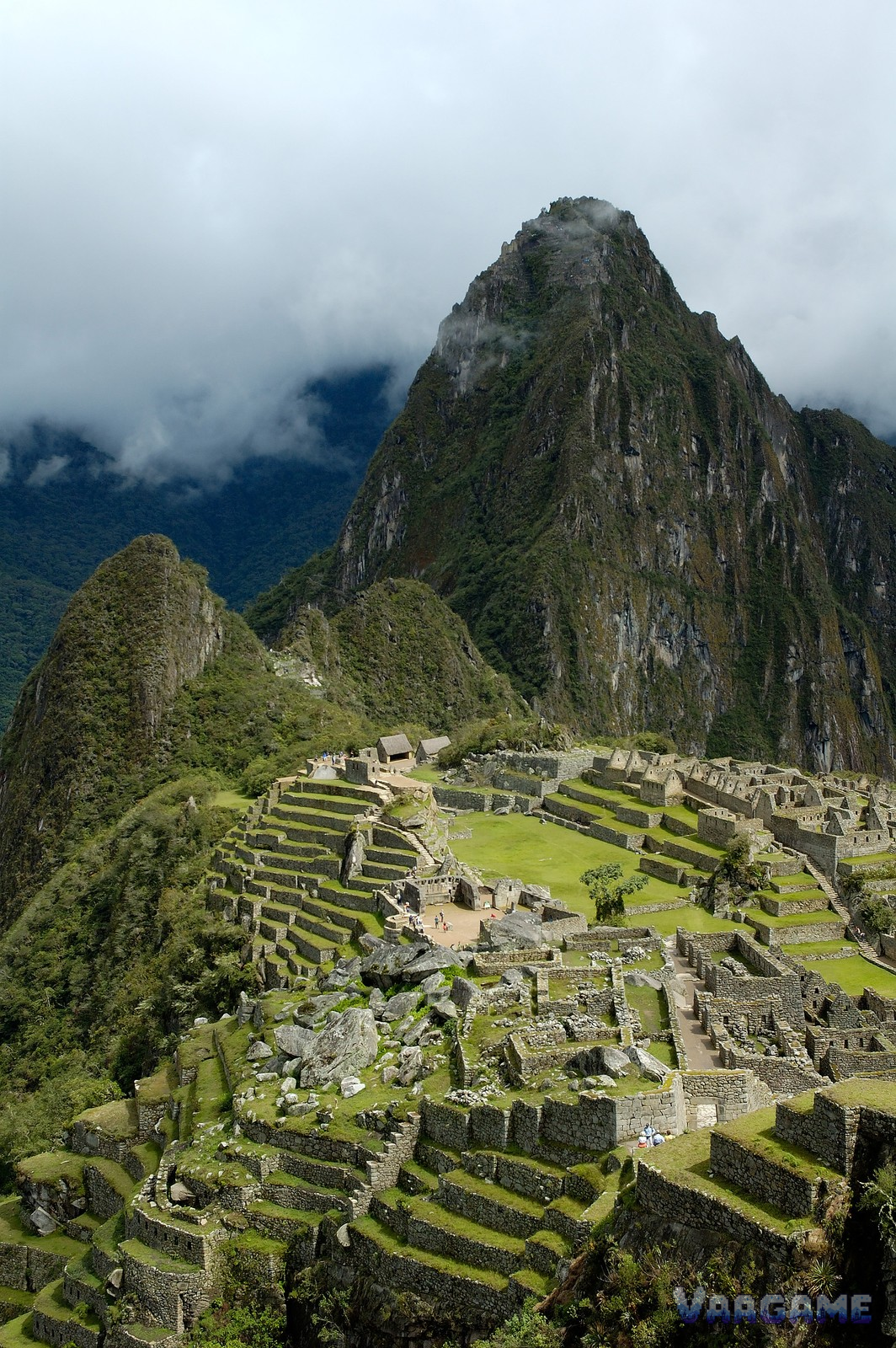
Machu Picchu arrived the way a hidden city should arrive in a story, except that the story was wrong about the hiding. The citadel sits on a ridge at 2,430 metres, above the Sacred Valley, stone houses and terraces fitted into the mountain with the peak of Huayna Picchu rising behind them, and it was built in about 1450, most scholars believe as an estate for Pachacuti, and abandoned about a century later, at the time of the Spanish conquest. The Spanish never found it. That sentence is true, and it is also incomplete, because local people knew the place all along, and the Peruvian explorer Agustin Lizárraga reached it in 1902 and left his name and the year on a temple wall. When the American historian Hiram Bingham arrived in 1911, led by a local farmer, he brought the site to the attention of the outside world, and the outside world then told the story as if the city had been lost and then found, as if no one had been living beside it. In the game, Paititi is hidden because its people chose to hide, and Lara earns entry by being trusted. Here the city was not hidden by choice. It was overlooked by an empire that never walked this ridge, and then renamed as a discovery by a man who had been shown the way. I walked among the stone houses with that double truth in my head, and the houses did not resolve it. They simply stood there, dry stone against cloud, doing what they had done for five centuries: holding their shape while the stories told about them changed.
Potatoes and Juice at Altitude
Back in Cusco, I went looking for the city at its most ordinary, and found it under a roof. The San Pedro Market, the city's main covered market, opened in 1925 and is still its oldest, a long hall of stalls a short walk from the main square, where vendors sell Andean potatoes and corn in colours I had no names for, cheeses and breads, textiles, and juices made to order at the fruit stalls. I drank a passion fruit juice standing at a stall, tart and cold, and then sat down to a bowl of chicken soup, caldo de gallina, steam rising into air that still felt thin, and ate slowly, the way the altitude asked me to do everything. In the game, food is something Lara gathers and cooks at a campfire to restore herself for the next climb. Here the food was not preparation for anything. It was the day itself, a market doing what markets have done in Cusco since long before any game: feeding people who live here, and letting a tired walker sit down among them without being asked to perform a quest first. The potatoes in their bins, purple and yellow and brown, were the same crop that had fed the terraces I had climbed, and that continuity felt less like a symbol than like a fact I could taste. Afterwards I walked the few blocks back to the Plaza de Armas and sat for a while by the fountain, watching the square go on with its day.
Next time, come back dressed like this
Next time, come back dressed like this. I would come back in sturdy walking shoes that do not mind wet stone or long flights of terrace steps, light layers that can be added or shed as the sun moves behind cloud and comes back again, a sun hat for the high thin light, and a small bag that leaves both hands free for railings and for steadying myself on uneven steps. Nothing on this walk needs a costume, and nothing in it should be bought as one: Lara's Inca dress in Paititi belongs to a fictional city and its people, and a replica weapon would be wrong here in a way that goes beyond taste, because the temples and towns on this walk are living places with their own rules, and the house rules come first. I checked, and I could not confirm a reliably in-stock, verifiable listing for the thing I actually wanted, so there is nothing to buy from this page, and I would rather say that plainly than dress a guess up as a recommendation. The walk itself is the thing to bring back: the curve of a wall, the twelve angles of a single stone, the unfinished temple, the city that was never lost.
I left Cusco the way I had arrived, short of breath and slower than I had planned, with the passion fruit taste still on my tongue and Lara's hidden city still running quietly in my head, and the real valley not resolving it. In the game, the hidden city is found, entered, and saved, because a game has to end. The real valley does not end that way. Its temples were stripped and rebuilt, its fortress town won a battle and lost the war, its most famous city was never lost and then was called discovered, and its market still sells potatoes and juice to people who live there. I did not find Paititi, and I did not need to. The stones were already there, in Cusco and in the valley and on the ridge, fitted without mortar, holding their shape, and leaving the rest open.