

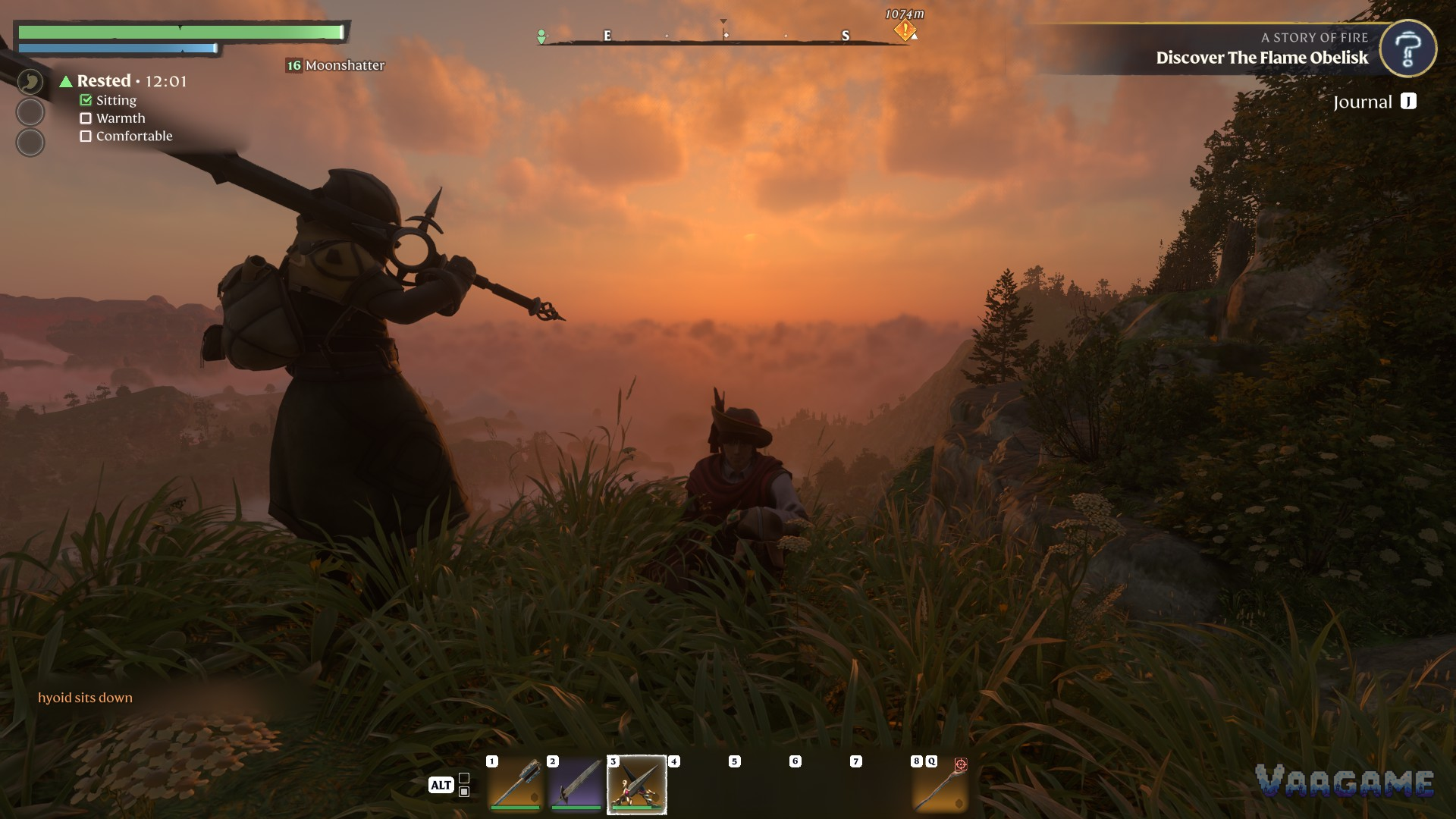
The best weapon in Enshrouded is rarely the one with the biggest number. It is the one that matches your build, your region, and your Flame level, and that you have upgraded through the right craftsperson. This guide sorts weapons by type and by stage, using tiers and roles instead of damage numbers, because 1.0 rebalanced many values and Early Access numbers are not safe to repeat.
How Weapons Map to Builds
Weapon choice follows the three color zones. Warriors use one-handed and two-handed melee weapons. Rangers use bows, with daggers as a close-range option. Mages use staves and wands. Upgrades follow the same split: the Blacksmith upgrades warrior armor and weapons, the Hunter upgrades ranger gear, and the Alchemist upgrades mage gear. If you invest in a weapon, invest in its craftsperson too, or your weapon will fall behind the region you are entering.
Melee Weapons: Early, Mid, and Late Game
Swipe horizontally to view all columns.
| Stage | Role and tier | What to look for |
|---|---|---|
Early game (Springlands, Revelwood) | Reliable starter tier: a one-handed weapon with a shield for safety, or a two-handed weapon if you prefer slower, heavier hits | Comfort first. The best early melee weapon is the one whose attack timing you already understand. |
Mid game (Nomad Highlands to Albaneve Summits) | Upgraded mid tier through the Blacksmith, matched to your region's enemy levels | Upgrade before entering a new region. An unupgraded weapon in a higher region feels weak even if the weapon type is right. |
Late game (Veilwater Basin, Cinder's Cradle) | High tier and endgame tier, chosen for boss fights and Shroud-heavy content | Specialize now. Late content rewards a weapon you have mastered, not a collection of half-upgraded options. |
One-handed weapons pair naturally with shields and with the Guardian direction, trading raw hit size for defense and faster recovery. Two-handed weapons trade defense for heavier individual hits and wider swings, which suits players who prefer to commit to each attack. Neither is objectively better in 1.0. The honest test is which one lets you survive a full fight without running out of stamina or health at the wrong moment.
Ranged Weapons: Bows and Their Role
Bows are the ranger's main weapon, and their strength is distance. A bow lets you start fights on your terms, thin out groups before they reach you, and finish weakened enemies without closing in. The cost is stamina: sustained bow use and dodging draw from the same pool, so ranger gear and Endurance investment matter as much as the bow itself. Upgrade through the Hunter, and treat arrows and positioning as part of the weapon, not extras.
Daggers serve as the ranger's close-range answer. They are not a replacement for the bow, they are insurance for the moment an enemy closes the gap. If you play Ranger, keep a dagger option upgraded enough to survive that moment, rather than letting a single close-range enemy end an otherwise clean fight.
Magic Weapons: Wands and Staves
Wands are the Battlemage's signature weapon: fast, flexible, and paired with Blink movement for repositioning. Staves lean toward heavier spellcasting and area control, suiting the Wizard direction. Both scale through the Alchemist, so a mage's weapon progression depends on rescuing and investing in that craftsperson. Mana sustain is part of the weapon choice: a weapon you cannot keep casting with is weaker in practice than a slightly lower-tier weapon you can sustain through a whole fight.
Swipe horizontally to view all columns.
| Magic weapon | Best for | Watch out for |
|---|---|---|
Wand | Battlemage, mobile play, solo flexibility | Mana management in long fights |
Staff | Wizard, heavier spells, area control | Slower casting rhythm; positioning matters more |
Weapons by Stage: A Summary
Early game: pick one weapon you enjoy, upgrade it, and learn its timing. Versatility beats rarity here.
Mid game: match your weapon tier to your region, and upgrade through the right craftsperson before pushing onward.
Late game: specialize. Boss fights and the Cinder's Cradle endgame reward mastery of one weapon, not a spread of options.
All stages: if a weapon feels weak, check Flame level, gear tier, and upgrade status before blaming the weapon type.
Legendary Runes and Boss Drops
Story bosses drop Legendary Runes on every kill, which feed into high-tier crafting and progression. Most story bosses drop between 4 and 8 runes, while the Wispwyvern and the Dragon Youngling drop 12 to 16, and the final boss Vorgoth drops 25 to
35. Boss farming is therefore a real late-game activity, not just a story beat: if a weapon tier feels out of reach, check whether a boss you can already beat is the missing source.
Carrying a backup weapon is worth the inventory space, especially in the Shroud. A melee fighter with a ranged option, or a mage with a melee fallback, can handle the one enemy type their main weapon struggles against without retreating. The backup does not need to be fully upgraded, but it should not be left at starter tier while your main weapon climbs: a backup that cannot hurt anything in your current region is just weight.