

Your first day in Loftia should end with a working loop, not a tour of everything. Create a character you like, follow the intro quest in Loftia City, salvage until you can build the Project Station, and then plant and craft something of your own before you log off. Everything else in the game, neighborhoods, community projects, the Hanging Gardens, and Gridfall, opens from that loop, and none of it needs to be rushed on day one.
Quick answer
First 30 minutes: character creation, then Pebble and the A Fresh Start quest in Loftia City
First real milestone: enough salvaged materials to build the Project Station, the workbench for early tools
First evening goal: a planted crop, a crafted tool, and a home step you chose yourself
Do not skip the intro quests to explore: they are the tutorial, and they hand you the systems in order
At a glance
Where you start: Loftia City, the shared hub, after character creation
First guide: Pebble, a chinchilla NPC, and the quest A Fresh Start
First economy: salvaging discarded materials, which feed nearly every early recipe
First workbench: the Project Station, built from salvaged materials
Last verified: November 3, 2026, at the Early Access launch hour
1. Character creation: take the few minutes seriously
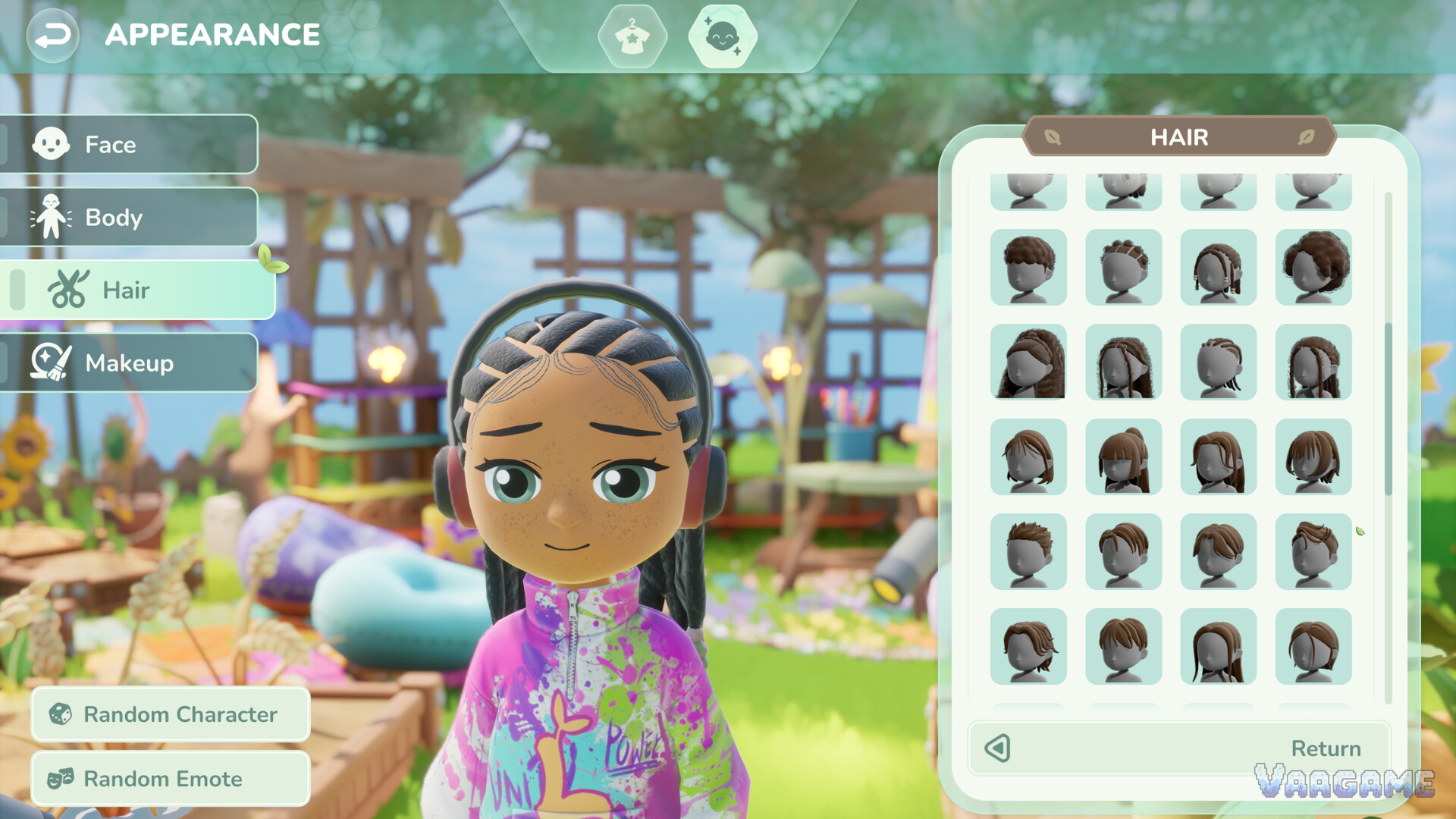
Character creation covers hair, hair color, eyes, nose, mouth, and a starter outfit, and demo coverage notes that color choices are not limited to a preset palette and options are not locked by gender. That matters more in Loftia than in a solo game, because the world is shared: the character you make is the one other players see in the city, on your island, and on group quests. Pick something you will still like in a week, not the first preset that loads, and do not treat the creator as a skip screen.
2. Follow Pebble: the intro quest is the tutorial
Demo and preview coverage agree on the opening shape: you glide into Loftia City, a short cutscene shows off the hub, and Pebble hands you the first quest, A Fresh Start. From there, introductory quests with characters such as Pebble, Hazel, and Milo gradually introduce the systems: gathering resources and crafting tools, then farming, cooking, and decorating your own home. The key word is gradually. The game does not throw everything at you at once, and the players who enjoy day one most are the ones who let it stay gradual instead of sprinting past the questline to see the whole map.
If you remember one rule for day one, make it this: a finished intro quest beats an explored map. The quests hand you materials, tools, and the vocabulary of the game, salvaging, the Project Station, solar energy, in the order you will actually use them. Exploring first gives you screenshots; questing first gives you a loop.
3. Salvage first: the material economy of day one
Salvaging is the first economy because, as demo coverage puts it, it feeds nearly every early crafting recipe. The demo questline points you toward the Scrap Quarter for screws and plastic discards, then clay at the Construction Site and scrap wire at the Solar Farm, and those materials build the Project Station. You do not need to memorize that route for this guide, but you do need the habit behind it: pick up discarded materials whenever you pass them, because early Loftia rewards the player who gathers on the way, not the player who goes back for a dedicated farming run later.
Build the Project Station as soon as you can afford it. It is the workbench for most early tools, and until it exists, your material pile is potential, not progress. After it exists, the day changes shape: you stop asking what to do next and start choosing which tool, crop, or decoration to make first, and that choice is the real start of the game.
4. Solar energy: the battery habit to learn on day one
Loftia has no food-based stamina bar. Demo coverage describes the replacement plainly: crafting and other actions draw from battery charges, and those charges come from solar panels such as the Small Solar Panel. You charge a handheld battery at the panel and spend it at your stations. Weather sets how fast that happens, with demo coverage reporting clear skies running panels at about 99 to 100 percent efficiency and light rain dropping them to around 45 percent. Treat those numbers as demo-coverage figures, not as a promise for every panel in Early Access, but learn the habit they point to: charge before you craft, and check the sky before you plan a big crafting session.
5. Before you log off: three small wins
One planted thing: a crop in the ground, not a plan for a farm
One crafted thing: a tool from the Project Station that you will use tomorrow
One home choice: a decoration or layout decision that makes the island feel like yours
Three wins is enough for day one, because Early Access is a year-long road, not a launch-week race. The players who burn out in cozy games are usually the ones who tried to finish the intro, the farm, the house, and the first community project in a single sitting. Loftia rewards the opposite: a small loop, repeated, in a world that is still there tomorrow.
Frequently asked questions
What should I do first in Loftia?
Create your character, then follow Pebble and the A Fresh Start quest in Loftia City. Salvage materials as you go, and build the Project Station as soon as you can.
Do I need to play with other players on day one?
No. The world is shared and other players will be around you, but the intro quests work at your own pace, and group quests are something you join when you want to, not a day-one requirement.
Why does crafting stop working sometimes?
Check your battery. Crafting draws battery charges that come from solar panels, so charge a handheld battery at a panel before a big crafting session, and remember weather affects panel efficiency.
Should I rush to the Hanging Gardens or Gridfall on day one?
No. The intro questline introduces systems in order, and the regions are part of a storyline that spans the whole Early Access period. Get your loop working first; the regions will still be there.