

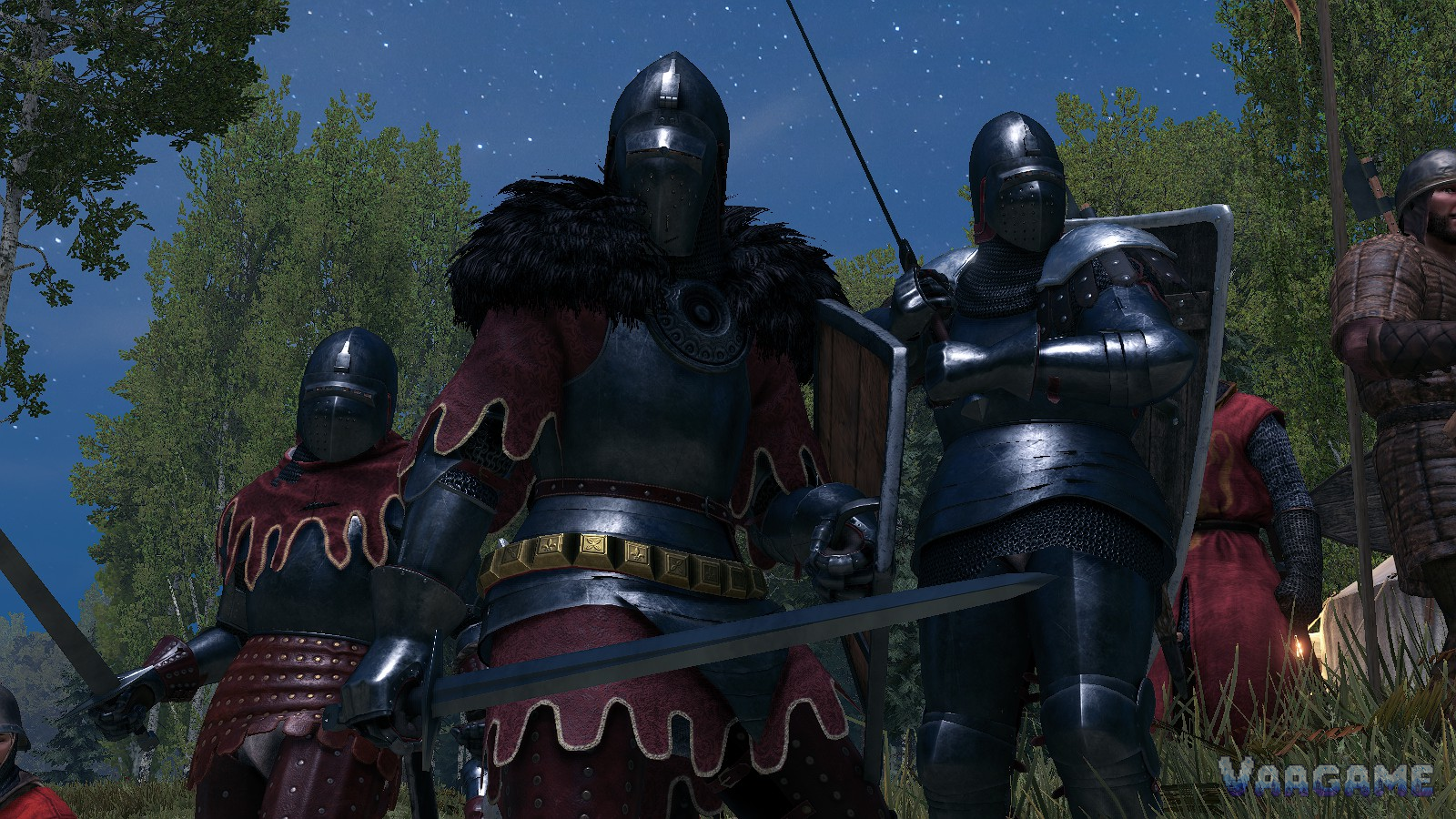
Mount & Blade II: Bannerlord drops you into Calradia, a medieval continent torn by civil war, with a sword, a handful of recruits and no quest arrow telling you what to do next. That freedom is the whole game: you can fight, trade, smith, serve a kingdom or build one of your own. This guide covers the first hours properly — character creation, the campaign and sandbox modes, clan tiers, party wages, food and morale, and the mistakes that end a promising run early. Multiplayer exists, but this column focuses on the single-player campaign, and multiplayer gets only a passing mention here.
At a glance
Developer / Publisher: TaleWorlds Entertainment
Full release: October 25, 2022 (Early Access from March 30, 2020)
Price: $49.99 on Steam; Digital Deluxe $59.99 (checked October 28, 2026)
Steam achievements: 50; Steam Deck rating: Playable
Languages: 13, including Simplified Chinese interface and subtitles (no Chinese voice acting)
Based on the v1.4.x line; War Sails expansion released November 26, 2025
Last verified: October 28, 2026
1. What the game is, in the official pitch
The official description opens with the horns sounding and ravens gathering: an empire torn by civil war, new kingdoms rising beyond its borders. You create a character to match your play style, then explore, raid and conquer across a vast medieval sandbox where no two playthroughs are the same. You raise armies, engage in politics, trade, craft weapons, recruit companions and manage your fiefdom as you try to establish your clan among the nobility of Calradia. Battles are fought in first or third person, commanding troops in huge real-time fights with the series' directional combat system, where the direction you swing matters as much as the weapon you swing it with.
Two things in that pitch deserve emphasis for a new player. First, this is a sandbox, not a story campaign with a fixed route: the main quest line exists, but the game never forces you onto it. Second, the loop is economic before it is heroic. Every soldier eats every day and expects pay, every horse, weapon and suit of armour costs money, and the size of the army you can field is set by your clan tier and your purse, not by your courage.
2. Player reviews: what owners actually say
Steam's overall rating sits around 87% positive, which puts Bannerlord in the well-liked-but-not-unanimous bracket. The pattern of praise and complaint is remarkably consistent across years of reviews, and it is worth knowing before you buy, because the complaints are about the kind of game it is, not about bugs you can wait out.
Positive, from a top-rated Steam community review scored 8/10: the reviewer describes being in the middle of a siege, giving orders to their army while trying not to die, and calls Bannerlord the most immersive game they have played, praising the deep combat, the complex sandbox mechanics and the sieges in particular, and noting that mods can fix most of what they disliked. Their dislikes, listed in the same review, are that the game is janky, has essentially no story, and looks dated, and they call $50 a hard sale, recommending buying on sale instead.
Positive, from Metacritic user rey03 (June 2026, 9/10, 250+ hours): a systems-heavy sandbox with massive real-time battles, called possibly the best game they played in 2026 despite its age, with the caveat that it is not for absolutely everyone — it is for players who enjoy complex systems, freedom and huge battles.
Critical, from Metacritic user BammBammBule: a very good and unique game whose weakest part begins once you have your own kingdom, with a political system they call rudimentary and barely usable — a missed opportunity at exactly the point the game is supposed to get most interesting.
Critical, from Metacritic user Stardust182 (600+ hours): engrossing for hundreds of hours, but lacking depth, with the absence of a diplomacy system called glaring, and the added complaint that console players cannot use mods to patch the gaps the way PC players can.
3. Official system requirements, explained
The official Steam requirements are modest by 2026 standards, but they are minimums, not promises. Minimum asks for Windows 7 64-bit, an Intel Core i3-8100 or AMD Ryzen 3 1200, 6 GB of RAM, an Intel UHD 630, a GeForce GTX 660 2GB or a Radeon HD 7850 2GB, and 60 GB of storage. Recommended asks for Windows 10 64-bit, an i5-9600K or Ryzen 5 3600X, 8 GB of RAM, a GTX 1060 3GB or RX 580, and the same 60 GB. The jump that matters is not the GPU alone: large battles are CPU-heavy, because hundreds of soldiers are all making decisions and colliding at once, so a weak CPU will stutter in exactly the big fights the game is about, even if the GPU keeps up. Treat 8 GB of RAM as the real floor, not 6 GB, and put the game on an SSD — 60 GB on a spinning drive means long loads between the campaign map and every battle.
4. Value hardware picks
No hardware price is listed here, deliberately. At the time of checking on October 28, 2026, no hardware item for this guide had a confirmed Amazon ASIN with a tracker-verified price, and this guide does not guess prices or attach unconfirmed links. Shop against the spec tiers below instead, and treat any listing price you find as a check-on-the-day figure, not a figure from this article.
GPU: anything at or above the recommended GTX 1060 3GB / RX 580 class is the sensible floor; buy VRAM headroom if you play at 1440p or run large battles
CPU: prioritise strong single-core performance over core count — battle AI and physics punish weak cores first
RAM: 16 GB is the comfortable tier; 8 GB meets the official recommended line but leaves little room beside the game
Storage: a SATA or NVMe SSD with at least 60 GB free for the game alone; this is the cheapest loading-time upgrade in the whole build
5. Campaign or sandbox: pick at character creation
Campaign mode gives you a story quest line about the shattered empire and a missing banner, plus family members who start as companions, including a brother and sister you can later send out on their own. Sandbox mode drops the main quest and lets you shape your own rise from the start. New players should take Campaign: the opening quest is also the tutorial in disguise, it teaches combat, trading and clan management in order, and you can ignore the main quest afterwards and play it as a sandbox anyway. Sandbox is the better second run, once you already know the systems and do not need the guided opening.
Character creation asks for your culture, family background and early life choices, and each choice nudges starting skills and attributes. Do not agonise over this screen: no choice locks you out of any path, and the skills you actually use in the first hours matter far more than the bonuses you start with. Pick a culture whose troops and starting region appeal to you — you will spend your first weeks fighting and trading there — and pick a build that matches how you want to fight, on foot, on horseback, or with a bow.
6. Clan tier is the real progression bar
Renown is earned from battles, tournaments and quests, and it raises your clan tier. The tier caps how many troops you can field, how many companions you can recruit, and how many workshops and caravans you can own. That is why early play feels cramped: at the lowest tiers you are a small warband leader, not a general, and the game is telling you to earn renown before it hands you an army. Chasing renown early — tournaments, looter fights, hideouts you can actually win — is not grinding for its own sake; it is unlocking the rest of the game. The companion and workshop systems in our economy guides assume you understand this gate, because both are capped by it.
7. Your party: food, wages and speed
Three numbers run your warband, and all three are visible on the campaign map: daily wages, food stocks, and party speed. Wages are paid every day whether you fight or not, so a big army you cannot afford is a countdown, not a trophy. Food is consumed daily too, and a varied diet keeps morale higher than a single staple — an army marching on grain alone will not stay happy for long. Speed decides which fights you can choose and which choose you: mounted troops and spare horses in your inventory raise it, while heavy loot, prisoners and too many foot soldiers drag it down. The early-game rule that follows from all three is simple: recruit to what your purse can feed, keep a food reserve before a long march, and never let wages eat your last coins, because an unpaid, hungry party deserts and mutinies in that order.
8. The first hours, in order
Finish the opening training and the first quests — they teach directional combat and the campaign map for free
Fight looters, not lords: looters are the only early enemy sized for a starting party
Enter every tournament in towns you pass; entry costs nothing and the prizes beat anything you can afford
Sell loot, ransom prisoners, and bank a reserve before you recruit past your wages
Take village and town quests from notables — they pay, and they raise the renown your clan tier needs
Upgrade troops slowly and keep a mix of shield infantry and archers; a one-type army loses to the first thing it cannot answer
9. Five mistakes that end early runs
Declaring war on the world: raiding a village makes its whole faction your enemy, and a starting party cannot survive that
Recruiting to the cap on day one: wages arrive daily, loot does not
Auto-resolving every fight: early on, your own fighting skill is the difference between winning and wiping
Ignoring food and speed: a slow, hungry party gets caught by the enemies it was trying to outrun
Spending the first fortune on armour: a bigger party and a cash reserve survive longer than one shiny helmet
FAQ
How long is a Bannerlord campaign? There is no fixed length. A campaign from nobody to king is a project measured in dozens of hours, and many players never finish one because founding and holding a kingdom is a longer job than getting there. Treat the first ten hours as learning the systems, not as progress toward an ending.
Can I change difficulty later? Difficulty and related campaign settings can be adjusted from the options, so start on a forgiving setting and raise it once combat clicks. There is no reward for suffering through a setting you do not enjoy.
Do I need War Sails to enjoy the base game? No. War Sails, released November 26, 2025, adds naval warfare, the Nords faction and ships, and it is a separate purchase on top of the base game. The base campaign is complete without it; buy it for the sea, not because the land game requires it.
Is multiplayer required for anything in the campaign? No. Multiplayer is a separate PvP mode with its own matchmaking, and nothing in the single-player campaign requires it. This column covers the campaign; multiplayer is mentioned here only so new players do not go looking for a co-op campaign that does not exist.
Related guides
Mount & Blade II: Bannerlord Settings and Performance Guide: Battle Size, Presets and Fixes
Bannerlord Early Money Guide: Looters, Tournaments and Your First Party
Bannerlord Trade, Workshops and Caravans Guide: Rumours, Inputs and Companions
Bannerlord Combat, Troops and Formations Guide: Win Field Battles Before They Start
Bannerlord Siege Attack and Defense Guide: Engines, Breaches and Holding the Walls
Bannerlord Smithing Guide: Make Money and Craft Weapons That Sell
Bannerlord Family, Companions and Marriage Guide: Build a Clan That Outlives You
Bannerlord Kingdoms, Fiefs and Influence: How Votes, Policies and Clan Tier Work
Bannerlord War Sails Naval Guide: Ships, Sea Battles and the Nords
Bannerlord Mods Guide: How to Install Mods and the Best Mods to Start With
Next: our settings and performance guide explains battle size, the graphics presets and the first settings to change on a struggling PC, and our early-money guide turns the first weeks into a working warband fund.