

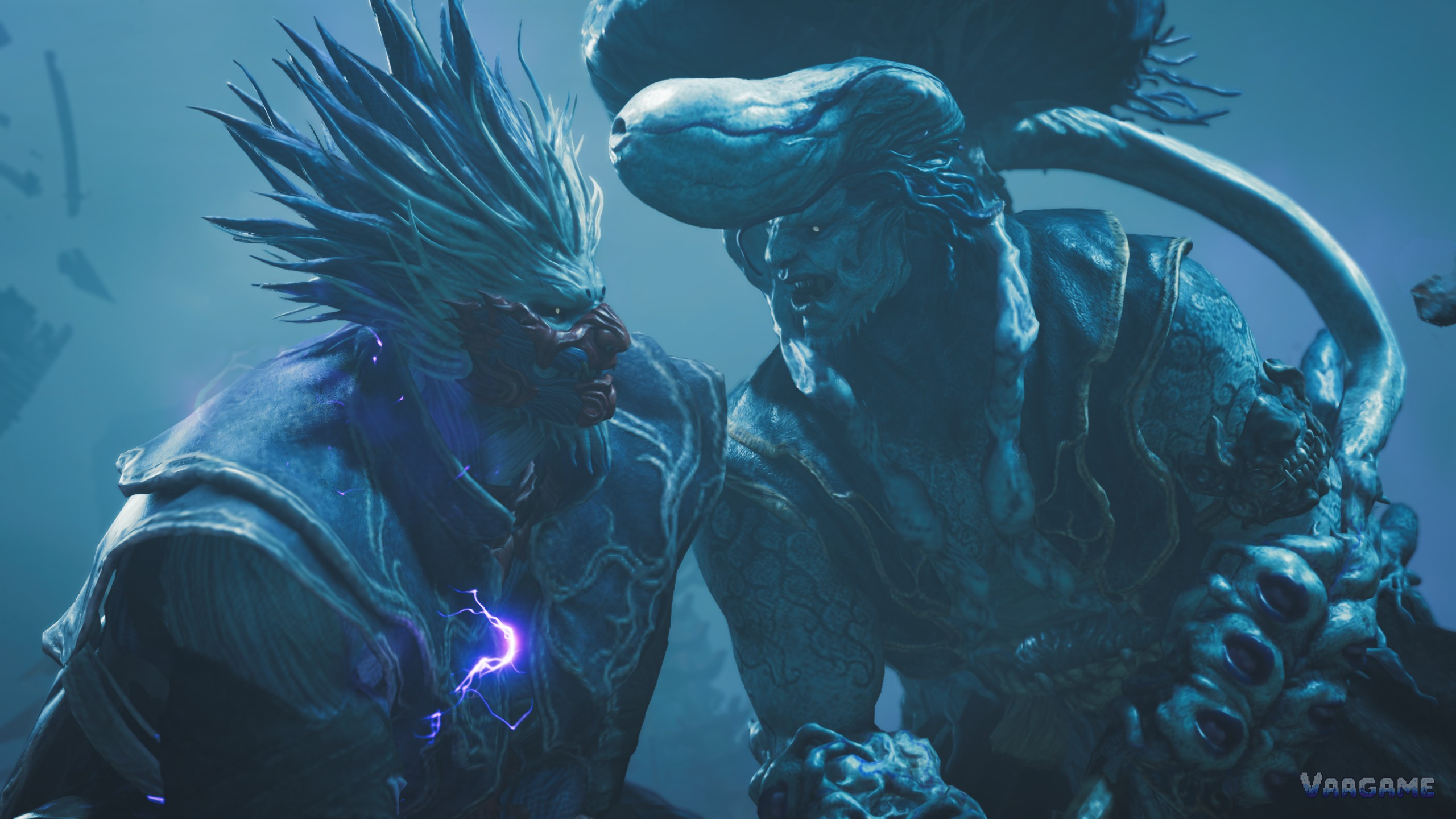
Issen is the heart of Onimusha: Way of the Sword’s combat, and it is not a parry. A parry interrupts an attack; an Issen answers an attack with an attack, in the moment just before it lands, and cancels it for big damage and extra souls. Around it sits a whole system: Chain Issen for groups, a shared posture gauge for you and your enemies, and Break Issen for finishing what posture pressure started. This guide explains that system in depth, without repeating the Parry versus Deflect input tables.
Quick answer
Issen: attack in the moment just before an enemy attack lands. Too early or too late fails, and a failed Issen usually eats damage.
Chain Issen: after an Issen hit, press attack again immediately to cut to the next enemy. Clean hits keep the chain going; mashing breaks it.
Posture is a shared Stamina Gauge, not health. A full-health boss can still be posture-broken into a Break Issen.
Break Issen needs no frame-perfect timing. Empty the posture gauge by any means, then press normal attack on the staggered enemy.
Against bosses, Break Issen opens a choice: red zones for extra direct damage, purple zones for a burst of souls.
At a glance
Issen: Counter an attack with an attack, just before it lands; narrower window than Parry, Deflect, or Evade
Chain Issen: Unlocked during The Oni’s Apprentice (2 Power Stones); Chain Length 1 and 2 after the 2nd and 3rd Oni Portals (3 Power Stones each)
Issen Power 1 and 2: After the 1st and 3rd Oni Portals, for 4,500 and 6,500 red souls
Posture: Shared Stamina Gauge; boss posture is the red bar under the health bar; it recovers over time if not pressured
Break Issen: No frame-perfect timing required; normal attack on a posture-emptied enemy
Frame data: No exact frame counts. The developer has not published them; a 4 to 6 frame claim from a low-authority site is not used.
Trophies tied to this system: Brutalist (50 Issen attacks), Flow State (Chain Issen defeats 50), Berserker (consecutive Break Issen defeats 3)
1. Issen: the counter-attack
Issen answers an attack with an attack. Input your attack in the moment just before the enemy attack lands, and you cancel it for big damage and extra souls. Attack too early, while your swing is just starting, or too late, after you have already been hit, and it fails. The window is narrower than Parry, Deflect, or Evade, and a failed Issen almost always means taking damage, which is why it is high risk and high reward. Against ordinary enemies, an Issen is often a one-hit kill with extra souls. Against bosses, it deals big damage, drops extra souls, and accelerates posture drain. It is not a follow-up after a block, and it is not a counter after being hit; it is a pre-emptive answer.
2. Chain Issen: groups
Chain Issen is not a separate opening move. After an Issen hit, press attack again immediately, and on the next hit press again, cutting to the next enemy each time. The visual cue is a white flash on the blade plus a metallic slash sound at the Issen hit. Range is limited to enemies within a forward dash: scattered positioning breaks the chain, and mashing or early inputs break it too. Chain Issen unlocks during The Oni’s Apprentice for 2 Power Stones, with Chain Length 1 after the second Oni Portal and Chain Length 2 after the third, at 3 Power Stones each. Issen Power 1 and 2, which strengthen Issen, cost 4,500 and 6,500 red souls after the first and third Portals. Practice on ordinary Genma groups, not bosses: bosses are single targets with no second enemy to chain to, which makes them poor places to farm the Flow State trophy for 50 Chain Issen defeats.
3. Posture: the shared gauge
Posture is a Stamina Gauge shared by you and your enemies. The official Weekly Oni Memo wording, as relayed by the wiki, calls it the connection between soul and body. Posture is not health: a full-health boss can still be posture-broken into a Break Issen. Boss posture is the red bar under the health bar. It builds, in relative speed from slowest to fastest: ordinary attack hits, which shave a little each time and are the most reliable but slowest; Timed Parry, which preserves your own posture better than holding guard and drains enemy posture faster than attacks; Deflect, which takes a large chunk at once, is the fastest posture pressure, and can be used mid-attack-animation, in any stance, from any angle, without sheathing first; Issen, which ends the incoming attack and pushes the enemy toward Break; deflected projectiles, which count against their source enemy; and parrying an enemy into an object or another enemy, which adds considerable posture damage. If pressure stops, posture recovers over time, and a missed window lets the enemy recover and rejoin the fight.
Your own posture matters just as much. Holding guard drains it continuously; when it empties, you are guard-broken, briefly unable to block or dodge, and open to heavy punishment, with the official memo also describing extra damage taken and souls dropped. Pure holding guard is therefore unsustainable: the system pushes you toward Timed Parry, Deflect, and Issen. The blue aura, or Blazing State, links in here: while it is active, Break Issen animations are faster and chains flow more smoothly, and after building the blue gauge through Parry into Blazing State, Timed Deflect drains posture faster. No official numbers exist for any of this, so all of it is relative.
4. Break Issen: the finish
Break Issen is the fundamental contrast to Classic Issen. Classic Issen asks whether you can counter an attack at the instant it lands. Break Issen asks whether you can pressure posture empty and then harvest. It needs no frame-perfect timing: empty the Stamina Gauge by any means, attack, Parry, or Deflect, and when the enemy staggers into the drained state, press normal attack. Against ordinary Genma, Break Issen is an instant execution animation, often a dismemberment, that ends the enemy outright and drops more red souls than an ordinary kill. When several enemies are drained at once, Break Issen Combo lets you chain from one drained enemy to the next without rebuilding gauge: Chain Issen chains Issen successes, Break Issen Combo chains drained enemies.
Against bosses, Break Issen does not directly execute, except when the boss is at critically low health, where it can finish the boss with a fast draw slash, doubled under Oni Awakening, and where a distant drained enemy can trigger a similar dash slash. Normally it enters a slow, frozen decision: the boss model overlays color zones, and you choose a zone to strike. Red zones deal extra direct damage, for finishing and weak points. Purple zones deal lower damage but release a burst of souls, blue and yellow, for Oni Power, health, and awakening resources, which fits resource-starved moments or a costly next phase. The red-equals-damage and purple-equals-souls core is consistent across sources; specific body-part names differ between wiki pages, so this guide does not fix them.
5. Boss posture tactics, by boss
Sasaki Ganryu, the demonstration fight: red zones to the head deal high damage and break the hat, making later hits easier; purple zones replenish souls. Part names for the soul zones differ between pages, so use the color rule, not a part list.
Daidara: early, favor purple zones or strip leg armor, which Break Issen removes directly without arrows, and immediately absorb the dropped souls before Daidara reabsorbs them; late, with armor stripped and transformation timed, switch to head damage.
Greater Nue: the key is the tail. A posture break followed by Break Issen on the tail removes its unblockable sweep and tail guard, after which Oni Strength can pick up the tail as a weapon; the head is armored and needs bow, Oni Strength, or Break Issen armor-breaking before head damage works.
Rasho-gan, Benkei, and Dohatsu-ten: single-source secondary guide advice, stated as such. Rasho-gan loses moves when its back limbs are hit; Benkei’s six armor pieces and Dohatsu-ten’s helmet lock damage while worn, so spending Break Issen on souls while armored is wasteful: strip armor first.
6. How to practice
Use the Practice Ground drills. The Issen Drill rewards the Amulet of Introspection, the Chain Issen Drill rewards it twice, and Deflect and Exhaustion drills exist alongside them. New drills open as skills, Oni Armaments, and abilities unlock.
Practice Issen rhythm on low-damage, long-windup ordinary Genma groups first, then take it to bosses. Boss Rematch allows no items except Hozuki, so do not lean on items there.
In run one, turn Action Prompts off on Action difficulty and practice without them. Carnage removes prompts entirely, and PowerPyx advises against entering Carnage dependent on them.
FAQ
Is Issen the same as Parry?
No. Parry interrupts an attack and creates an opening. Issen answers an attack with an attack just before it lands, canceling it for big damage and extra souls. The full input comparison is in our Parry versus Deflect guide.
How many frames is the Issen window?
Unpublished. The developer has not released exact frame counts, and a 4 to 6 frame figure from a low-authority site is not used here. What is verified is that the window is narrower than Parry, Deflect, or Evade.
Does Break Issen need frame-perfect timing?
No. That is the point of Break Issen: empty the posture gauge by any means, then press normal attack on the staggered enemy. Frame precision belongs to Classic Issen.
What should I practice first?
Issen rhythm on ordinary Genma groups, then Chain Issen on groups, then Break Issen after posture pressure. Bosses come last: they are single targets and poor Chain Issen practice.