

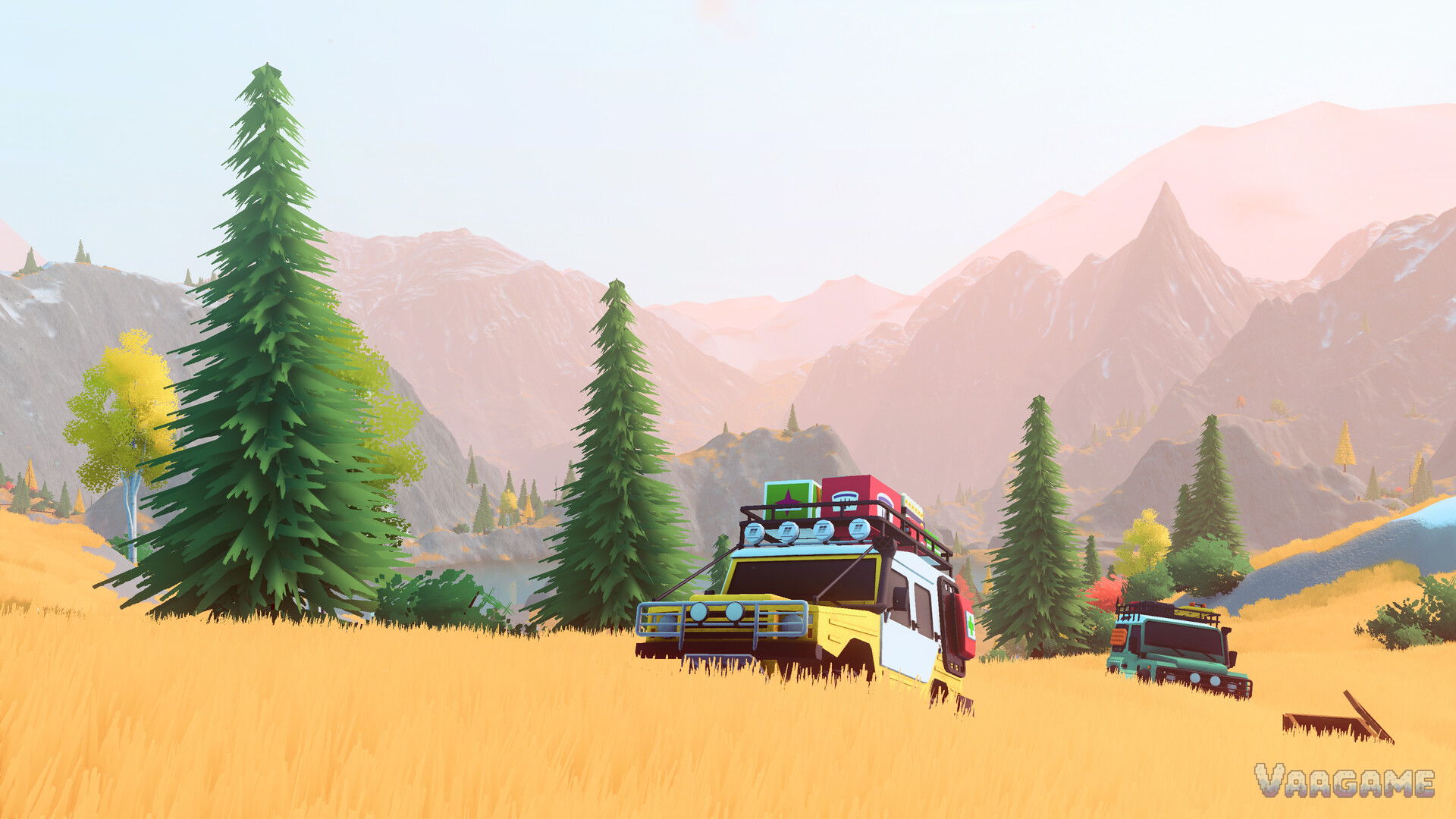
Crates are over the hill's dress-up layer: wooden boxes scattered across both regions that open into cosmetic items — mudflaps, bike racks, roof racks carrying camping gear or beer crates — while merchants and cabins handle colours, accessories and fitting. Nothing in this system touches performance, and that is precisely its charm: customisation is the game's pure-expression economy, running parallel to the Pebbles-and-upgrades one. This guide covers how crates work, where they live, how the customisation stops fit together, and what the Supporter Edition adds to the wardrobe.
At a glance
Crates contain cosmetics only: mudflaps, racks, roof kit and other appearance parts — zero performance effect
They are found, not bought: crates sit out in the world across every region, waiting to be driven to
Fitting happens at stops: colours, accessories and cosmetics are changed at merchants and cabins, per the official description
The dress-up layer is popular: the game's outfit-related achievement is among its most unlocked in launch week
Supporter Edition: Adds exclusive vehicle cosmetics (plus the soundtrack and an exclusive campsite)
1. What a crate actually is
Find a crate — they sit beside trails, at cabins, near viewpoints, in the places exploration already takes you — and it opens into a cosmetic piece for your vehicles. Launch coverage (Polygon's review is the clearest) lists the flavour: mudflaps, a bike rack, roof racks loaded with camping gear or beer crates — the expedition clutter that turns a generic 4x4 silhouette into a truck with a biography. Pieces are pure appearance: a roof rack full of camping kit carries exactly as much as an empty one, which in this game is nothing at all, and that is fine.
Two design consequences are worth knowing. First, crates make exploration pay in a second currency: a detour that finds no Pebbles can still find your truck a new look, so very few drives in over the hill are ever truly unrewarded. Second, because cosmetics are decoupled from stats, you never face the classic dilemma of wearing the ugly part because it is stronger. The wardrobe is safe to love.
2. Where crates live (and an honest sourcing note)
Crates are distributed across every region, clustered where players already go — near cabins, viewpoints and objective sites — with strays rewarding genuine off-line wandering. For scale, take the one published count with its name attached: GamerGuides' interactive map logged the three Canadian areas at 18 (Emerald Lake), 15 (Gimli Ridge) and 15 (Asgard Mountain) crates. That tally is a single source's mapping work, quoted here for scale only; we do not reproduce their marker data, and our own per-area location lists will be a later, first-hand project (the plan for this column files them under Tier 2).
The practical upshot: in Canadian country, a crate sits within reach of most objectives, and the dress-up achievement's high unlock rate in launch week — it ranks among the game's most common — says the average player is finding plenty without any map at all.
Crates also make good waypoints. Because they cluster near the places exploration already targets, a crate run is a low-stakes way to learn new ground: the drive out teaches the surfaces, the drive back is a convoy photo opportunity, and the box at the end pays in wardrobe rather than pressure. Route guides in this collection treat them as secondary objectives for exactly this reason — they are the game's way of making sure that even a deliberately unambitious afternoon still moves something forward.
3. Customisation proper: colours, accessories, fitting
Finding pieces is half the system; fitting them is the other half. Per the official description, colours, accessories and cosmetic parts are changed at merchants and cabins — the same stops where upgrades are bought (the cabins guide covers the network these stops form). Expect the loop to feel like this: travel finds crates, crates grow the wardrobe, and stops on your route are where the wardrobe goes on the truck. Because fitting is tied to stops rather than a pause menu, changing your look becomes part of the expedition rhythm — a cabin evening activity, like sleeping off a storm.
The customisation layer also explains the game's convoy photography culture: with a fleet of era-correct shapes and a wardrobe of expedition clutter, no two players' trucks dress alike, and co-op gatherings (like the lakeshore convoy in the official screenshots) read as car meets. In a game whose achievements reward photography, looking distinctive is a mechanic-adjacent pleasure.
4. The Supporter Edition wardrobe
The Supporter Edition ($37.99, against the base game's $24.99) builds its value on this layer: exclusive vehicle cosmetics that base-game crates do not hand out, the official digital soundtrack (40 tracks), and an exclusive campsite with tent and campfire placed in the world. Whether that bundle is "worth it" depends on how much of the game the wardrobe is for you — but note the structural honesty of it: the edition sells expression and music, not power. Every mechanical thing in the game is earnable by every edition in the same way (the vehicles guide covers the unlock economy in full).
5. Two wardrobes: found and bought
The customisation economy has two streams, and knowing which is which saves Pebbles. The found stream is crates: free, exploration-driven, and the source of the expedition-clutter pieces that give trucks their biography. The bought stream runs through the same merchants and cabins that handle fitting — colours and accessories are the deliberate purchases, the pieces you choose rather than discover. The sane division of labour is to let crates build the wardrobe's bulk and reserve deliberate spending for the signature items: the colour that makes the truck yours, the accessory a crate has not handed you. Spending Pebbles to rush the wardrobe while the upgrade lines wait is the one genuine mistake this system offers — the crates guide and the upgrades guide agree on the order: capability first, expression whenever, and the found stream makes "whenever" arrive sooner than you would think.
FAQ
Do crates cost Pebbles to open? No — crates are found in the world and opened where they sit; Pebbles are the currency of merchants and upgrades, not of crates. The wardrobe grows by driving, not by paying.
Can cosmetic parts improve performance? No. Cosmetics are purely visual — that separation is deliberate, and it is why you can dress a truck entirely by taste. Performance lives in the upgrade lines (engine, tyres, water protection).
Are crate contents random or fixed? Launch documentation does not describe a loot table either way, and we will not invent one. What is verifiable is the category of contents (appearance parts) and that crates are plentiful across every region.
Where can I find a full crate location list? GamerGuides' interactive map is the published one at launch (their counts are quoted in this guide, with attribution). Our own location coverage is planned as first-hand Tier 2 work rather than a copy of their markers.
Do Supporter Edition cosmetics give any advantage? None mechanically — they are exclusive looks, sitting alongside the soundtrack and campsite as the edition's extras. Capability in over the hill is earned identically by every edition.
Related guides
over the hill Vehicles Guide: Confirmed Cars, How Unlocking Works and the Fleet Owner Grind
over the hill Upgrades and Equipment: What To Buy First With Your Pebbles
over the hill Cabins, Campsites and Merchants: Fast Travel, Supplies and NPC Services
over the hill Wildlife and Photo Mode Guide: The Compendium, the Camera and Golden Hour