

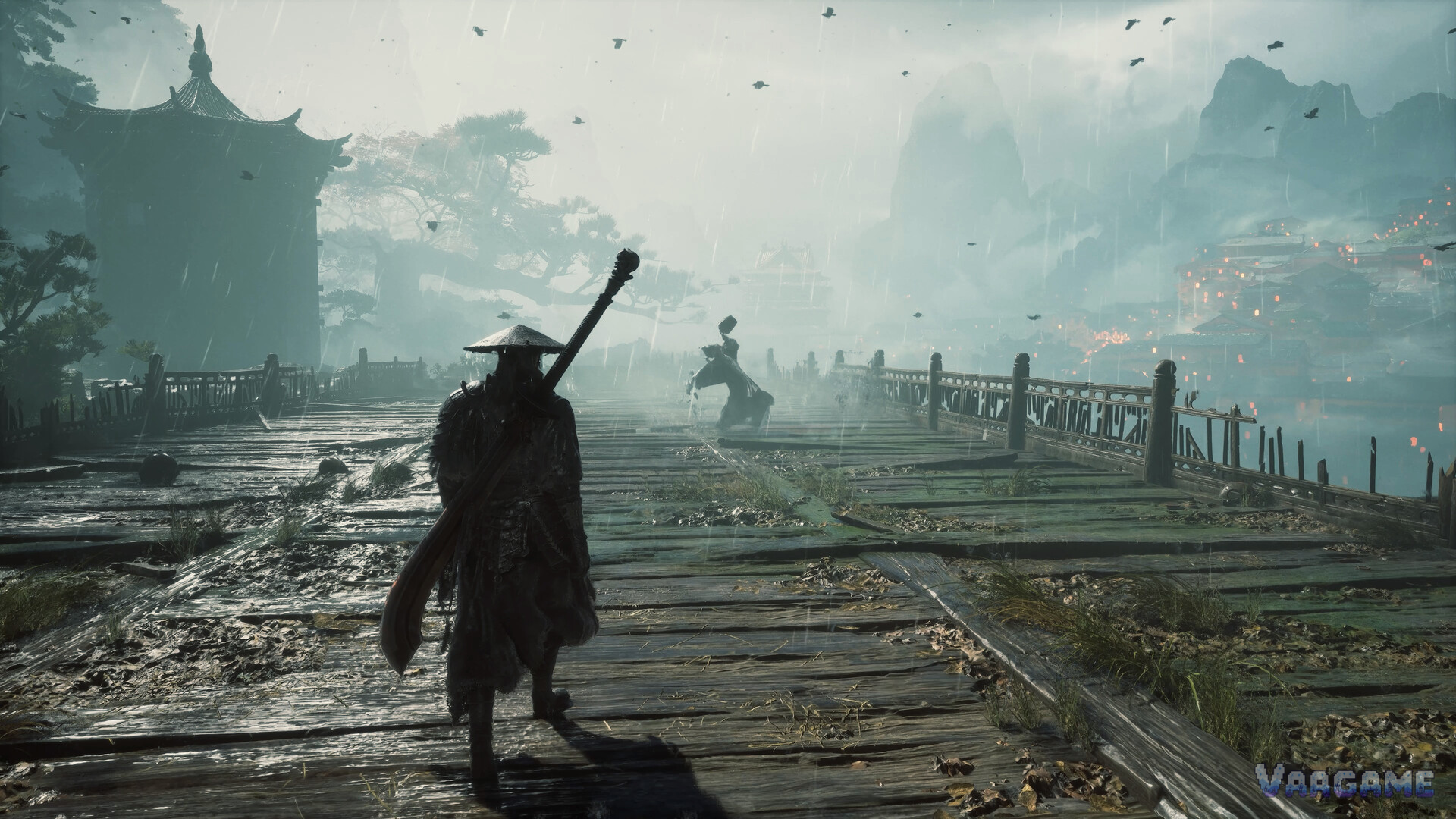
Phantom Blade Zero rewards players who wander: its world is semi-open across 8 hand-painted, ink-style maps, the in-game map points you in a general direction rather than marking everything, and fast travel points let you return to places you have already reached. This guide explains how that exploration system works, without listing any collectible locations.
At a glance
World structure
Semi-open world across 8 regions
Map style
8 hand-painted, ink-style maps
Map guidance
General direction, not a pile of markers
Fast travel
Fast travel points exist
Exploration systems
Hidden passages and mechanisms as concepts
Collectible locations
Not in this guide; second phase
Last verified
October 26, 2026 (pre-launch facts)
Quick answer
The world is semi-open, spread across 8 hand-painted, ink-style maps that function as 8 regions.
Direction in complex regions is deliberately vague, because the design rewards exploration itself.
The map gives a general direction and does not pile on markers, so it never becomes a checklist hunt.
Hidden passages and mechanisms exist as exploration concepts, and this guide explains them without giving locations.
Fast travel points let you return to places you have already reached, which keeps backtracking cheap.
1. Semi-open means connected regions, not one seamless map
Semi-open is the middle ground between a corridor and a fully open world. Phantom Blade Zero is built from 8 hand-painted, ink-style maps, and those maps function as 8 regions you move between. Each region has its own layout, landmarks, and routes, and the ink-painting style gives the whole world a consistent visual identity.
For planning, think in regions rather than in one giant map. When you enter a new region, your first job is to learn its shape: where its main routes run, where its landmarks sit, and which direction the map is pointing you toward. That regional habit matters more than any single route, because the game never asks you to hold the entire world in your head at once.
2. Read the map for direction, not for a checklist
The map in Phantom Blade Zero gives a general direction, and it deliberately stops short of marking everything. That restraint is easy to misread as a missing feature, especially if you arrive from games that fill every screen with icons. Here it is the system working as designed: the map orients you, and your own observation does the rest.
The practical adjustment is small. Use the map to answer one question at a time: which general direction should I head next. Then put the map away and read the world itself: its landmarks, its paths, and its changes in terrain. Players who keep reopening the map looking for a marker that was never meant to be there will feel lost longer than players who trust the direction and walk.
Complex regions lean into this hardest. Their sense of direction is deliberately vague, and that vagueness is the reward mechanism: the more carefully you explore, the more of the region you actually learn. A region you have wandered through stays in your memory in a way a region you have only followed icons through never does.
3. Hidden passages and mechanisms reward attention, not speed
Hidden passages and mechanisms are part of the exploration system, and they work as concepts before they work as specific spots. A hidden passage is a route that does not announce itself: a gap, a side route, or a way through that only appears when you look closely instead of rushing past. A mechanism is an interactive element in the world that changes a route or opens a way when you engage with it.
Neither concept needs a location list to be useful. The skill they reward is attention at junctions: slow down where a route branches, check side paths before committing to the main road, and revisit a spot that looked odd the first time you passed it. Speed is the enemy of both systems, because a passage you sprint past and a mechanism you never notice are the same thing in practice.
This guide stops at the concept on purpose. Specific passage and mechanism locations, like collectible locations, belong to the second phase of this column, where they can be verified from the released game instead of guessed before release. If a route feels intentionally hidden, treat that feeling as information and explore it, rather than treating it as a gap in this guide.
4. Fast travel keeps exploration cheap
Fast travel points exist, and they change the risk calculation of wandering. Exploring a side route costs little when you know you can return to a familiar point instead of walking the whole way back. That safety net is what makes the vague map direction workable: you can afford to get a little lost, because getting back is cheap.
Use fast travel as a loop, not as a shortcut you save for emergencies. Explore outward from a point, learn the region around it, and travel back when you want a new starting position or a fresh look at an earlier area. Regions reward return visits, because a route that meant nothing on your first pass can read completely differently once you know the area.
Swipe horizontally to view all columns.
| Exploration element | What it does | How to use it |
|---|---|---|
Map | Gives a general direction | Check direction, then read the world itself |
Fast travel point | Returns you to a reached place | Loop outward and travel back freely |
Hidden passage | A route that does not announce itself | Slow down at junctions and check side paths |
Mechanism | An interactive element that changes a route | Engage with it and watch what changes |
5. A first-run exploration routine
A simple routine keeps the vague map from turning into aimless wandering. It has five steps, and each one follows from the systems above. The routine is deliberately short: exploration in this game is a habit, not a procedure you memorize.
Follow the map's general direction first, so you always have a heading.
At every junction, slow down and check side paths before taking the main road.
Note landmarks as you go, so a region becomes a place you recognize.
When a route looks intentionally hidden or odd, explore it instead of dismissing it.
Use fast travel to revisit earlier areas once you know a region better.
FAQ
How many regions are there?
There are 8 regions, presented as 8 hand-painted, ink-style maps. Think of each map as one region with its own layout and landmarks. The world is semi-open, so regions connect rather than forming one seamless map.
Is Phantom Blade Zero a fully open world game?
No, it is a semi-open world built from connected regions, not a single fully open map. That structure is why the guide talks about learning one region at a time. Expect connected areas with distinct layouts, not one borderless landscape.
Why does the map feel empty compared with other games?
The map is designed to give a general direction rather than pile on markers, and complex regions keep direction deliberately vague to reward exploration. An empty-looking map is the system working as intended. Read landmarks and paths in the world itself instead of hunting for icons.
Where are the collectible locations?
They are not in this guide. Collectible maps and specific locations belong to the second phase of this column, where they can be verified from the released game. This guide covers the exploration systems only, so nothing here is guessed before release.
Related guides
Phantom Blade Zero Story and World Guide: Premise, Wulin, and Kungfu Punk Without Spoilers
Phantom Blade Zero Settings and Performance Guide: Official PC Specs, Benchmark, and Confirmed Features