

Advanced regions are not harder versions of beginner regions: they are places where shelter is rare, climbs are mandatory, and predators hunt in packs. Go to Timberwolf Mountain for the best loot in the game, to Hushed River Valley for isolation, to Ash Canyon for rope climbs, to Bleak Inlet and Blackrock for timberwolves, and to the Far Territory only when you own the Tales DLC and a full kit.
At a glance
Advanced base regions: Timberwolf Mountain, Ash Canyon, Bleak Inlet, Blackrock
Isolation regions: Hushed River Valley, Forlorn Muskeg, Desolation Point, Broken Railroad
Far Territory (Tales DLC): Transfer Pass, Forsaken Airfield, Zone of Contamination, Sundered Pass
Far Territory transition: Far Range Branch Line
Checked: 2026-10-25
Quick answer
Timberwolf Mountain has the best loot and the hardest climb. Go prepared or do not go.
Hushed River Valley has almost no buildings. It is a cave and rope region, not a town region.
Bleak Inlet and Blackrock mean timberwolf packs. Bring flares, fire, and a shelter plan.
The Far Territory is the coldest, harshest set of regions. It is endgame territory.
1. Timberwolf Mountain: the best loot, the hardest climb
Timberwolf Mountain is a high mountain region with a mountaineer hut, a crashed plane, and a summit climb that needs rope and stamina. It holds some of the best loot in the game, including rare clothing and tools, which is why experienced players climb it. The price is exposure: long climbs, deep cold, and long stretches with no building to hide in. Go with a rope, a full fire kit, food for the climb and the descent, and a plan to sleep at the hut, not on the mountain.
2. Hushed River Valley and Ash Canyon: caves and ropes
Hushed River Valley is a maze of caves, canyons, and waterfalls with almost no buildings, and it is the region that teaches cave navigation: torches, landmarks, and never entering a cave system without knowing the way out. Ash Canyon is a high, rocky region of rope climbs between cliff shelves, with a gold mine and a spectacular view at the top. Both regions demand the same kit: rope, torch or lantern, fire kit, and food for a trip that takes longer than it looks on the map. Both punish the player who treats them like a town region with houses every few minutes.
3. Bleak Inlet and Blackrock: timberwolf country
Bleak Inlet is a coastal cannery region with a radio tower, a long bridge, and timberwolf packs that patrol the open ground. Blackrock is a prison region with a penitentiary, mines, and the same packs. In both, the rule from the animals guide matters most: timberwolf packs have morale, and they break when you hurt a member or use fire and flares hard. Travel with flares, a fire kit, and a shelter you can reach in minutes, and never cross open ground at dusk in these regions. The loot is strong, especially tools and ammunition, but it is priced in risk.
4. Forlorn Muskeg, Desolation Point, and Broken Railroad
Forlorn Muskeg is a flat, marshy region of weak ice, a radio tower, and long sightlines, and its danger is thin ice and exposure rather than buildings. Desolation Point is a coastal point with a lighthouse, a processing plant, and a whaling history, and it rewards players who want coastal loot and a lighthouse base. Broken Railroad is a small, late-game region of rail yards and a hunting lodge, reached through Forlorn Muskeg and the Ravine, and it is best visited when you already have strong clothing and a rifle. All three are intermediate-to-advanced: visit them after a beginner region, not instead of one.
5. The Far Territory: Transfer Pass first
The Tales from the Far Territory DLC adds four main regions reached through the Far Range Branch Line: Transfer Pass, Forsaken Airfield, Zone of Contamination, and Sundered Pass. Transfer Pass is the hub: a small, relatively sheltered region that connects the others, and it is where a Far Territory trip should start. Learn Transfer Pass, stock it, and use it as a base before pushing into the harsher regions, because the Far Territory has long distances between shelters and some of the coldest weather in the game.
Swipe horizontally to view all columns.
| Far Territory region | Character | Warning |
|---|---|---|
Transfer Pass | Hub, connects the others | Still cold and exposed |
Forsaken Airfield | Vast plain, hangar, control tower | One of the coldest regions |
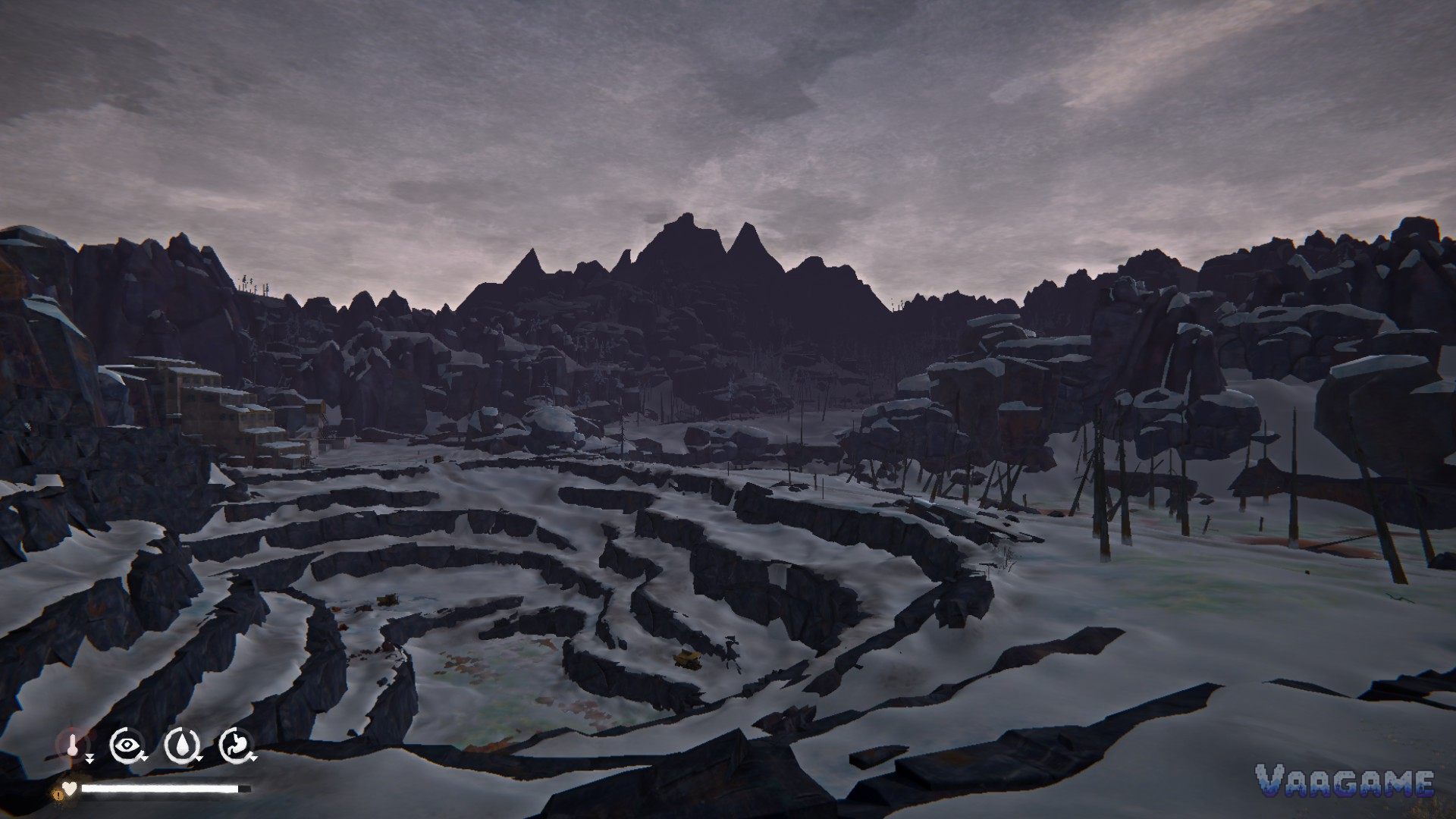
Zone of Contamination | Open-pit mine, chemical spills | Poisoned areas, harsh weather |
Sundered Pass | Steep climbs, avalanche terrain | Minimal shelter at altitude |
6. Forsaken Airfield and Sundered Pass: the extremes
Forsaken Airfield is a vast, flat, frozen airfield with a hangar, a control tower, and a ranger cabin, and it is officially described as one of the harshest, coldest regions in the game. Its danger is the open plain: wind has nothing to stop it, and shelter is far apart. Sundered Pass is the opposite extreme: steep, rocky, avalanche-prone high ground with minimal shelter beyond the treeline, built for the most prepared survivors. Both regions are endgame content. Visit them with the best clothing you own, a full fire kit, and a route that never leaves you more than one shelter away from safety.
7. Advanced travel discipline
Advanced travel runs on three disciplines. One: never leave a shelter without knowing the next shelter. Two: carry a rope and a fire kit even when the trip looks short, because advanced regions turn short trips long. Three: turn back at the first sign of a storm or a pack, not at the third. The players who map every advanced region are not braver than beginners. They are simply the ones who turned back most often.
FAQ
Do Far Territory regions count for Faithful Cartographer?
No. The Faithful Cartographer achievement covers the base-game surveyed locations, and the Far Territory regions are tracked separately. Map them for survival, not for that achievement.
What is the hardest region in the game?
It depends on the threat you fear most: Sundered Pass for altitude and shelter scarcity, Forsaken Airfield for cold and exposure, and Bleak Inlet or Blackrock for timberwolf packs. All three demand endgame preparation.
Can I reach the Far Territory without the DLC?
No. The Far Territory regions require the Tales from the Far Territory DLC installed, and the in-game routes to them are closed without it.