

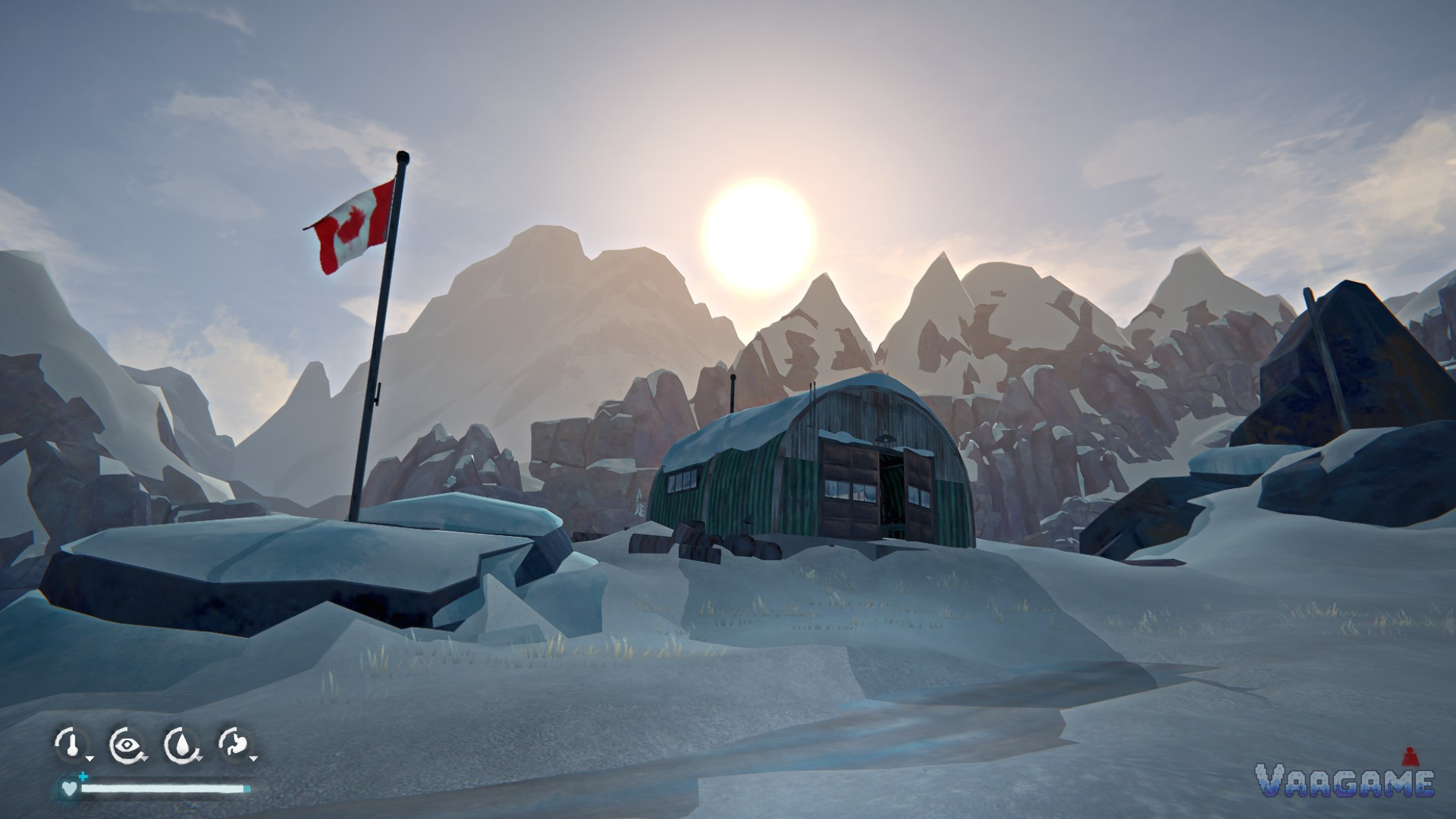
Start in Mystery Lake or Mountain Town, learn one region completely, and only then cross into the next: that is the whole beginner map strategy for The Long Dark. Great Bear Island is divided into regions connected by smaller transition zones, and the four regions in this guide are the ones with the most shelter, the most forgiving wildlife, and the clearest roads.
At a glance
Map structure: main regions plus smaller transition zones
Beginner regions: Mystery Lake, Mountain Town, Coastal Highway, Pleasant Valley
Best first base: Camp Office (Mystery Lake) or a Milton house
Travel rule: daylight, roads, and a shelter every few hours
Checked: 2026-10-25
Quick answer
Mystery Lake is the classic first region: lake, cabins, dam, and clear landmarks.
Mountain Town (Milton) is a town full of houses to loot, but wolves patrol the streets.
Coastal Highway is a long road of houses, cars, and fishing spots.
Pleasant Valley is big and open: beautiful, easy to get lost in, and colder than it looks.
1. How the map works: regions and transitions
Great Bear Island is not one open map. It is a set of regions, each a large area with its own shelters, loot, and wildlife, connected by smaller transition zones such as the Ravine, Winding River, and Crumbling Highway. Transition zones are mostly corridors with few shelters, so you cross them, you do not live in them. The base game has 12 main regions, and the Tales DLC adds four more in the Far Territory. Learn the transitions near your base first, because a region exit you have never used is a gamble in a storm.
2. Mystery Lake: the classic first region
Mystery Lake is a frozen lake surrounded by cabins, a ranger station, and the Carter Hydro Dam at one end. It is the classic first region because it teaches everything: ice fishing on the lake, cabin looting, a dam interior to explore, and clear landmarks that make navigation easy. The Camp Office by the lake is one of the best early bases in the game, with a bed, a fireplace, and storage. Wolves patrol the lake ice and the rail line, so fish and travel with an eye on the shoreline, and use the cabins as stepping stones.
3. Mountain Town: a town to loot, street by street
Mountain Town, known to players as Milton, is a small town of houses, a church, a gas station, and a radio tower, with a crashed plane story that story players will recognise. For Survival players it is a loot-rich region: almost every house can be searched, and the town rewards a careful street-by-street sweep. The danger is that wolves patrol between the houses, so loot in daylight, keep a door nearby, and never get cornered in a yard. The gas station and the church are strong base candidates, and the town is a good second region after Mystery Lake.
4. Coastal Highway: the long road
Coastal Highway is a long coastal road of houses, trailers, cars, and fishing access, running between the Ravine and the sea. It is a good region for players who like road travel, because the road itself is the navigation: follow it and you will find shelter regularly. Fishing huts along the coast give steady food, and cars give cloth and supplies. The risks are the long distances between warm buildings in a storm and the wolves that use the same road you do, so plan fuel and food for each leg, and do not start the longest stretch late in the day.
5. Pleasant Valley: big, open, and colder than it looks
Pleasant Valley is a large farming valley with a farmstead, a community hall, and long open fields, and it looks friendlier than it is. Its size is the danger: distances are long, landmarks are far apart, and wind crosses the open fields without anything to stop it, which makes the feels-like temperature drop fast. Beginners should enter Pleasant Valley with a full fire kit, a clear destination, and a base plan, and should treat the farmstead as the prize: a large, warm base in the middle of a region that rewards long stays.
Swipe horizontally to view all columns.
| Region | Best base | Main danger |
|---|---|---|
Mystery Lake | Camp Office | Wolves on the lake ice |
Mountain Town | Gas station or church | Wolves between houses |
Coastal Highway | Coastal house or fishing hut | Long cold stretches |
Pleasant Valley | Farmstead | Wind, distance, getting lost |
6. Beginner routes: the first three crossings
The three crossings every beginner should learn are: Mystery Lake to Mountain Town, Mystery Lake to Coastal Highway through the Ravine, and Mountain Town to Pleasant Valley. Learn each one in good weather first, note where the shelters and caves sit along the way, and only then use them in bad weather. A crossing you have walked in sunshine is a route; a crossing you have only seen on a map is a guess, and guesses in blizzards end runs.
7. What not to do on the beginner map
Do not cross into an advanced region on your first week just because the exit is there. Timberwolf Mountain, Hushed River Valley, and Ash Canyon are covered in the advanced guide for a reason, and they punish beginners with climbs, cold, and predators. Do not ignore transition zones either: a transition with no shelter is a place to move through quickly, not a place to loot slowly. And do not travel without a destination shelter in mind. Every beginner trip should end at a named building you have already visited, not at a hope.
FAQ
Which region should I start in?
Mystery Lake or Mountain Town. Both have dense shelter, clear landmarks, and manageable wildlife, and both connect to several other regions for your second week.
Can I walk the whole map?
Yes, all regions connect through transitions, but the full crossing is a late-game project. Beginners should master one region, then add neighbours one at a time.
What is a transition zone?
A small region whose job is to connect two main regions, like the Ravine between Mystery Lake and Coastal Highway. Expect a corridor, not a home: cross it, do not settle in it.