

Your first fortune in Bannerlord does not come from one big score. It comes from stacking small, repeatable income — looter loot, tournament prizes, village quests, ransomed prisoners and a little honest trading — while keeping your party small enough that daily wages never eat it. This guide gives that opening a working order: what to do in the first days, how to build your first real party, when to spend on gear and when to bank the money, and the traps that leave new warband leaders broke with an army they cannot feed. Exact profit figures are deliberately absent: prices move with supply, war and season in every campaign, so this guide teaches the methods and the checks, not a price list that would be wrong by next week.
At a glance
The rule: income must cover daily wages plus a reserve, or the party shrinks on its own
Best first income: looters, tournaments and village quests — all repeatable, all low risk
First big decision: when to grow past a small party, and what wages that growth commits you to
No fixed profit table in this guide: prices move with supply, war and campaign state
Last verified: October 28, 2026
1. The only money rule that matters early
Every day in Bannerlord costs you money: troop wages are deducted daily, food is consumed daily, and wounded troops still expect to be paid while they recover. Income, by contrast, arrives in lumps — a battle here, a quest there, a tournament prize once in a while. The early game is therefore a cash-flow problem, not a wealth problem. A warband leader with a large reserve and a small party is rich; a leader with a large party and an empty purse is one bad week from desertion. Before every recruitment round, look at your daily wage figure on the party screen and ask whether your recent income covers it with room to spare. If it does not, stop recruiting and go earn first. Community guides put the same point more bluntly: do not promote troops past your ability to keep making a passive profit, because high-tier troops cost high-tier wages every single day.
2. The first days: looters, tournaments, quests
Start with looters. They are the only enemy sized for a starting party, they carry loot you can sell and prisoners you can ransom, and fighting them trains your recruits and your own combat skill at the same time. Do not chase a lord, a caravan guard or a bandit hideout in the first days: all three are built for parties bigger than yours, and losing a fight costs you the troops, the gear and the time you can least afford.
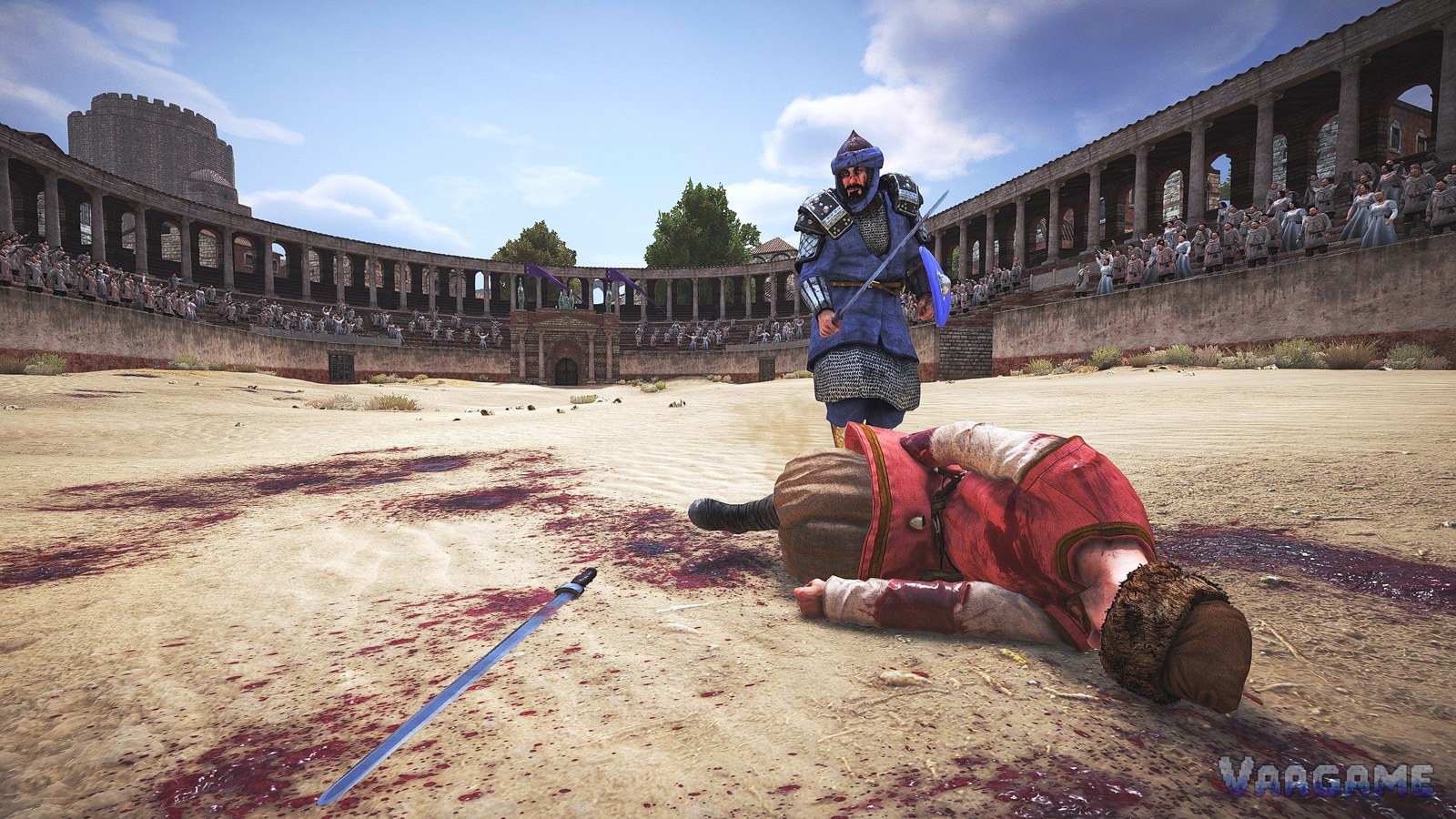
Tournaments are the best free money in the early game, and they are easy to overlook because they look like a minigame. Entry costs nothing, the equipment prizes are better than anything you can afford to buy, and winning also pays and raises renown — the same renown your clan tier needs to grow. Enter every tournament in every town you pass, even if you lose the first few: the practice alone teaches directional combat faster than any field battle, because you fight on foot, one opponent at a time, with the same weapons you will carry into real wars.
Village and town quests from notables are the third leg of early income, and the most underrated. A notable asking you to clear a hideout, escort a caravan, deliver goods or deal with deserters is offering pay, renown and, often, a relationship that later unlocks recruits and better prices. Take quests you can actually complete with your current party, and say no to the ones that send a dozen recruits against a fortified hideout. A failed quest costs reputation with the giver; a declined quest costs nothing.
3. Turn loot into money without wasting it
After every fight, three piles of value are sitting on the battlefield: equipment, horses and prisoners. Sell equipment you will not wear, but check it first — a better helmet, shield or horse for your own character is worth more than its sale price, because you would otherwise buy it later at a markup. Keep horses even when you do not need the mounts: spare horses in your inventory raise party speed and carrying capacity, which is what lets you outrun trouble and haul more loot to the next town. Prisoners can be ransomed, and selling them promptly beats dragging a slow, expensive column of captives across the map.
4. Your first real party: composition and wages
The first party that can do more than fight looters is a mixed one: shield infantry to hold a line, archers to punish anyone who charges it, and a few cavalry or mounted skirmishers to chase down routers and protect your flanks. A one-type army is a puzzle with one answer missing, and the first enemy that counters it will teach you that lesson expensively. Recruit from villages as you travel, upgrade steadily rather than all at once, and keep the wage figure in view after every upgrade round. A useful community rule of thumb: if a single bad week — no tournaments, no quests, one lost fight — would empty your purse, your party is already too big for your income.
5. When to spend, when to bank
Spend on: a horse that raises your speed, a shield and weapon that keep you alive in tournaments, food variety for morale
Bank for: your first workshop or caravan fund, which needs a large upfront sum before it pays anything back
Never spend on: a full set of shiny armour while your party is still small, or a troop upgrade round that doubles your daily wage overnight
Keep a reserve that covers wages and food for a long march with no income — that reserve is what lets you take a risk instead of being forced into one
6. Smithing: the early money-maker with a stamina limit
Smithing is the early-game income source new players hear the most about, and the one most often misunderstood. You smelt looted weapons to learn their parts, then forge weapons to sell or to fill orders from town notables. It is real income, and it trains a skill that stays useful all campaign. But it is gated by stamina: your character tires, orders take time, and the famous huge payouts belong to high-tier weapons with rare parts, not to the first swords you hammer out. Treat smithing as a side business between fights, not a replacement for them, and do not spend your whole reserve buying raw materials before you know which parts you can actually make. Gap, stated plainly: exact smithing returns vary by weapon parts, order and campaign state, so no profit-per-sword figure is listed here — any guide that quotes one without those conditions is quoting its own campaign, not yours.
7. Traps that leave you broke
Raiding villages for quick cash: it makes a whole faction hostile, and the loot is not worth a war you cannot win
Chasing lords before your party is ready: losing means ransom, lost troops and a long walk home
Buying a workshop or caravan before you can afford to lose the investment: both need a large upfront sum and time to pay back
Letting food run to zero on a long march: morale collapses, troops desert, and the rescue costs more than the food would have
Upgrading every recruit the moment you can afford it: wages are forever, loot is not
FAQ
What is the fastest early money? Tournaments plus looter loot, repeated town by town. It is not glamorous, but it is free, it trains combat and renown, and it never asks you to risk your whole party.
When should I buy my first workshop or caravan? When you can pay the large upfront cost and still keep a wage-and-food reserve afterwards, and when your clan tier allows it. The full workshop and caravan guide covers choosing the town and the companion.
Should I become a mercenary as soon as I can? Mercenary service pays for fighting in wars, and it is a strong mid-game income step, but it also puts you in wars you do not control. Take it when your party can survive a real battle, not the moment it unlocks.
Related guides
Mount & Blade II: Bannerlord Beginner's Guide: Campaign, Clan Tiers, Wages and Your First Hours
Mount & Blade II: Bannerlord Settings and Performance Guide: Battle Size, Presets and Fixes
Bannerlord Trade, Workshops and Caravans Guide: Rumours, Inputs and Companions
Bannerlord Combat, Troops and Formations Guide: Win Field Battles Before They Start
Bannerlord Siege Attack and Defense Guide: Engines, Breaches and Holding the Walls
Bannerlord Smithing Guide: Make Money and Craft Weapons That Sell
Bannerlord Family, Companions and Marriage Guide: Build a Clan That Outlives You
Bannerlord Kingdoms, Fiefs and Influence: How Votes, Policies and Clan Tier Work
Bannerlord War Sails Naval Guide: Ships, Sea Battles and the Nords
Bannerlord Mods Guide: How to Install Mods and the Best Mods to Start With
Next: the trade, workshops and caravans guide turns this early fund into passive income, with the workshop input-output table and the caravan companion rules.