

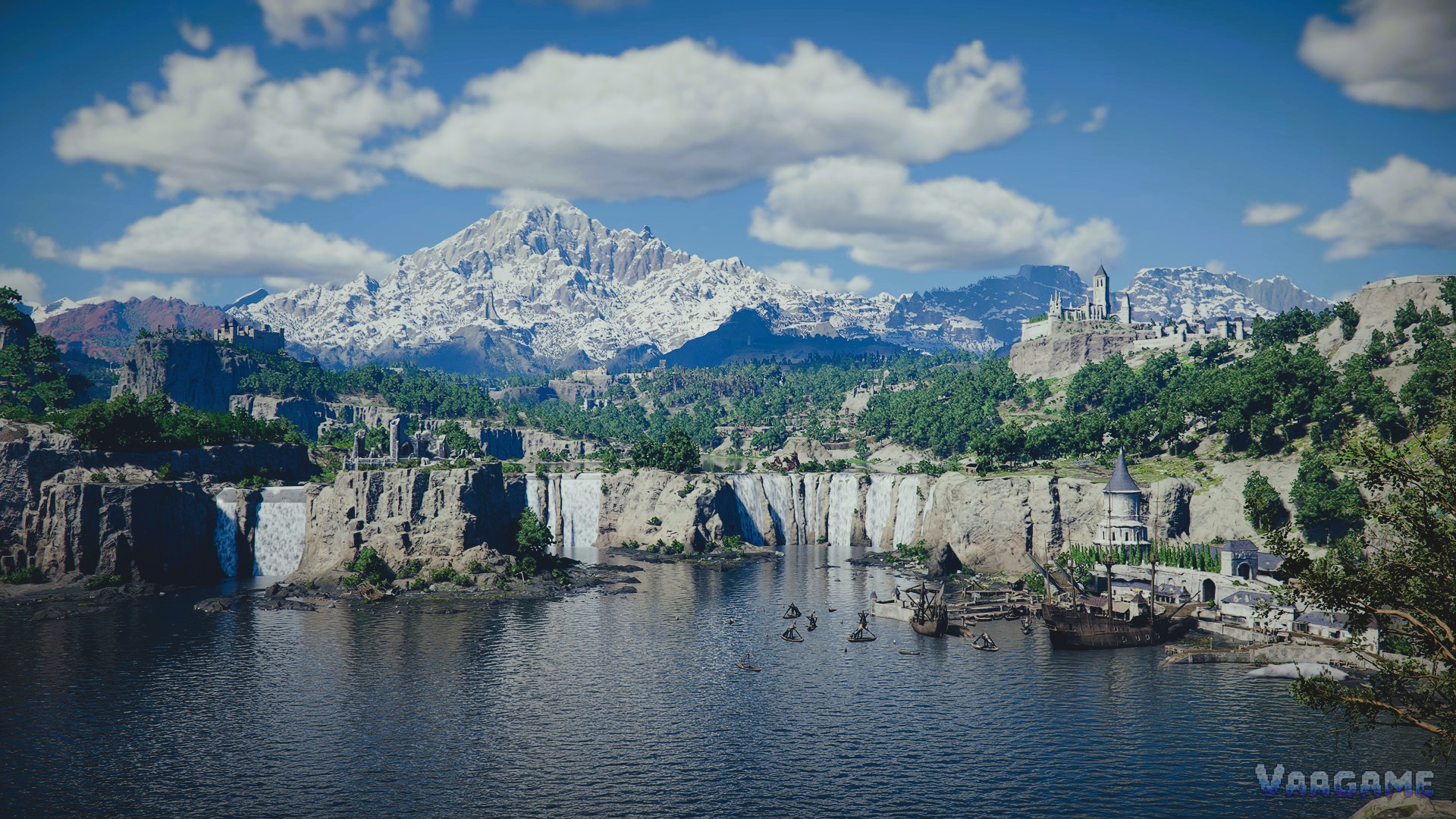
Collecting in the base game of Crimson Desert looks like one huge list until you see the systems underneath it. There are bells that reveal the map, cressets that double as fast travel points, ruins that hide cressets behind puzzles, sealed artifacts that unlock whole challenge families, and equipment and horses that are collections in their own right. Learn the systems first, and the list stops looking impossible.
At a glance
Scope: Base game only. DLC ocean treasures, underwater mounts, and the Lumen swords are in the DLC guide.
Systems: 8 Hidden Bells, 60 secret places, 37 ancient ruins, sealed Abyss artifacts, special equipment, horses.
First move: Ring the bells. Community guides say ringing all 8 reveals the full map of Pywel.
Tracker: In-game Journal, then Challenges, plus the map itself as cressets and bells are activated.
Honesty note: Totals for bells, cressets, and ruins are community-reported, not published by Pearl Abyss. Your Journal is authoritative.
1. Start with the 8 Hidden Bells
Community guides call the 8 Hidden Bells the single most important collectibles in the game, for a practical reason: ringing all 8 reveals the full map of Pywel. Everything after that, cressets, ruins, sealed artifacts, and road encounters, gets dramatically easier once you can see the continent instead of guessing at fog. Do the bells before any dedicated sweep.
One bell needs a warning. Community guides report that the Pailune bell is story-locked and becomes accessible only after chapter 7, the Protector of Pailune section. If you are counting bells and one will not open, check your story progress before assuming you missed a location.
2. Secret places and Abyss Cressets: 60
Secret places are the backbone of base exploration. Community guides report 60 Abyss Cressets in total, each one a glowing pedestal or pillar in an elevated, hidden, or puzzle-protected spot. Interacting with a cresset completes its secret place challenge, grants an Abyss Artifact, and turns that spot into a permanent fast travel point. That triple payoff is why cressets are worth clearing region by region instead of chasing one at a time across the map.
Abyss Artifacts are not souvenirs. Community guides explain that they enhance character skills, and that artifacts also come from quests, bosses, exploration, and unsealing sealed artifacts. If your build feels starved of skill points, the missing points are usually sitting in unvisited cressets and unsealed artifacts, not in a shop you have not found.
Swipe horizontally to view all columns.
| System | What you get | Count and source |
|---|---|---|
Abyss Cressets at secret places | One Abyss Artifact plus a permanent fast travel point each | 60, community-reported |
Hidden Bells | Full map of Pywel when all 8 are rung | 8, community-reported |
Ancient ruins puzzles | An activated nearby cresset, plus its artifact and fast travel point | 37, community-reported |
3. Ancient ruins: 37 puzzles that guard cressets
Ancient ruins are a separate family from secret places, but they feed into it. Community guides report 37 ancient ruin locations, each requiring an environmental puzzle, and solving the puzzle activates a nearby Abyss Cresset. Ruins show on the map as white search areas with a question mark, though those search areas can also hold other points of interest, so a question mark is a lead, not a guarantee.
Puzzle types vary by ruin. Community guides describe tile-path puzzles, bell-order puzzles, checkerboard stone puzzles, and mechanism puzzles that use learned abilities such as Nature Snare and Blinding Flash. If a ruin will not open, the missing piece is usually an ability you have not learned yet or a mechanism you have not noticed, not a bug. Come back after the relevant story or ability progress.
4. Sealed Abyss Artifacts: pick them up along roads
Sealed Abyss Artifacts are the oddest collectible in the base game because they are not destinations. Community guides report 141 in total, found along roads, not marked on the map, appearing as purple icons on the minimap when nearby. You pick one up, unseal it inside your inventory, and it unlocks a challenge from the sealed artifact. That unlocked challenge is the point: sealed artifacts are keys to the mastery, combat, and life challenge families that the base achievements guide lists.
The efficient method follows from that. Ride roads instead of fast-travelling everywhere, watch the minimap for purple icons, and unseal promptly so the new challenges enter your Journal while you are still in the region. A dedicated sealed-artifact sweep at the very end is the slowest way to do this family, because you will be re-riding roads you already rode for no other reason.
5. Special equipment, horses, and the rest of the list
Grand Collector of Arms, the special equipment achievement, is a collection in its own right: special weapons and gear found through quests, bosses, and exploration. Player reports warn that artifacts are scarce and not enough to max every character set, so choose which sets to invest in rather than assuming a full collection will fund everything.
Horses work the same way. Tamer of Legends asks for all horse challenges, and the horses themselves are found, tamed, and managed through the stable and pet menu. Ride often, keep your mount close on open ground, and remember that faction quests tie to random mounted encounters: a horse collection built only by fast travel will stall.
Two smaller items round out the honest list. Hunting and life challenges, fishing, cooking, gathering, and crafting, are collections of routines rather than objects, and they feed the Ultimate Hunter and Natural Collector achievements. A hidden treasure map, reported in DLC coverage as 12 pieces, is mentioned here only as a community lead: this guide could not verify its piece count or reward from an official source, so do not plan a route around it until it is confirmed.
6. A route that works
Ring the bells first, except the story-locked Pailune bell, which waits for chapter 7.
Clear cressets and ruins region by region, so each new fast travel point shortens the next leg.
Ride roads and grab sealed artifacts as you go; unseal them promptly.
Check the Journal family by family after each region, not at the end of the game.
Save the last sealed-artifact sweep for the true leftovers only, after the Journal tells you what is actually missing.
Frequently asked questions
What should I collect first?
The bells. A revealed map makes every other family faster, and the Pailune bell is the only one that waits for story progress.
Are cressets and secret places the same thing?
They overlap closely: secret place challenges are completed by activating Abyss Cressets, and each cresset grants an artifact and a fast travel point. The achievement family is called secret places; the object in the world is the cresset.
Do I need the DLC for any base collectible?
No. Everything in this guide is in the base continent. DLC collectibles, ocean treasures, underwater mounts, and the Lumen swords, are separate and covered in the DLC guide.
Why does my Journal show challenges I cannot start?
Because its family is gated, usually by a sealed artifact you have not picked up or unsealed, or by story progress. Pick up road artifacts and advance the story before assuming a challenge is bugged.