

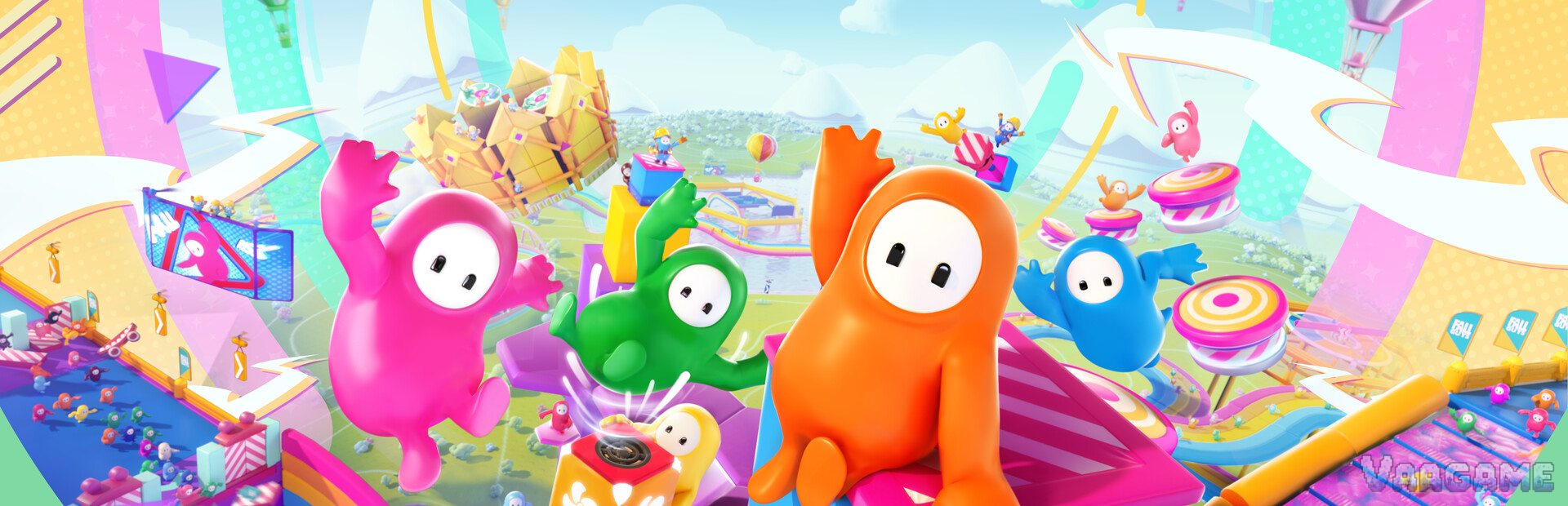
Fall Guys launched on a Tuesday morning in August 2020, free on PlayStation Plus, and by the morning more than 120,000 players were connected at once. The servers did not stand a chance — and the funniest part of the story is what the developers did next.
At a glance
Fall Guys (launched as Fall Guys: Ultimate Knockout), by Mediatonic and published by Devolver Digital, built in Unity.
Launched August 4, 2020, for PlayStation 4 and Windows, free on PlayStation Plus that month.
More than 120,000 players connected at once, past the team's 'absolute highest number of expected players for the entire day'.
Matchmaking switched off for 30 minutes to beef up servers; servers were shut down early on launch day because of overload.
About 1,500 negative and 3,000 positive Steam reviews at the time of writing — fans positive-bombed the score back to Mostly Positive.
Sources: Digital Trends' launch-day report, plus Kotaku and PCGamesN's same-day coverage.
Last verified: October 26, 2026.
Free on PS Plus, famous on Twitch, and far too popular
Fall Guys: Ultimate Knockout, Mediatonic's physics party battle royale, launched on Tuesday, August 4, 2020, for PlayStation 4 and Windows — free on PlayStation Plus that month. It arrived with a warning nobody priced in: through two betas it had become a surprise hit on Twitch, with streamers handing beta keys to viewers until the game cracked 200,000 concurrent Twitch views and became the top-streamed game on Twitch for a night. Launch-day demand was never going to come from beta numbers alone.
Connection issues started shortly after 8:00 a.m. ET, and according to the game's official account more than 120,000 players were connected at once — 120,000 concurrent users across both platforms, with Steam accounting for as many as 56,032 of them, according to SteamDB. The developers had to shut down servers early on launch day because of overload. Then came the famous tweet: matchmaking would switch off for 30 minutes so the team could 'BEEF the servers up to MAXIMUM BEEF', because they had 'basically skyrocketed right past our absolute highest number of expected players for the entire day'. Around noon, account creation for PS4 players was disabled; at 4:30 p.m. ET, matchmaking was switched off again while the team scaled up.
The dissection: the forecast measured the wrong thing
The failure was not that the servers were weak. It was that the forecast described a different game from the one that launched. The 'absolute highest number of expected players for the entire day' was blown past in the morning, because two demand sources stacked: PlayStation Plus, with a subscriber base of more than 40 million users getting the game free, and the Twitch fame from the beta key giveaways. Neither beta concurrency nor wishlists can capture a free-at-launch, streamer-amplified spike. And the failure mode mattered: this was not laggy gameplay, it was no gameplay — players could not get into matches, got kicked mid-match, lost games and in-game currency. A multiplayer game that cannot form matches has no game at all.
Then came the second-order failure. By 1:30 p.m. ET the official account was asking players to hold off on negative Steam reviews until they had actually played, but reviews were already calling the game a 'connection error simulator', and one reviewer wrote that they tried for over an hour and could not join a single game. At the time of writing there were about 1,500 negative reviews and 3,000 positive ones. And then the twist: about an hour later, fans positive-bombed the score back to Mostly Positive, and the account replied in disbelief and delight. The funny, honest tweets had built community goodwill, and goodwill turned into a real asset — but only because the servers actually came back.
What to do Monday morning
Forecast for your marketing, not your beta: add free-at-launch, streamer reach and platform subscriber bases to the number, then load-test at a multiple of that.
Build the off-switch before launch: a matchmaking pause, a queue, or a graceful-degradation mode you can flip in minutes — not something you invent while servers are down.
Decouple account creation from gameplay if you can: disabling PS4 sign-ups bought room, but it is a lever you want designed, not discovered.
Talk like a human, often: plain, funny, frequent status updates turned a review bomb into a positive bomb — but only because the servers actually came back.
Protect progress during outages: players who lost wins, XP and currency are the angriest reviewers — make sure a dropped match does not eat what they earned.