

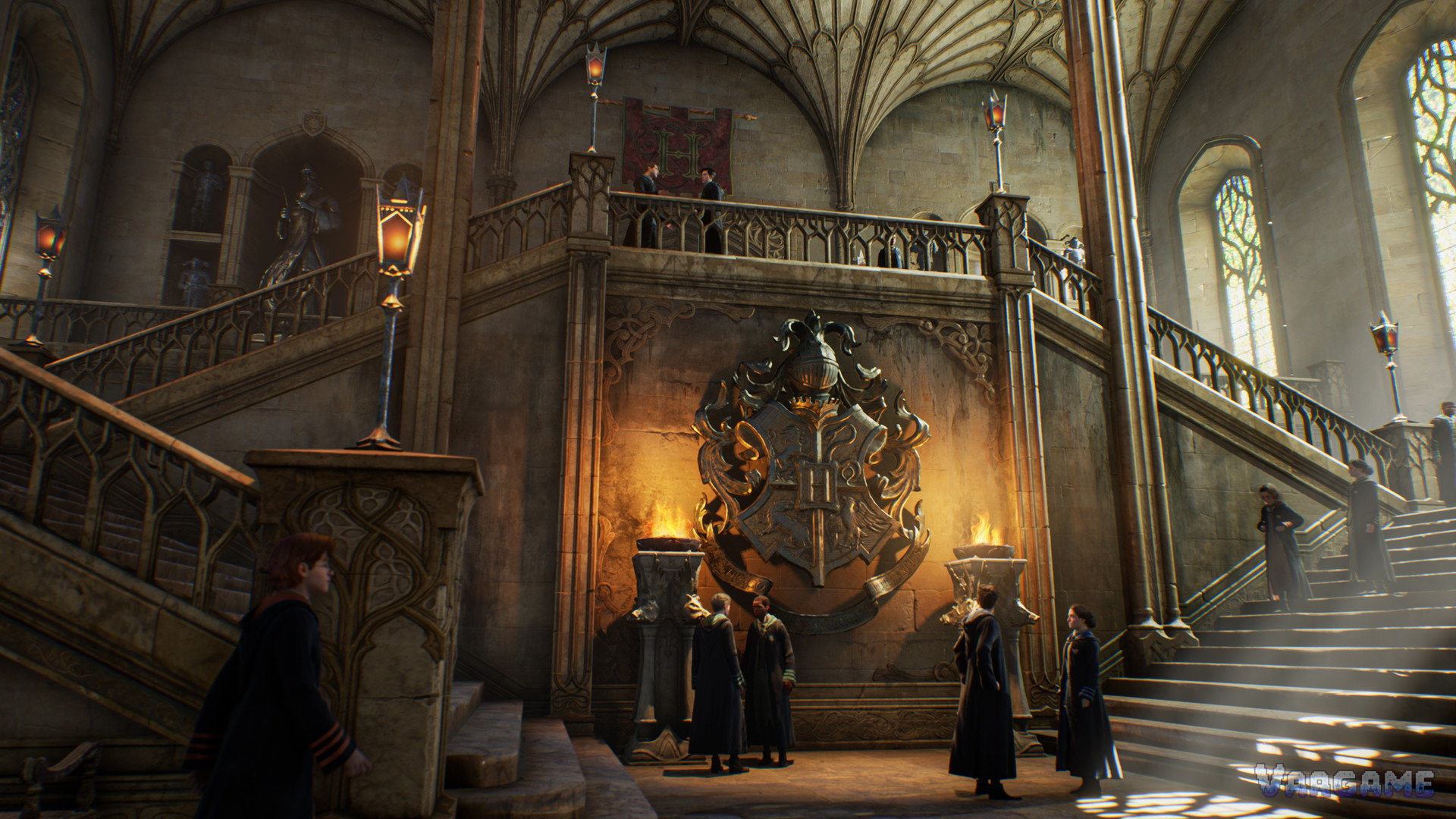
Hogwarts Legacy is getting DLSS 5 today. NVIDIA announced on November 3 that the game will update on Thursday, November 5, to add DLSS 5 with 3D-Guided Neural Rendering, in collaboration with Warner Bros. Games and Avalanche Software. The update is free, and it adds a Neural Rendering toggle in the graphics settings. One caution on timing: as of 15:15 CST on November 5, no separate patch notes from Avalanche Software or Warner Bros. Games had appeared, so November 5 is NVIDIA's announced date, not a patch we have independently confirmed as live. Check Steam for the update before assuming it has landed.
At a glance
What: DLSS 5 with 3D-Guided Neural Rendering arrives November 5, 2026, per NVIDIA's November 3 announcement.
Cost: a free game update. After updating, enable the Neural Rendering option in the graphics settings.
Hardware: GeForce RTX 50 Series GPUs and laptops, RTX Spark PCs, and GeForce NOW Ultimate. RTX 40 Series and older cards do not get native DLSS 5; cloud play through GeForce NOW Ultimate is the only path NVIDIA lists for them.
Driver: GeForce Game Ready driver 621.14 was released November 4, adding support ahead of the patch (Neowin, via WindowsForum).
Performance: NVIDIA claims up to 300 FPS at 4K on a GeForce RTX 5090 with max settings, DLSS 5, 6X Multi Frame Generation, Ray Reconstruction, NVIDIA Reflex, and ray tracing; up to 370 FPS at 1440p, without naming the card for that figure. No independent benchmarks have been published yet.
Status: the patch had not been independently confirmed live at 15:15 CST on November 5; no Avalanche or Warner Bros. Games patch notes were found.
What DLSS 5 changes in Hogwarts Legacy
DLSS 5 introduces 3D-Guided Neural Rendering, which NVIDIA describes as the final stage of the rendering pipeline: it takes the engine's finished frame and uses AI to add lighting and material detail, while the game's geometry, textures, and lighting buffers stay in place as the foundation. Developers get model controls to decide where the effect applies. In Hogwarts Legacy, Avalanche used those controls to boost environmental detail while preserving character identity, according to NVIDIA.
With Neural Rendering on, NVIDIA says detail and shadows in environments are enhanced, texture detail on characters is improved, shading and lighting are refined, and reflections are more vibrant. In Hogsmeade, NVIDIA's examples point to weathered roofs where creeping moss stands out from the shingles, and window boxes and potted flowers with more localised lighting and shadows. These are NVIDIA's descriptions of its own comparison images, not independent test results.
"The team at Avalanche Software worked closely with NVIDIA to add DLSS 5 Neural Rendering technology into Hogwarts Legacy for PC to ensure the best visual results while maintaining our artistic intent," said Jose Villeta, Director of Software Engineering at Avalanche Software. "This allowed us to iterate and tune environments, tone and skin structural parameters in a manner that keeps the game true to the original vision."
With this addition, the game's full DLSS suite is now supported: DLSS Super Resolution, Multi Frame Generation, Ray Reconstruction, and NVIDIA Reflex alongside the new Neural Rendering option. The game already supported Multi Frame Generation and Ray Reconstruction before this update.
How to turn it on
Update the game on Steam, then open the graphics settings and enable the Neural Rendering option. NVIDIA also recommends enabling DLSS Super Resolution under Upscale Type, DLSS Multi Frame Generation under Frame Generation, NVIDIA Reflex under Low Latency Mode, and DLSS Ray Reconstruction if ray tracing is on. Install GeForce Game Ready driver 621.14 first; it was released November 4, ahead of the game patch.
Who can use it, and who cannot
Native DLSS 5 is limited to GeForce RTX 50 Series GPUs and laptops, RTX Spark PCs, and GeForce NOW Ultimate. NVIDIA lists no RTX 40 Series or older card for local DLSS
5. Players on RTX 40 Series or older hardware can only reach DLSS 5 through GeForce NOW Ultimate cloud streaming, per NVIDIA and GameRant's reporting.
What NVIDIA claims about performance
NVIDIA's headline figure is up to 300 FPS at 4K on a GeForce RTX 5090, with max settings, DLSS 5, 6X Multi Frame Generation, Ray Reconstruction, NVIDIA Reflex, and ray tracing all enabled. At 2560x1440, NVIDIA claims up to 370 FPS, without naming the card. Both figures are NVIDIA's own benchmarks, and the 300 FPS figure depends on 6X Multi Frame Generation, which generates AI frames rather than rendering them natively. No independent benchmarks had been published at the time of writing, so treat the numbers as vendor claims, not measured results.
All three November games launch with NVIDIA's October 2026 Neural Rendering model, which NVIDIA says shrank the model's footprint by 24% to roughly 118 million parameters, cut 4K VRAM usage by 20%, and doubled performance versus the previous version. Again, these are NVIDIA's figures, not independent measurements.
The wider November rollout
Hogwarts Legacy is the first of three games NVIDIA named for DLSS 5 in November. War Thunder adds it in mid-November as part of the Eagle's Shadow major update, and Where Winds Meet adds it on November
23. Both are background only: neither date is a Hogwarts Legacy date, and neither game has DLSS 5 live yet.
What to watch next
The first thing to watch is whether the patch actually lands today and what it changes beyond the DLSS 5 toggle: NVIDIA's announcement describes a visual upgrade only, with no new quests, story content, or gameplay systems announced. The second is independent testing: once the patch is live, third-party benchmarks will show how much of the frame-rate gain is Multi Frame Generation and how the new lighting holds up in real play. Until then, the honest summary is that the update is scheduled, the hardware gate is narrow, and the performance numbers are NVIDIA's.