

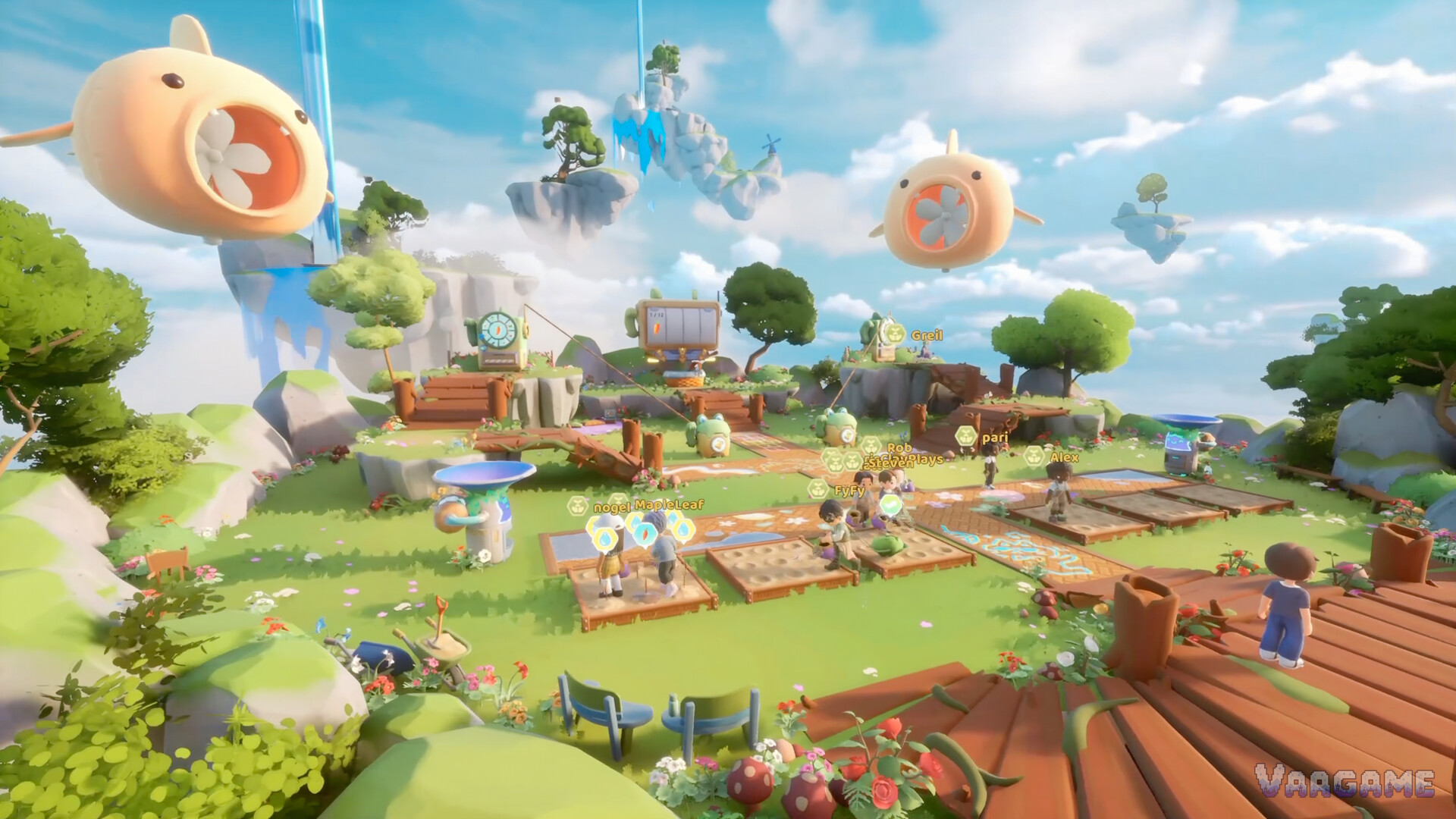
If farming feeds your loop and decorating makes it yours, community projects are what make it bigger. The official description says the mechanism outright: by contributing to shared builds, you unlock new resources, uncover hidden stories, and open up new islands to explore. That is not flavor text. It is the unlock system of the game, and a player who ignores it is playing a smaller Loftia than the one they bought.
Quick answer
Mechanism: contribute to shared builds, unlock resources, stories, and islands
Daily habit: the community farm minigame is shared work you can join in small sessions
Cosmetics layer: the Community Pass is tied to World Projects, and the shop sells cosmetics only
Pick one: push one project with your group, not five projects alone
At a glance
World Projects: large-scale community builds that grow the shared world
Community farm: a minigame for shared farming, listed in the Early Access content
Community Pass: tied to World Projects, per launch coverage of the official FAQ
Not verified at launch: project lists, contribution costs, and reward tables
Last verified: November 3, 2026, at the Early Access launch hour
1. World Projects: the shared builds that open the world
World Projects are the large-scale version of the neighborhood idea. Your island links into neighborhoods, and neighborhoods contribute to projects that change the shared world: new resources appear, hidden stories surface, and new islands open. The practical consequence for a new player is a choice about where to put surplus. A farm that produces extra crops and a crafter with extra materials have a destination now, and the destination is not a bigger pile in storage. It is a project that turns surplus into access, and access is the one currency in Loftia that cannot be farmed alone.
2. The community farm: shared work in small sessions
The Early Access notes list the community farm minigame alongside adventure islands as shared content you can spend time on with other Loftians. The minigame framing matters: this is not a second full-time farm, it is a shared activity sized for a session, a few plots, a few other players, a visible result. Treat it as the daily habit of community play: show up, contribute, leave the plots better than you found them, and come back tomorrow. The players who burn out on community content are usually the ones who treat every shared activity like a job; the minigame label is the game telling you not to.
3. The Community Pass and the cosmetics line
Launch coverage of the official FAQ describes a Community Pass tied to World Projects, and a Backer Boutique shop that sells cosmetics. Keep the two lines separate in your head, because the game does. Projects are progression: they unlock resources, stories, and islands. The pass and the shop are cosmetics: they change how things look, not what you can reach. If a purchase ever promises access, check it against that line, because the official materials draw it clearly: the shop sells cosmetics only, and access comes from contributing, not from paying.
4. How to pick a project: one, together, to completion
Step 1: ask your neighborhood what it is already pushing, and join that, rather than starting alone
Step 2: bring something real, crops, materials, or time, on a schedule you can keep
Step 3: finish it, and notice what it unlocked, because the unlock is the lesson for the next project
One project to completion teaches more than five projects sampled, because only completion shows you the unlock: the resource, the story, or the island that was not there before. Sampling teaches you menus. Completion teaches you the game. That is why this guide repeats the same advice in every community section: pick one, together, to completion.
Frequently asked questions
Do I have to join World Projects to progress?
No single project is required, but the unlock mechanism itself matters: new resources, stories, and islands come from shared builds. Skipping all of them means playing a smaller world.
Does the Community Pass unlock areas?
No. Per launch coverage of the official FAQ, the pass is tied to World Projects as a cosmetics layer, while access itself comes from contributing to shared builds. The shop sells cosmetics only.
What rewards do projects give?
The confirmed rewards are new resources, hidden stories, and new islands, per the official description. Exact project reward tables are not published in verifiable form at launch, and this guide does not invent them.