

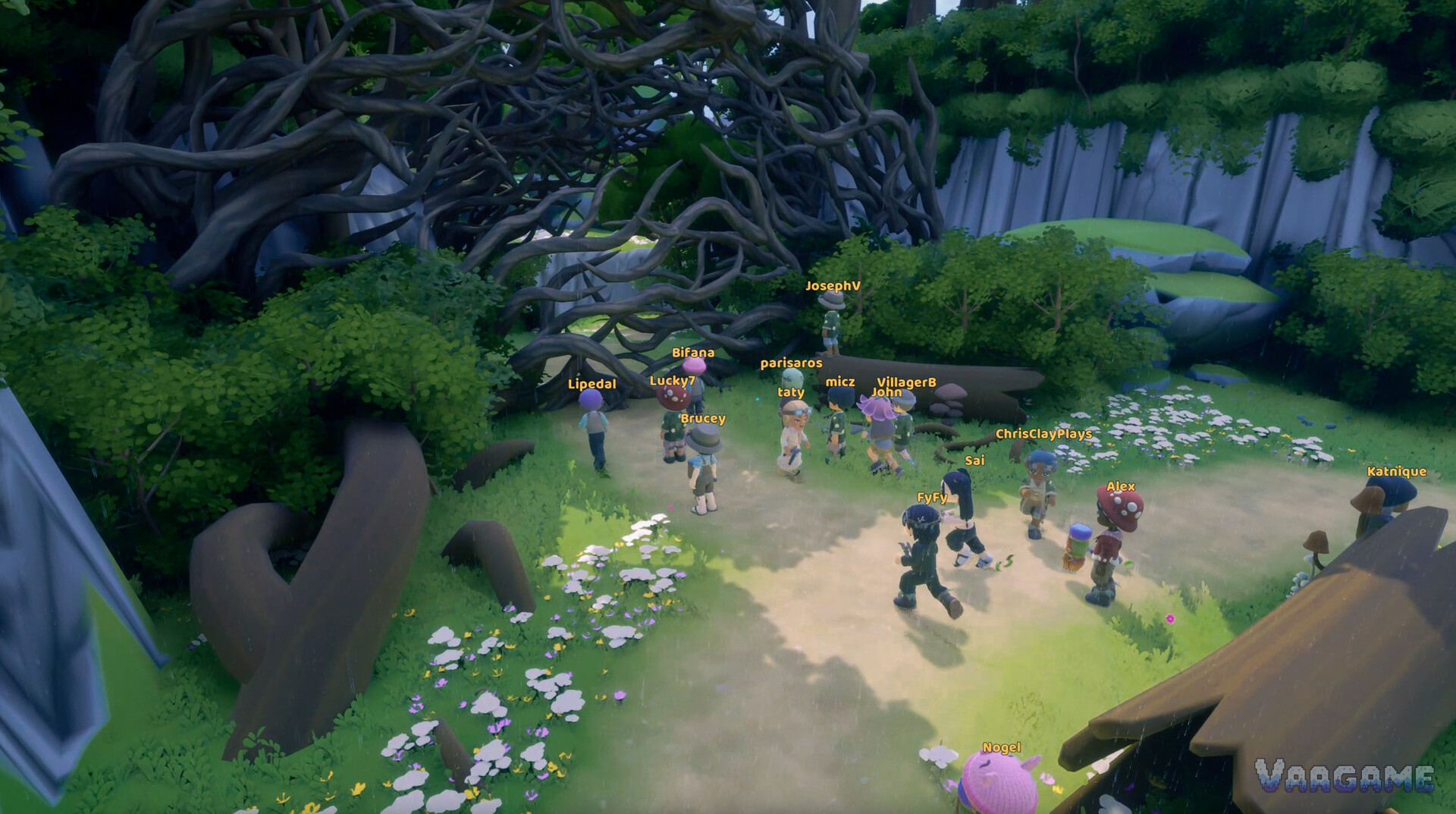
Co-op in Loftia starts before you ever join a party. It starts the moment you log in, because the world is shared: other players are in the city with you, your island links into their neighborhoods, and the farm and projects you touch are shared work. Group quests are the loudest part of co-op, but they are not the whole of it, and a player who understands the quiet parts, neighborhoods, shared farms, shared builds, will enjoy the loud parts more.
Quick answer
Shared by default: the world, the city, and neighborhoods are shared even when you play solo
Group quests: join when you want, at your own pace, not as a requirement
Buy per platform: a Steam copy does not unlock Epic, and each platform is a separate purchase
Cross-play: not promised at launch, reported as in testing, so do not buy across platforms for it
At a glance
Co-op shape: shared world plus group quests, with solo play fully supported at your own pace
Online-only: an internet connection is required no matter how you play
Platforms: Steam and Epic on PC and Mac at launch; Switch in 2027
Not verified at launch: party size limits, group quest reward tables, and cross-play timing
Last verified: November 3, 2026, at the Early Access launch hour
1. How co-op works: shared world first, party second
The official description gives the structure in one line: create your own floating island and link up with others to form neighborhoods, then decorate, farm, craft, and spend time together in shared spaces. Group quests sit on top of that: venture beyond the city to scavenge in abandoned factories, solve puzzles, and take on group quests across different biomes, teaming up when you want or exploring at your own pace. The order matters. If you treat co-op as only the party layer, you will miss the neighbor layer that makes parties work: the island you visit, the farm you share, the project you both contributed to. Parties are events; neighborhoods are the place events happen.
2. Before you start: five things to agree with friends
Platform first: play on the same platform, because cross-play is not promised and purchases are per platform
Pace second: agree whether the group rushes quests or wanders, because Loftia rewards both and punishes neither, but not at the same time
Island rules: who can build where, and what shared storage means, before anyone places anything
Project picks: choose one community project to push together, not five to sample
Solo time: agree that solo sessions are normal, because the game supports them and the world stays shared
The platform point is the only one with money attached, so it comes first. Launch coverage of the official FAQ reports that you need to purchase the game on each platform you wish to play it on, and that cross-play is not promised yet, with testing reported. Buying on two platforms hoping they connect is a purchase decision made on a hope, and this guide will not recommend it. Play where your friends already are, and let cross-play arrive as good news rather than as a rescue plan.
3. Co-op etiquette for a cozy shared world
Cozy co-op has etiquette because the world is shared and the stakes are social, not mechanical. Do not harvest a shared plot bare without asking, do not redecorate a shared space unilaterally, and do not rush a friend through a quest they are enjoying slowly. The game gives you no fail state for rudeness, which is exactly why rudeness is the only real griefing available: in a world without combat, the way you treat shared things is the game.
Frequently asked questions
Can I play Loftia entirely solo?
Yes, at your own pace, but the world stays shared and online-only. Solo means no party requirement, not a private world.
Do my friends need the game on the same platform?
At launch, yes, effectively. Cross-play is not promised, and purchases are per platform, so plan around playing together on one platform.
Are group quests required for progression?
No. Group quests are something you join when you want, and skills, farming, and community work all progress without them. They add to the loop; they do not gate it.