

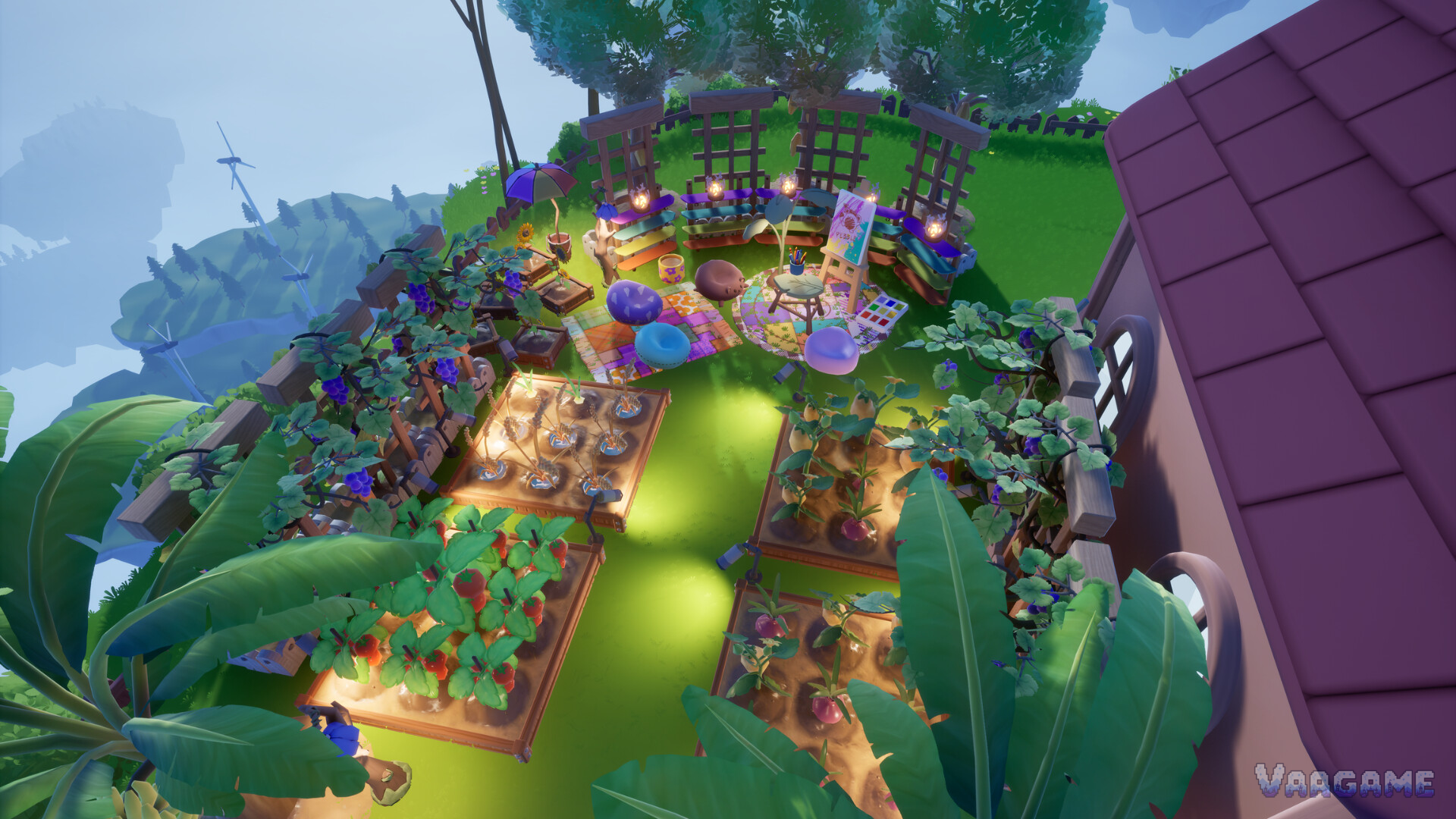
Farming in Loftia is not a side activity you do between quests. It is one of the three legs the whole loop stands on, next to crafting and community work, and it is designed around a single idea: grow food and materials with renewable energy, in systems that look like the solarpunk world they belong to. Hydroponics, aquaponics, and trellis farming are the three named methods, solar panels and batteries are the power behind them, and the weather is the variable you plan around. Get those four facts right and the rest of farming is layout and habit.
Quick answer
Three methods: hydroponics, aquaponics, and trellis farming, all named in the official description
Power rule: tools and stations draw battery charges from renewable energy, so charge before big farming sessions
Weather rule: solar efficiency moves with the sky, with demo coverage reporting about 99 to 100 percent on clear days and around 45 percent in light rain
First farm order: one working plot, then a second method, then scale, not three systems on day one
At a glance
What farming is for: food for cooking, materials for crafting, and supply for community work
Methods: hydroponics, aquaponics, trellis farming
Energy: sun, wind, and rain renewables; handheld batteries charged at panels
Not verified at launch: individual crop names, growth times, and yield numbers are not published in verifiable form
Last verified: November 3, 2026, at the Early Access launch hour
1. The three methods, and what each one is for
Swipe horizontally to view all columns.
| Method | What it looks like | Why it matters |
|---|---|---|
Hydroponics | Crops grown in water-based setups rather than open soil beds | Compact growing that fits island and rooftop space |
Aquaponics | Fish and plants in a linked system, each feeding the other | The most solarpunk method: waste becomes input, not trash |
Trellis farming | Climbing crops on frames, shown clearly in home garden shots | Vertical growing that saves ground space for other plots |
Do not read that table as a tier list. The official description names all three as the farming identity of the game, and nothing published at launch ranks one above the others or gives exact yields. The practical reading is spatial: trellis farming goes vertical, hydroponics goes compact, aquaponics links two productions into one loop. A good first farm uses the method that fits the space you have, not the method a guide calls best without numbers to back it up.
2. Energy is part of farming, not a separate system
The official description ties tools to renewable energy generated from the sun, wind, and rain, and demo coverage fills in the mechanism: crafting and other actions draw battery charges, and you charge a handheld battery at a panel and spend it at your stations. For farming, that means the farm has a power budget as well as a space budget. A big planting or crafting session with an empty battery stops the same way a station with no materials stops, and the fix is the same kind of planning: charge first, check the sky, and remember that demo coverage reports clear skies at about 99 to 100 percent panel efficiency and light rain at around 45 percent. Those figures are demo-coverage figures, and they are useful as a planning habit, not as a promise for every panel.
3. First farm order: one plot, one method, then scale
Step 1: one working ground plot near your home, planted and harvested once
Step 2: a second method that fits your space, trellis if ground is tight, hydroponics if you want compact beds
Step 3: link the farm to cooking, so crops become meals instead of inventory clutter
Step 4: bring surplus to community work, where shared builds turn produce into progress
The order protects you from the classic cozy-game trap: a farm that looks impressive on day three and produces nothing you actually use. A plot you harvest beats three systems you admire. Once the first plot feeds your cooking, scaling is a decision you can make with evidence, because you know what your loop consumes in a session and what it still lacks.
Frequently asked questions
Which farming method is best in Loftia?
None is ranked best in anything published at launch. Pick by space: trellis for vertical growing, hydroponics for compact beds, aquaponics for a linked fish-and-plant loop.
Do crops grow while I am offline?
No growth timing is published in verifiable form at launch, and this guide does not invent one. Plant, harvest, and observe your own plots, and treat any launch-week growth-time claim without a source as a guess.
What do I do with crops once they grow?
Cook with them and craft with them first, and bring surplus to community work. Crops that sit in storage are potential, not progress.