

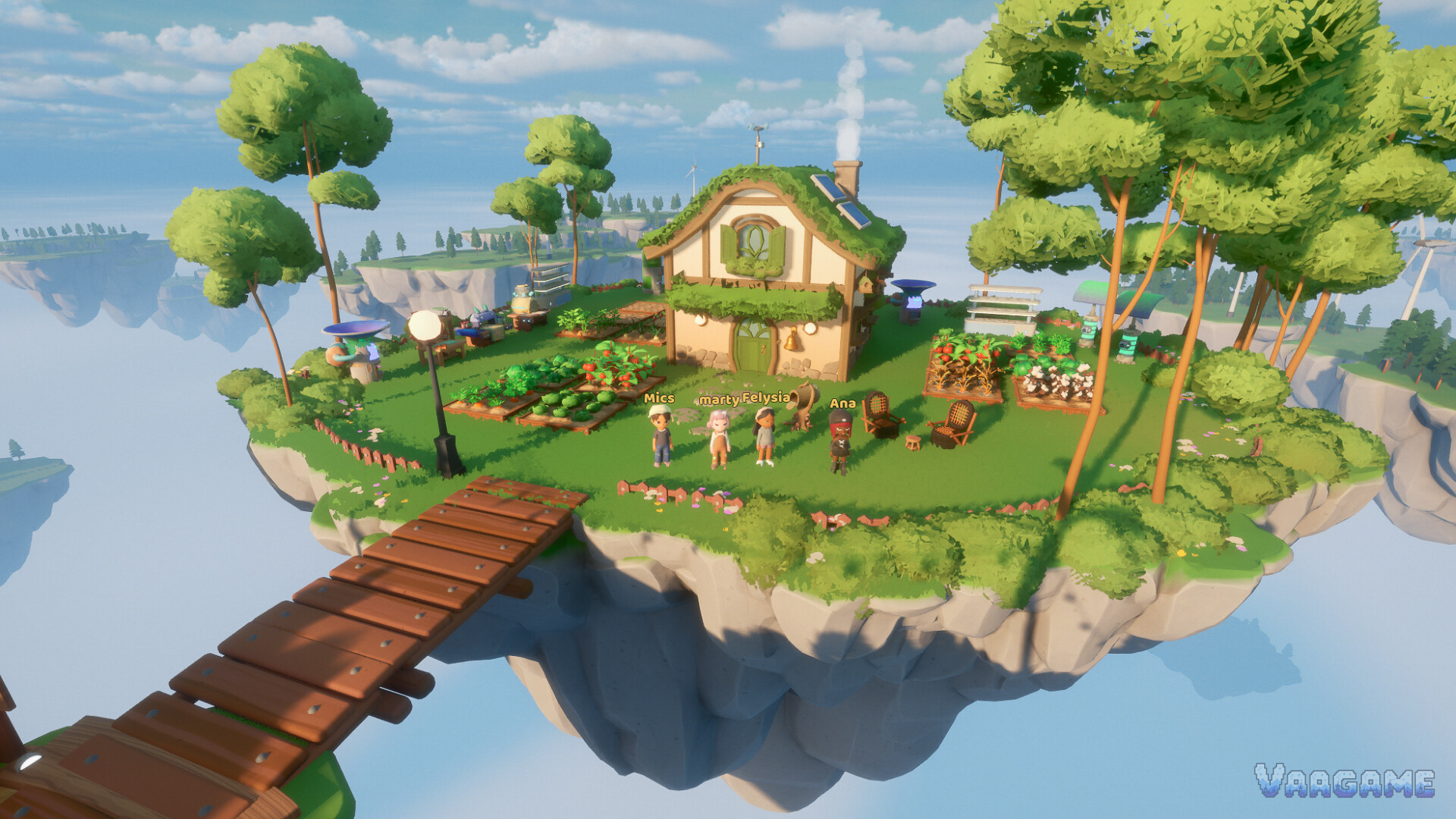
Design your island like a small town, not like a storage yard. A town has zones that make sense next to each other, roads that lead somewhere, an arrival that tells visitors where they are, and room left over for whatever comes next. An island built that way stays usable when the farm grows, the house fills up, and friends start arriving, and an island built as a pile of useful things does not.
Quick answer
Zones in order: home, farm, work, social, in that walking order from arrival
Arrival rule: one clear entrance, one visible home, one path that does not cross storage
Power rule: panels where the farm and workbench are, not where they look best in a screenshot
Growth rule: leave one empty zone for whatever Early Access adds next
At a glance
Island parts: home, farm plots, workbench and storage, panels, social corners, paths
Neighborhoods: islands link into neighborhoods, so the island edge is a social edge too
Growth context: Early Access lasts about a year, and 1.0 adds Study Cafe, Player Markets, and Clubs
Not verified at launch: island size limits, expansion costs, and build caps are not published in verifiable form
Last verified: November 3, 2026, at the Early Access launch hour
1. Zones: what goes where, and why
Swipe horizontally to view all columns.
| Zone | Put it here | Why |
|---|---|---|
Home | Near arrival, visible from the entrance | Visitors and you both orient by the house first |
Farm | Beside the home, with panels nearby | Harvest to cooking is a short walk, and power is close |
Work | Between farm and home, not at the far edge | Materials flow farm to bench to storage without crossing the island |
Social | A sitting corner with a view, reachable from arrival | Friends need somewhere to be, not just somewhere to pass through |
The table is a walking order, not a decoration theory. From arrival, you should meet the home, then the farm, then the workbench, then a place to sit. If your first step from arrival is a storage pile, the island reads as a warehouse, and every visit after that starts with an apology. Build the walk first, then the rooms.
2. Arrival and paths: the ten-second test
Stand at your island entrance and count to ten. In those ten seconds, a visitor should know three things: where the home is, where to sit, and where not to wander. If they know none of them, the island fails the ten-second test, and the fix is almost always a path, not more furniture. One clear path from entrance to home, one branch to the farm, one branch to the sitting corner, and no dead ends that dump visitors into storage.
3. Growth plan: leave room for the year ahead
Early Access is expected to last about a year, and the 1.0 plan already names Study Cafe, Player Markets, and Clubs. You do not know what those need in space terms yet, and that is exactly why the growth rule matters: leave one zone empty, or at least lightly used, for whatever comes next. An island that is full on day seven has nowhere to put the future, and the player who filled it will spend more time moving things than the player who left room. Empty space is not wasted space in a live game; it is the cheapest expansion you will ever buy.
Frequently asked questions
How big can my island get?
No island size limit or expansion cost is published in verifiable form at launch, and this guide does not invent one. Design with zones and one empty zone, and let expansion facts arrive with player mapping.
Should friends be able to reach my farm?
Yes, if you want shared work to happen. Community farm play and shared builds work better when friends can reach plots without crossing your storage, so put a path there on purpose.
What if I already filled my island?
Move storage and single-use decoration first, not the farm or the home. Freeing one zone beats rebuilding the island, and the empty zone rule starts working the moment you create it.