

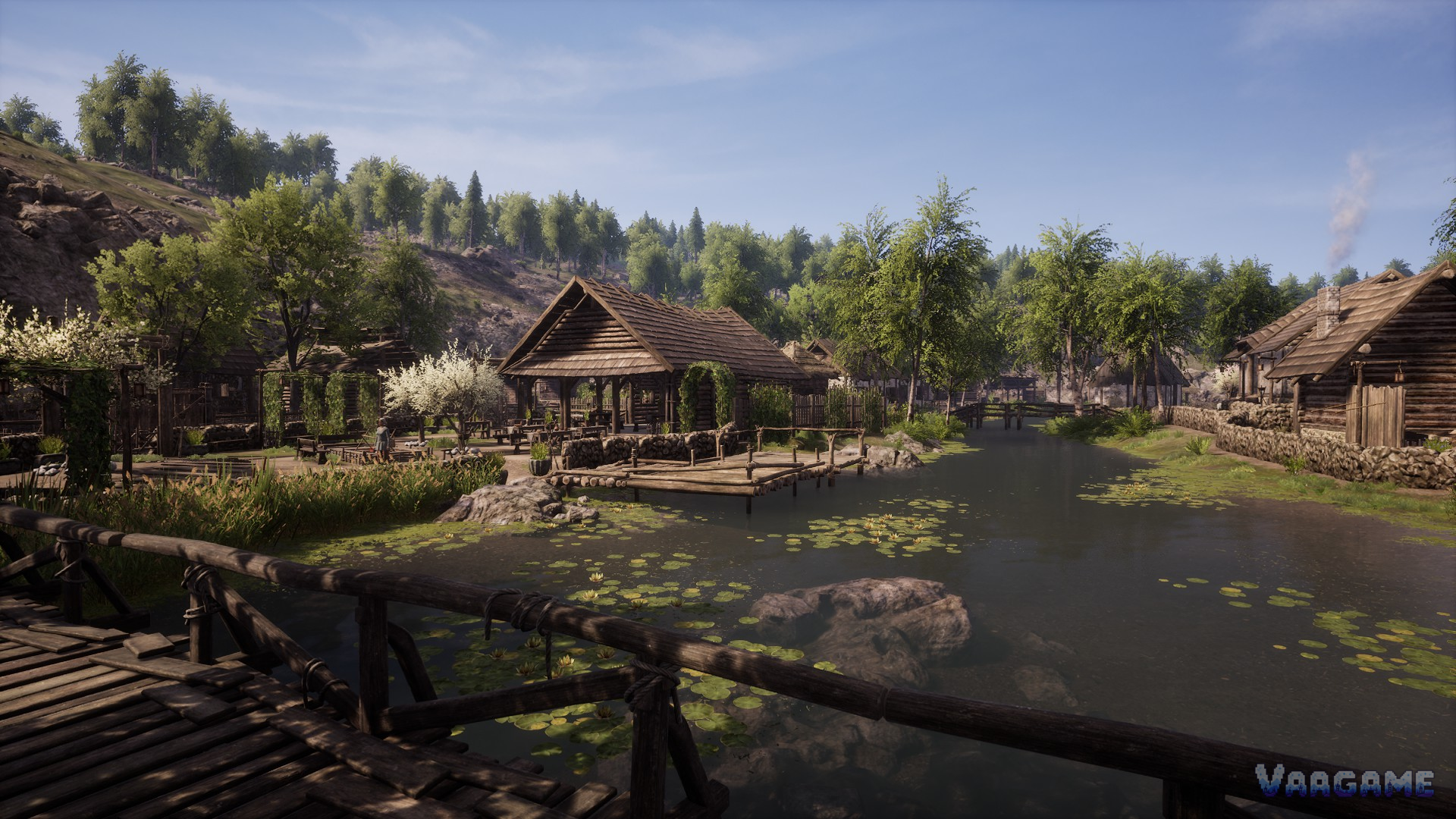
Villagers join your settlement when you talk to them, offer them a home, and give them work they can actually do, and they stay when their daily needs are met season after season. Medieval Dynasty is a village building game first and a survival game second, so recruitment is a long term investment rather than a one time hire. Talk to travellers and residents in other settlements, check what they are good at, and only invite people you can house and feed. Quests help twice over: they teach you the map and they introduce you to the people who may later move in.
At a glance
Game: Medieval Dynasty (PC)
Base price: $34.99, checked 2026-10-25, not on sale
Version: latest patch 2.7.0.4, 2026-10-07; checked 2026-10-25
Season length: 3 days by default, adjustable at game start
Villages: Valley is solo only; The Oxbow supports solo and co-op
Key goals: 50 inhabitants, 100 side quests, a wife and an heir
Quick answer
Recruit only when you have a free house, stored food and water, and a job ready for the newcomer.
Match the job to the person where you can, and keep warehouses stocked so workers can keep producing.
Do quests early: the main quest teaches the systems, and side quests build the contacts who later join you.
Watch mood over seasons: long term shortages and poor housing push people toward leaving.
Marriage and an heir protect the dynasty: the heir can later take over as player character.
1. Recruit in this order: talk, check, house, then invite
Start in other settlements, not in your own empty village. Walk up to residents and travellers, open conversation, and learn their skills and situation before you offer anything. A villager who fits an open job is worth more than a villager who arrives with no work to do, because idle hands still consume food and water every season.
Player guides summarise the recruitment threshold as about 70 percent affinity, and they describe housing and tools as part of the deal. Treat that number as a player guide summary, not an official rule, and use it as a practical check: if the person likes you and you can show them a real house and a real job, the invitation stands a far better chance. If either piece is missing, keep talking and building instead of spamming the invite.
Recruit one household at a time in the early game. Each new family needs a house, a share of stored food and water, and firewood for cold seasons.
2. Daily needs: housing, food, water and firewood come first
The official store description frames the survival test plainly: make sure neither you nor your population starve or die of thirst, by hunting, planting crops or trading resources. In village terms, that means food and water must sit in the right storage, not in your personal backpack, so villagers can draw on them day after day. Firewood belongs in the same routine, because cold seasons punish a village that only stocks food.
Housing quality matters beyond a roof. Player guides list house insulation, satisfied needs, preferred work and seasonal events among the factors that shape mood, and they describe a simple failure mode: when needs go unmet for a long time, mood falls and people may leave with their family. The exact official formula for mood has not been verified, so treat the list as a checklist for inspection rather than a set of guaranteed numbers.
Build a weekly style routine inside each season. Check storage levels, repair houses, restock firewood, and reassign workers whose jobs no longer match the season. Default seasons last only 3 days, so a shortage found on day one can still be fixed before the season turns, while a shortage found on the last day becomes a winter problem.
House ready before the invite, with room for a family
Food and water in storage, not only in your backpack
Firewood stocked before cold seasons arrive
A named job for the newcomer on arrival
3. Jobs: give people work they can do, then leave them to it
Jobs are the bridge between recruitment and production. A lumberjack feeds the building chain, a farmer feeds the food chain, and a cook turns raw harvest into meals that last. When you assign work, look at the person's strengths first and the empty slot second, because a worker in a fitting job produces steadily while a mismatched worker still costs daily upkeep.
Keep the supply chain visible. Workers need tools and raw materials in storage, and finished goods need somewhere to go. If a workshop stops, check storage and tools before blaming the worker, because most early stalls are supply stalls rather than people problems.
Reassign with the seasons. Field work peaks in planting and harvest seasons, while winter shifts the load toward firewood, crafting and repairs. A village that keeps summer assignments through winter wastes its best winter labour on fields that cannot produce.
4. Quests: main quest first, side quests for people and standing
The main quest is the tutorial with a story attached. It walks you through building a first house, finding a place in the world, and meeting the people who matter, and it ends with a dedicated achievement for finishing it. New players should follow it until the core loop feels natural, then branch into side work.
Side quests are where recruitment pays off. Travellers ask for deliveries, hunts and favours, and completing them raises your standing with people who may later accept an invitation. The game tracks this work with an achievement for completing 100 side quests, which tells you the intended scale: side quests are a long habit, not a short checklist.
Take quests you can finish with your current village. A delivery across the map with no horse and no road knowledge costs a whole season, while a nearby hunt or craft job fits between building days. Check the reward as well: coins, reputation and contacts all count, and a quest that only pays coins may still be worth it if it introduces a skilled villager.
Swipe horizontally to view all columns.
| Quest type | What it gives you | When to prioritise it |
|---|---|---|
Main quest | Story progress and core systems | From the first day until the loop feels natural |
Side quests | Standing, contacts and coins | Between building phases, near your village |
Recruitment talks | Future villagers with known skills | Whenever you visit another settlement |
5. Mood and leaving: read the warning signs early
Player guides describe mood as a score that falls when needs stay unmet and housing stays poor, and they report that a villager at minus 100 mood leaves the village with their family. That figure comes from player guides, not from an official formula, so use it as a warning level rather than a precise countdown. The practical signal is simpler: repeated shortages, cold houses and idle workers show up as trouble long before anyone packs up.
Fix the cause, not the symptom. A villager short of food needs stored food, a villager in a cold house needs insulation and firewood, and a villager in the wrong job needs reassignment. Gifts and conversation help relationships, but they do not replace a missing house or an empty storehouse.
Watch families as units. When one member leaves, the family often goes together, which can empty a house and a job at the same time. That is why recruitment should stay one household at a time: a single departure hurts, but it does not collapse a village built on many small households.
6. Family and dynasty: marriage, children and the heir
Marriage is part of the dynasty system, not a side activity. The store description promises that you can find true love, create a family, and pass your legacy to the next generation, and the achievement list backs that up with separate achievements for having a wife, having an heir, and playing as an heir. Plan a house with room for a family before the wedding, because a couple needs space to grow.
Player guides also warn that a wife whose affection falls to zero leaves with the heir. Treat that as a player guide summary, not an official rule, and keep the underlying habit simple: keep the household fed, housed and warm, and keep the relationship tended with gifts and time together. The exact number of years for an heir to grow up has not been verified from an official source, so this guide does not state a fixed number of years.
The dynasty goal is continuity. A village that only serves its founder ends with its founder, while a village with a family, an heir and many households can survive a bad winter and a bad season. That is the point of the settlement size achievement as well: reaching 50 inhabitants is proof that the village has grown beyond one household into a real town in the making.
Gap note: the official mood formula, the exact thresholds for leaving, and the number of years for an heir to grow up have not been verified from official sources. This guide states player guide figures only where labelled, and otherwise describes needs and mood in qualitative terms.
FAQ
How do I recruit my first villager?
Talk to people in other settlements, check what they are good at, and invite them only when you have a house, stored food and water, and a job ready. Player guides summarise the affinity threshold as about 70 percent, but housing and a job matter just as much as the number.
Why did my villagers leave?
The usual cause is unmet needs over several seasons: empty storage, cold housing, or a job that does not fit. Player guides report that very low mood leads to departure with the family, but the official formula has not been verified, so fix storage, housing and job fit first and watch whether mood recovers.
Are side quests worth doing?
Yes, for contacts and standing as much as for coins. Side quests introduce skilled people who may later join your village, and the game rewards completing 100 of them with an achievement, which shows they are meant to be a long habit.
What happens when I have an heir?
The heir continues the dynasty. The achievement list includes having an heir and later playing as an heir, so a family protects your village beyond the founder. The exact number of years for an heir to grow up has not been verified, and this guide does not state one.
Related guides
Medieval Dynasty Farming and Livestock Guide: Fields, Crops and Animals
Medieval Dynasty Skills and Technology Guide: Skill Trees and Tech Unlocks