

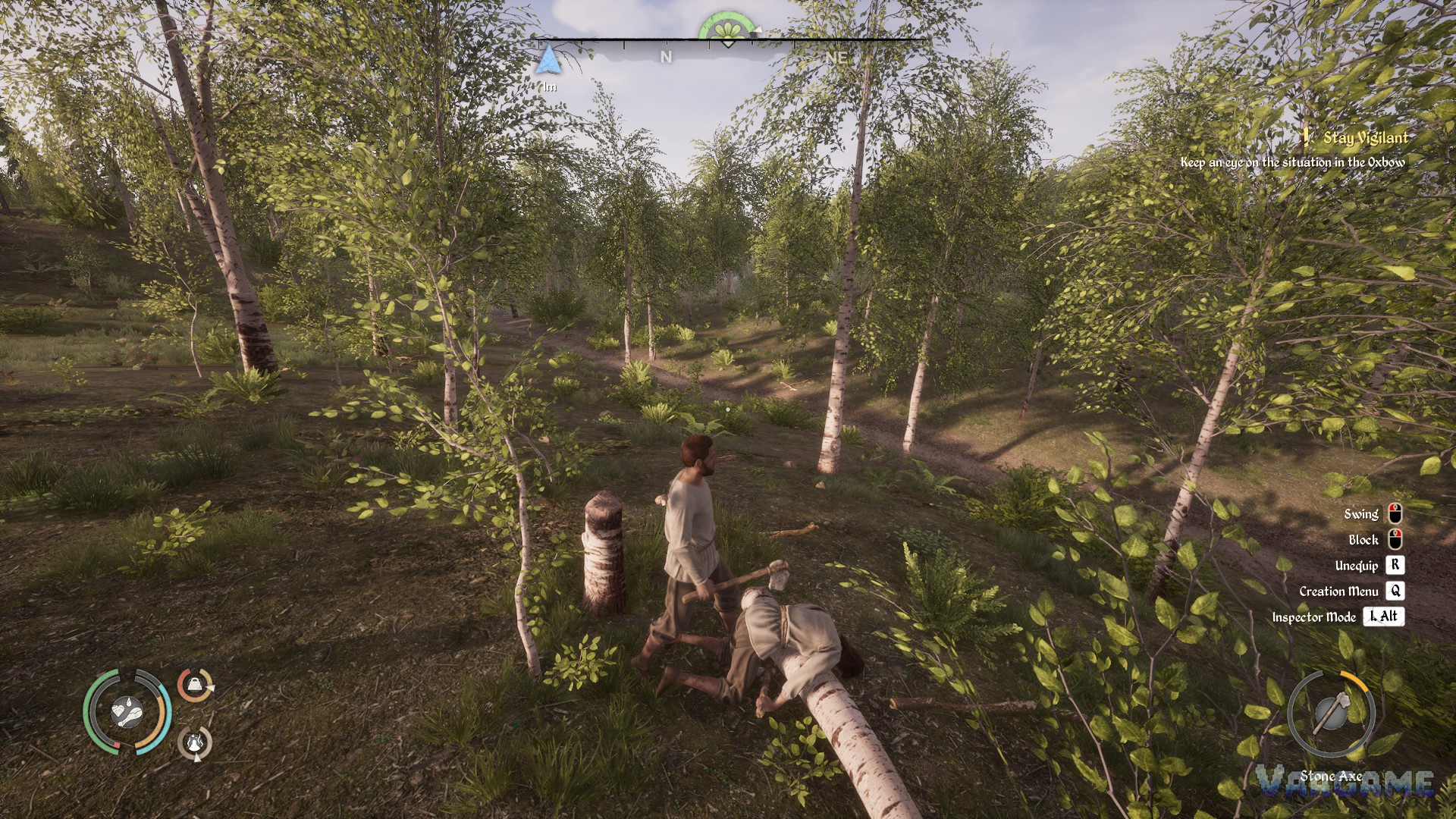
Level up by doing the work itself: chopping, hunting, farming, trading, surviving and crafting each raise their own skill toward level 10, while village activity feeds four Technology tracks that unlock new buildings and crafting options. The two systems reward different habits, and that split is the whole strategy. Your personal skills make you better at the jobs you do yourself, while Technology makes the whole village capable of more. Put early effort into the one or two jobs you repeat every day, and use the tech tracks to open the building or workshop your village is missing next.
At a glance
Game: Medieval Dynasty (PC)
Base price: $34.99, checked 2026-10-25, not on sale
Version: latest patch 2.7.0.4, 2026-10-07; checked 2026-10-25
Skills: 6 trees, each to level 10
Technology: 4 tracks, Building, Survival, Farming, Production
Season length: 3 days by default, adjustable at game start
Quick answer
Six skills reach level 10: Extraction, Hunting, Farming, Diplomacy, Survival and Production.
Technology has four tracks: Building, Survival, Farming and Production, unlocked by village activity.
Raise a skill by doing its work, and spend its points on that same line of work first.
Buildings unlock automatically once you earn enough tech points, while some item schematics must be bought with coins.
Do not chase every tree at once: one or two strong lines beat six half finished lines.
1. The six skills: one tree per kind of work
The skill list is confirmed by first hand achievement evidence: the game awards a separate Master achievement for reaching level 10 in Extraction, Hunting, Farming, Diplomacy, Survival and Production. That gives you a clean map of the whole system. Each tree caps at level 10, and each tree grows from its own kind of work rather than from a shared pool of experience.
Community wiki material describes the growth rule in familiar terms: do the matching action, gain experience in that skill, and earn skill points to spend as you level up. Treat the detailed perk by perk effects as unverified, because the factpack confirms the trees and the level cap but not a full perk table. The safe way to plan is by work type: pick the jobs you repeat daily, and expect those trees to lead.
Level 10 is a long goal, not a first season goal. With default seasons of only 3 days, early progress feels slow, and that is normal. A tree that reaches the middle levels while your village is still small already changes what you can do each day, so judge progress by daily work getting easier, not by the cap alone.
Swipe horizontally to view all columns.
| Skill tree | Grows from | Best early use |
|---|---|---|
Extraction | Gathering and resource work | Steady wood and raw materials |
Hunting | Hunting wild animals | Meat, hides and hunting income |
Farming | Field work and harvests | Reliable village food supply |
Diplomacy | Talking, trading and quests | Recruitment and better deals |
Survival | Wilderness and camp work | Self sufficiency away from home |
Production | Crafting and workshop work | Tools, goods and finished items |
2. Technology: four tracks that unlock the village
Technology is organised into four tracks, according to the community wiki: Building, Survival, Farming and Production. Village activity generates tech points on the matching track, and the tracks unlock different parts of the game. Building opens structures, Farming opens field and food options, Production opens workshops and crafted goods, and Survival opens the tools and options tied to life in the wild. The framework comes from the wiki rather than an official manual, so this guide uses it as a working map and labels the source level.
The unlock rule, again from the wiki, splits into two cases. Buildings unlock automatically once you have earned enough points on their track, while some item schematics must be bought with coins on top of the tech requirement. Two cited examples show the scale: a Smithy at rank one is listed at 50 Production tech points, and a Bow schematic is listed at 50 Survival tech points plus 100 coins. Use those as scale examples from the wiki, not as a complete unlock table.
Plan tech by the next bottleneck. If you cannot build the workshop you need, feed Production. If fields and food options lag behind your population, feed Farming. If you keep running out of houses, feed Building. Tech points follow village activity, so the fastest way to feed a track is to do more of that track's work for a season, not to wait for points to arrive on their own.
3. A practical order for the first seasons
Start with Extraction and one food line. Wood feeds houses, tools and firewood, so Extraction progress pays off in every other system. Pair it with Farming for a reliable food base, or with Hunting if you hunt often and your village is small. Either pairing gives you a daily loop that raises two trees at once.
Add Diplomacy as soon as you travel for quests and trade. Talking and trading are work too, and Diplomacy progress supports recruitment, which is the only way to turn a one person camp into a village with many hands. A player who only chops and hunts will hit a labour ceiling that no personal skill can fix.
Let Production catch up once you have a workshop. Crafting tools and goods turns raw materials into value, and Production tech opens the next tier of workshops. The same rule applies in reverse: buying advanced schematics before you have the workshop to use them wastes coins that could have bought a house or a season of food.
Season one: Extraction plus Farming or Hunting, every day
First trips out: add Diplomacy through quests and trade
First workshop: shift effort into Production and its tech track
Population growth: return to Building tech for more houses
4. Skills versus Technology: who benefits from each
Personal skills benefit the character doing the work. If you hunt every day, your Hunting tree leads, and your own hunts get smoother. If you farm every day, your Farming tree leads, and your own field work gets smoother. That is why the early choice matters: the game rewards the work you actually repeat, and it does not reward a plan you never act on.
Technology benefits the whole village. A new building unlocked on the Building track can house a family, a new workshop on the Production track can employ a villager, and a new Farming option can feed more people from the same fields. Villagers generate tech points through their activity as well, so a growing village feeds its own tech tracks faster than a solo camp can.
Use that split to divide your day. Spend your own labour on the skill line you want to lead, and spend your village planning on the tech track that removes the next bottleneck. When the two line up, for example a Farming skilled player plus Farming tech for better field options, the village food supply improves from both sides at once.
5. Achievements that track both systems
The achievement list gives you a free progress board. Six Master achievements mark level 10 in each skill, and nine development achievements mark settlement growth from Hermitage through Camp, Small Farm, Farm, Hamlet, Settlement, Village and Town to City. Together they show whether you are growing personally, growing the village, or both.
Do not chase the Master achievements as a first goal. They reward long play across many seasons, and a player who rushes one tree while the village starves will still lose villagers. Treat level 10 as proof of a habit you already have, and treat settlement growth as proof that the habit serves the village.
Gap note: full perk tables for each skill level, complete technology unlock tables, and full recipe values have not been verified. This guide states the confirmed trees, the level 10 cap, the four tech tracks and the two cited wiki examples, and does not invent further numbers.
FAQ
How many skill trees are there, and what is the max level?
There are six skill trees, Extraction, Hunting, Farming, Diplomacy, Survival and Production, and each caps at level
10. The cap is confirmed by six separate Master achievements, one per tree.
How does Technology unlock things?
According to the community wiki, village activity earns tech points on four tracks: Building, Survival, Farming and Production. Buildings unlock automatically at enough points, while some item schematics also cost coins, for example a Bow schematic listed at 50 Survival points plus 100 coins.
Which skill should I level first?
Start with Extraction plus one food line, Farming or Hunting, because wood and food are daily needs. Add Diplomacy once you travel for quests and trade, since recruitment is how a camp becomes a village.
Do villagers help Technology progress?
Yes, in the wiki framework, resident activity produces tech points on the matching track. That is why a growing village unlocks new buildings and workshops faster than a solo camp: more hands doing more tracked work.
Related guides
Medieval Dynasty Villagers and Quests Guide: Recruitment, Needs and Mood
Medieval Dynasty Hunting and Legendary Animals Guide: Wild Game Update