

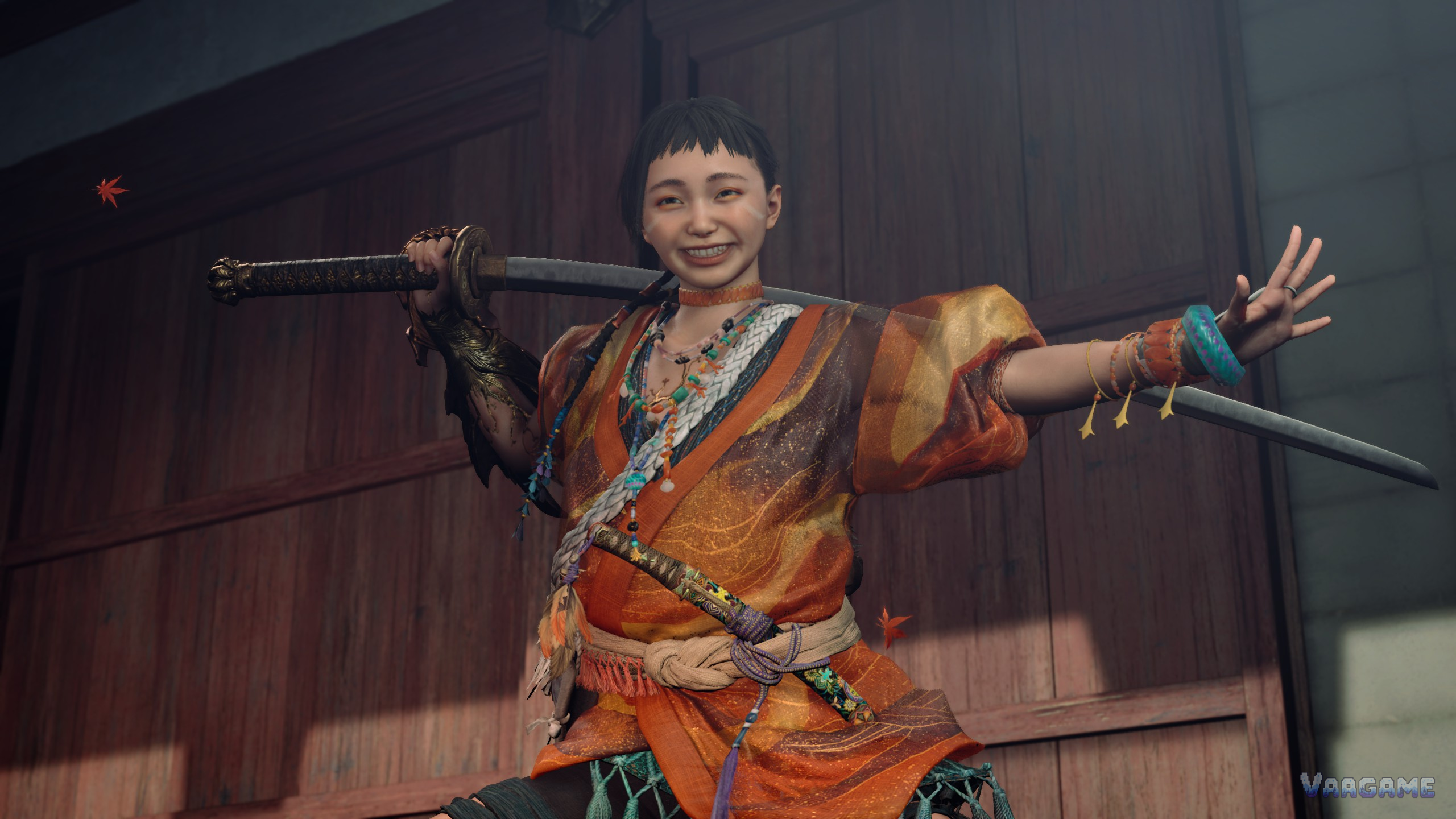
Onimusha: Way of the Sword is a samurai action game starring Musashi, a swordsman bound to an Oni Gauntlet that drinks the souls of defeated Genma. Combat rewards timing over button mashing: Parry interrupts attacks, Deflect drains enemy posture, and Issen punishes an enemy attack at the last possible moment. Learn those three tools, absorb souls for upgrades, and Kyoto opens up.
Quick answer
Parry interrupts an attack and creates an opening. Deflect mainly drains enemy Stamina, which is posture. Issen counters an attack at the last moment for big damage and extra souls.
Souls are your economy: red souls upgrade, blue souls power the Oni Armament, yellow souls heal.
Upgrade at the Spirit Mirror, not a blacksmith. Skills cost red souls plus Power or Oni Stones; equipment uses its own materials.
Story difficulty is more forgiving, with Action Prompts on and wider timing windows. Action is tighter and turns prompts off by default.
Carnage unlocks only after one completion, in New Game Plus, and locks for the whole run.
At a glance
Developer: Capcom
Genre: Samurai action, single-player
Platforms: PS5, Xbox Series X|S, Nintendo Switch 2, PC (Steam / Epic)
Price: Steam standard $69.99. Third-party tracking sampled to October 19, 2026 showed no discount; October 20 to 24 is unverified.
Reviews: About 30,000 reviews, 91% positive, per a third-party tracker dated October 19, 2026 (not a Steam store direct read).
Achievements: 52
Length: Main story about 20 hours (producer pre-launch estimate); main plus extras about 27 hours; platinum about 60 to 70 hours (community estimates).
1. About the game: the official picture
Onimusha: Way of the Sword is Capcom’s samurai action game, the series’ return after twenty years. You play Musashi, a swordsman bound to an Oni Gauntlet that drinks the souls of defeated Genma, fighting through Kyoto against Genma forces. It is single-player only, on PlayStation 5, Xbox Series X|S, Nintendo Switch 2, and PC (Steam and Epic). The Steam standard edition costs $69.99, Deluxe $79.99, and Premium Deluxe $89.99, with no Steam discount observed in third-party tracking sampled to October 19, 2026.
2. Combat basics: Parry, Deflect, Issen
Parry interrupts an incoming attack and creates an opening to strike back. Deflect mainly drains enemy Stamina, which is the posture gauge: when it empties, the enemy staggers and a Break Issen becomes available. Issen is the signature counter: attack in the moment just before an enemy attack lands, and you cancel it for big damage and extra souls. Holding guard Deflects or Parries attacks from any direction, including projectiles. This article stays at the beginner level; the full input and outcome comparison lives in our Parry versus Deflect guide, and the deep system guide covers posture management, Chain Issen, and Break Issen in detail.
3. Souls and the Oni Gauntlet
The Oni Gauntlet absorbs the souls of defeated Genma. Red souls are upgrade currency, blue souls power the Oni Armament, and yellow souls heal. Issen and Break Issen kills drop more souls than ordinary kills, which is why timing play pays twice: it wins fights and funds upgrades. The story unlocks Oni Strength, which breaks defenses and barriers, Oni Agility, which adds speed and wall-running, and Oni Awakening. The Oni Bow is your ranged tool and also triggers mechanisms. The game has seven Oni Armaments in total; guides disagree on how many come from the story versus chests, so this guide does not state a split.
4. Exploration and side content
Kyoto rewards looking around. Side content counts reported by guides are: Mysteries of Kyoto 8, Chance Encounters 18, Lion Dogs 36, and Genma Notes
23. Rescued Lion Dogs and Genma Notes carry into Carnage New Game Plus, so exploration in your first run is never wasted. Merchants handle buying, and Yorimasa’s Monument covers offering exchanges; there is no standalone blacksmith forge system, so do not go looking for one.
5. Progression: Spirit Mirror, skills, charms
Upgrades happen at the Spirit Mirror, under Enhance Equipment and Enhance Abilities. Basic Skills, Special Skills, Clothing, Sword, and Gauntlet each have their own track. Skills cost red souls plus Power or Oni Stones; equipment upgrades use their own materials, sword metal and clothing cloth. Charms number fifteen in total and are upgraded at the shrine in the southeast corner of Emma’s Hall, using red souls and Favor, after the main quest The Stage is Set at Kiyomizu. How many charms can be equipped at once is reported by only one source, so this guide does not state a number.
6. Difficulty and settings basics
Three difficulties exist. Story and Action are selectable at the start; Carnage appears only after one completion, in New Game Plus. Story is more forgiving: Action Prompts are on by default and Parry and Issen windows are wider. Action is tighter, with prompts off by default, and is the recommended pick for experienced action players. Carnage locks for the whole run and cannot be switched back, and Action Prompts are fully unavailable there. Capcom has published no exact per-tier damage numbers, so none appear here. The steps for changing difficulty live in our difficulty guide and are not repeated here.
Swipe horizontally to view all columns.
| Tier | Selectable when | Character |
|---|---|---|
Story | At the start. | More forgiving; prompts on by default; wider windows. |
Action | At the start. | Tighter; prompts off by default; for experienced action players. |
Carnage | After one completion, in New Game Plus. | Highest difficulty; locks for the whole run; no prompts. |
On PC, the official requirements need Windows 11, 16GB of RAM, DirectX 12, and 50GB of SSD space for both tiers. Minimum targets 1080p at 30fps on the Low preset with upscaling, on a GTX 1660 or RX 5500 XT. Recommended targets 1080p at 60fps on the Medium preset with upscaling, on an RTX 2060 Super or RX
6600. SSD space is required for both tiers, not only for Recommended. On Steam Deck, guides target 1280 by 720 at 30fps with FSR Balanced and ray tracing off and call the game playable, but no Valve Verified or Playable rating has been verified, so this guide does not claim one.
7. Mistakes to avoid
Do not hoard red souls forever. Upgrades at the Spirit Mirror are what turn close fights into comfortable ones.
Do not ignore posture. Attacking a full-posture enemy forever is the slowest way to win; Deflect and Issen drain it faster.
Do not set Uncapped frame rate before starting on PC. Community reports tie it to crashes; start capped, then adjust after saving.
Do not confuse True Onimusha with a true ending. It is the trophy for clearing Carnage difficulty.
8. What players say
Sample note: Steam’s public review API could not be read directly in this check (the request returned the Steam homepage instead of review data), so the positive excerpts below come from a SteamCozy snapshot of Steam reviews dated September 25, 2026, with snapshot helpful counts. Verbatim negative excerpts with confirmed Not Recommended thumbs could not be retrieved: SteamCozy’s page for this game lists only Recommended quotes, and critical community snippets found either still recommended the game overall or showed no thumb. The criticism paragraph below is therefore paraphrase from community discussion, not verbatim Steam reviews, and is labeled as such.
“I’ve been waiting for 20 years for another entry into this franchise. I’m happy to say Capcom killed it.” (Recommended, 1,110 helpful in the snapshot.)
“TL;DR: My first Onimusha game and a fantastic introduction to the series. Excellent combat, memorable characters, beautiful cinematic direction and surprisingly good character development make this one of my favorite action games in a while.” (Recommended, 417 helpful in the snapshot.)
“This game is a banger. Excellent graphics and optimization.” (Recommended, 817 helpful in the snapshot.)
Criticism themes, paraphrased from community discussion (not verbatim Steam reviews): repeated bosses and mini-boss reuse growing stale, final-boss and camera frustrations, and mediocre side content. Players raising these points often still recommended the game overall, which is why they are presented as themes rather than as negative-review quotes.
9. Official system requirements, explained
The Steam listing publishes both a minimum and a recommended tier, and both require Windows 11, 16GB of RAM, DirectX 12, and 50GB of SSD space. SSD space is a shared requirement, not a recommended-only one. The tiers differ in their targets and graphics cards, not in their platform requirements.
Swipe horizontally to view all columns.
| Tier | Official requirements | Target |
|---|---|---|
Minimum | Windows 11; 16GB RAM; DirectX 12; 50GB SSD space; GTX 1660 or RX 5500 XT. | 1080p, 30fps, Low preset, with upscaling. |
Recommended | Windows 11; 16GB RAM; DirectX 12; 50GB SSD space; RTX 2060 Super or RX 6600. | 1080p, 60fps, Medium preset, with upscaling. |
What this means in practice: the requirements are modest by 2026 standards, and the recommended tier is reachable with an RX 6600-class graphics card, which is exactly the value tier this guide’s hardware section targets. Low and Medium are the official target presets; High settings, DLSS and FSR details, and ray tracing options discussed in guides are recommendations, not an official tier table, so they are not presented as one here. On Steam Deck, guides target 1280 by 720 at 30fps with FSR Balanced and ray tracing off and call the game playable, but no Valve Verified or Playable rating has been verified.
10. Choosing hardware: a value build, honestly priced
Prices below were checked on October 25, 2026 through ASIN-level price trackers (pricehistory.app, CamelCamelCamel, Keepa public pages), never directly on Amazon, which blocks AI agents. Each price carries its tracker snapshot date. The honest headline first: a complete build total cannot be closed today. CPU, graphics card, and SSD prices have no valid current tracker price, partly because of an industry-wide NAND and SSD price spike in October 2026, so this section does not invent a total and does not reuse October 23 prices as today’s prices.
Swipe horizontally to view all columns.
| Part | Checked price | Note |
|---|---|---|
Motherboard: ASUS Prime B550M-A AC (AM4, mATX, DDR4, PCIe 4.0, WiFi), substitute for the MSI B550M PRO-VDH WiFi, whose tracker page has no current price. | $97.88, snapshot October 24, 2026; historical average $126.14. | Confirmed substitute. |
Power supply: Thermaltake Smart 500W 80+ White, substitute for the MSI MAG A550BN 550W 80+ Bronze, whose two ASIN listings have no current tracker price. Note the spec difference: 500W White, not 550W Bronze. | $39.99, snapshot October 20, 2026; historical average $39.48. | Confirmed substitute. |
Memory: TEAMGROUP T-Force Vulcan Z DDR4 16GB (2x8GB) 3200MHz CL16. | $149.99, snapshot October 24, 2026; historical average $76.32. Above the long-term average, in line with October’s high DDR4 price band. | Confirmed. |
Case: Thermaltake Versa H17 (mATX). | $49.99, snapshot October 23, 2026; historical average $55.51. | Confirmed, no anomaly. |
CPU: AMD Ryzen 5 5600G class (target). | No valid current tracker price. The 5600G box ASIN and all checked alternatives (5700G, 5600GT, 4600G) show blank or stale tracker prices. | Gap: do not fill with an estimate. |
Graphics card: RX 6600 8GB class (target). Meets the recommended tier (RTX 2060 Super or RX 6600). | No valid current tracker price. The ASRock Challenger D and PowerColor, Sapphire, MSI, and XFX alternatives all show blank or stale tracker prices. | Gap: do not fill with an estimate. |
Storage: 1TB NVMe (target). | No sane current tracker price. The WD Blue SN580 shows $298.00 on pricehistory (October 24 snapshot), far above its Camel Amazon average of $65.46 and historical high of $84.99, and 13 checked alternatives all show inflated October spike prices ($149.99 to $299.99). Wait for NAND prices to normalize rather than paying spike prices. | Gap: spike, not a normal price. |
Confirmed items subtotal: $97.88 + $39.99 + $149.99 + $49.99 = $337.85. That is a partial sum, not a build total: CPU, graphics card, and storage are excluded because they have no valid current price. Prices are roughly accurate tracker snapshots, labeled with their dates, and are not maintained daily.
FAQ
How do I change difficulty?
The steps live in our difficulty guide and are not repeated here. In short: Story and Action are selectable at the start, Carnage only after one completion in New Game Plus, and Carnage cannot be switched back mid-run.
What is the difference between Parry and Deflect?
Parry interrupts an attack and creates an opening. Deflect mainly drains enemy Stamina, which is posture. The full input and outcome comparison is in our Parry versus Deflect guide.
How long is the game?
Main story about 20 hours by a producer pre-launch estimate; main plus extras about 27 hours; a single-run full collection about 33 to 35 hours; platinum about 60 to 70 hours. The later figures are community estimates.
Is it Steam Deck Verified?
No Valve Verified or Playable rating has been verified. Guides target 720p at 30fps with FSR Balanced and ray tracing off and call it playable, but that is a guide target, not a Valve rating.