

over the hill hides a second game inside its driving: a wildlife compendium filled by photographing animals with the in-game camera, and a photography culture fed by achievements for golden hours, star fields and simple memories. It is also, by the launch data, one of the rarest completion pursuits in the game — the compendium's completion-tier achievements sat at a fraction of one percent in launch week. This guide covers how the camera and compendium work, how to find animals without a spawn table, and how to shoot the light the game rewards — method, not a species checklist we cannot verify.
At a glance
One camera, two jobs: The in-game camera registers animals into the wildlife compendium and serves as the photo mode
Registration: Spot an animal, photograph it, and it is logged — encounters are the content, not combat or collection
Finding animals: Read habitat — water, meadow edges, dawn and dusk — rather than grinding locations (there is no verified spawn table, and we will not invent one)
The light matters: Golden-hour and night-sky photography carry their own achievements (GoldenHour among them)
The long tail: Full compendium completion is one of the rarest completion pursuits in the game at launch — plan it as a companion to travel, not a grind
1. One camera, two jobs
The camera in over the hill is a working tool before it is a toy. Its first job is the wildlife compendium: the game's field guide, filled by encountering animals across both regions and photographing them to register the sighting. Its second job is the photography itself — the screenshots, the golden-hour experiments, the convoy portraits. The developer treats both as core: the official description lists the compendium among the game's systems, and the achievement set backs it with photography categories (memories, golden hours, star-watching) that reward simply being somewhere beautiful on purpose.
Practically, this means learning the camera early (the beginner guide puts a first animal photo in your first hour) pays compound interest: every later drive is also a compendium patrol, and every patrol makes the world denser.
2. How registration works
The loop is deliberately gentle:
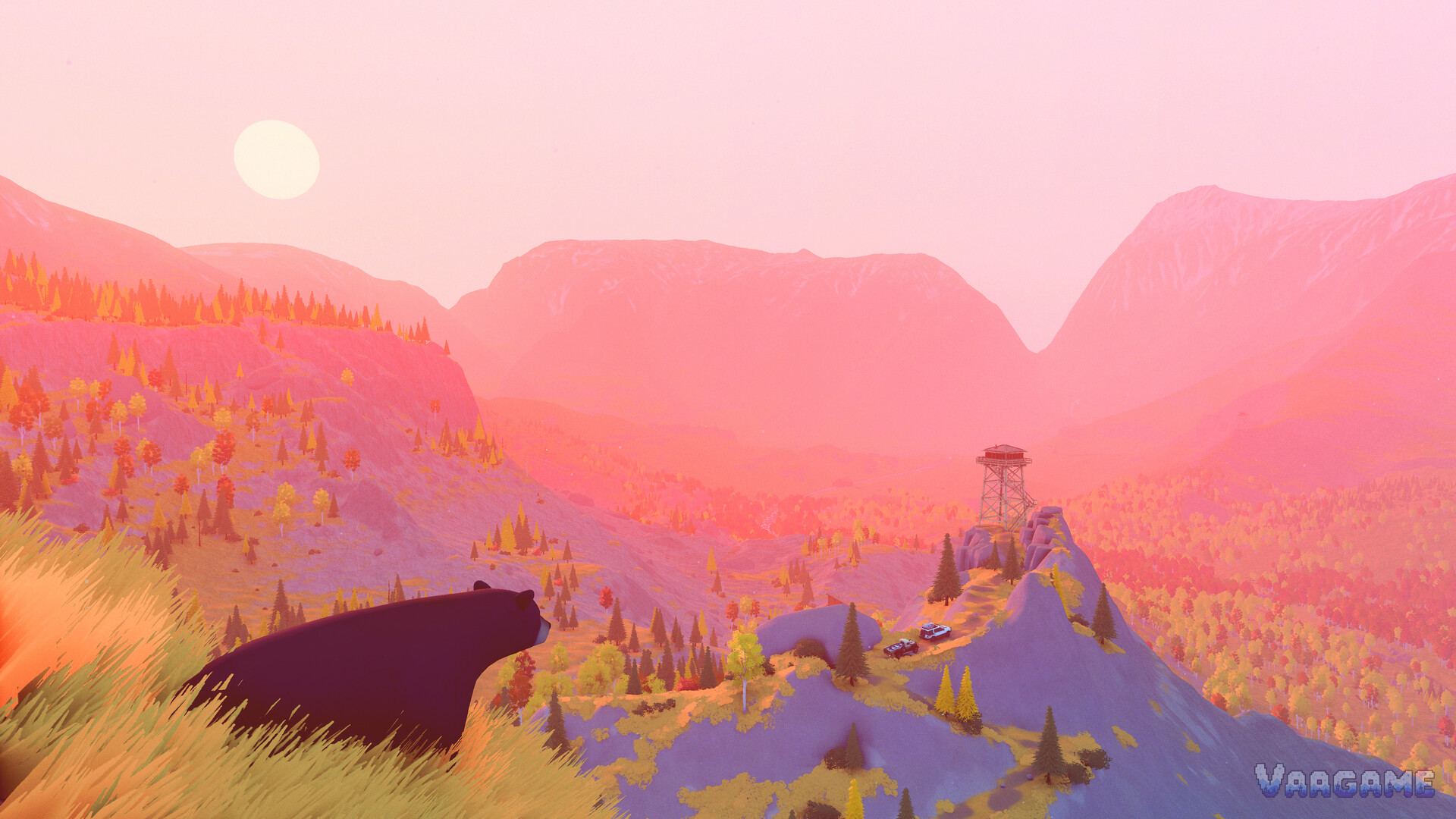
Spot. An animal in the world — the official imagery gives the emblematic case: a black bear standing in Valhallas meadow grass, entirely unbothered by your expedition.
Photograph. Frame it with the in-game camera; the sighting is the capture — no tranquilliser darts, no chase mechanics.
Registered. The compendium logs the entry, and the collection accrues across regions and seasons.
What the loop rewards is presence rather than reflexes: the animals are part of the living world the driving crosses, and encounters happen to travellers. The achievement ladder confirms the design in numbers — the completion tiers (the enthusiast- and naturalist-grade ends of the ladder) sat at 0.1–0.4% in launch week, the rarest territory in the whole 62-achievement set.
3. Finding animals: fieldcraft over farming
No verified spawn table exists for this game's wildlife, and any site printing exact animal locations in launch week is guessing in a confident font. What works instead is fieldcraft — the same habitat logic the real animals on these trucks' badges would follow:
Water draws life. Lakeshores, riverbanks and oases concentrate everything that drinks. The Canadian shallows and the Algerian oasis both qualify; drive them slowly.
Edges are richest. Meadow meeting forest, shore meeting scrub, dune meeting oasis — the seams between habitats are where encounters cluster in every real field guide ever written.
Dawn and dusk are the active hours. The game's day/night cycle is a real system here; schedule compendium patrols at the light changes, which conveniently are also the photography hours.
Slow down and stop. Encounters in a driving game belong to drivers at driving-game pace: walking speed, engine quiet in spirit, camera ready. The player crossing the meadow at travel speed meets the meadow's dust.
Expect the cast to change with the country, too. The compendium spans both regions, and desert water draws a different congregation than a Canadian shoreline — the oasis stop on a hauling run is worth a slow lap before you unload a single plank. Seasons shift the Canadian half as well: a compendium kept across winter country is a longer, quieter project than the autumn version, and the camera works in the snow exactly the same, which is to say the patience is the whole skill.
4. Shooting the light: golden hour and the night sky
The photography achievements sketch a curriculum. GoldenHour rewards the obvious-in-retrospect skill: being at a viewpoint when the light turns — which is a scheduling achievement as much as a camera one, and exactly what cabin time-advance exists for (the cabins guide covers the time system). The star-side achievements reward the desert night: the Milky Way over Algeria, a parked truck, lamps off. And the memory-making category blesses the ordinary version — photographs as the diary of a journey, taken because the convoy looked right against the cliffs.
Technique, such as it is, is composition plus timing:
Put the truck in the frame. Scale is the story in every official screenshot: small vehicle, enormous country.
Shoot the transitions. Dawn, dusk and storm-clearing are the game's three great lights; midday is for driving.
Use the landmarks. Watchtowers, aqueducts and arches are pre-built foregrounds. The game placed them like a photographer would.
5. The longest chase in the game
Calibration, to finish: the wildlife ladder's top end is, by launch-week data, one of the rarest completion pursuits in the game — rarer than finishing regions, rarer than the full fleet. That is not a warning; it is the compendium's role in the design. The fleet takes a campaign, the regions take expeditions, and the compendium takes residency — it completes for the player who lives in the world longest, camera ready, at the water at dawn. Treat it as the companion pursuit that quietly organises all the others, and it will never feel like a grind. It will feel like the game.
FAQ
How do I register an animal in the compendium? Photograph it with the in-game camera when you encounter it in the world. The sighting logs the entry — encounters are found by travelling, at the game's pace, not by hunting mechanics.
Where do animals appear? By habitat logic rather than fixed points anyone has verified: water edges, meadow-and-forest seams, and the active hours around dawn and dusk. This guide deliberately offers fieldcraft instead of a location list, because no verified location data exists yet.
What is GoldenHour? One of the game's photography achievements, rewarding golden-hour shooting. The practical skill is scheduling: use cabins to advance time, be at the viewpoint when the light turns, and let the camera collect what the timing earned.
How long does a full compendium take? It is the game's longest completion pursuit by the data: the compendium's completion-tier achievements sat at 0.1–0.4% unlock rates in launch week. Expect it to complete across a whole campaign of travel rather than in a dedicated weekend.
Related guides
over the hill Beginner's Guide: The Winch, Your First Upgrades and What To Do First
over the hill Valhallas Guide: Emerald Lake, Gimli Ridge and Asgard Mountain Routes
over the hill Algeria Guide: Desert Routes, Mesas and How To Reach High Places
over the hill Crates and Customisation: How Cosmetics, Colours and Accessories Work