

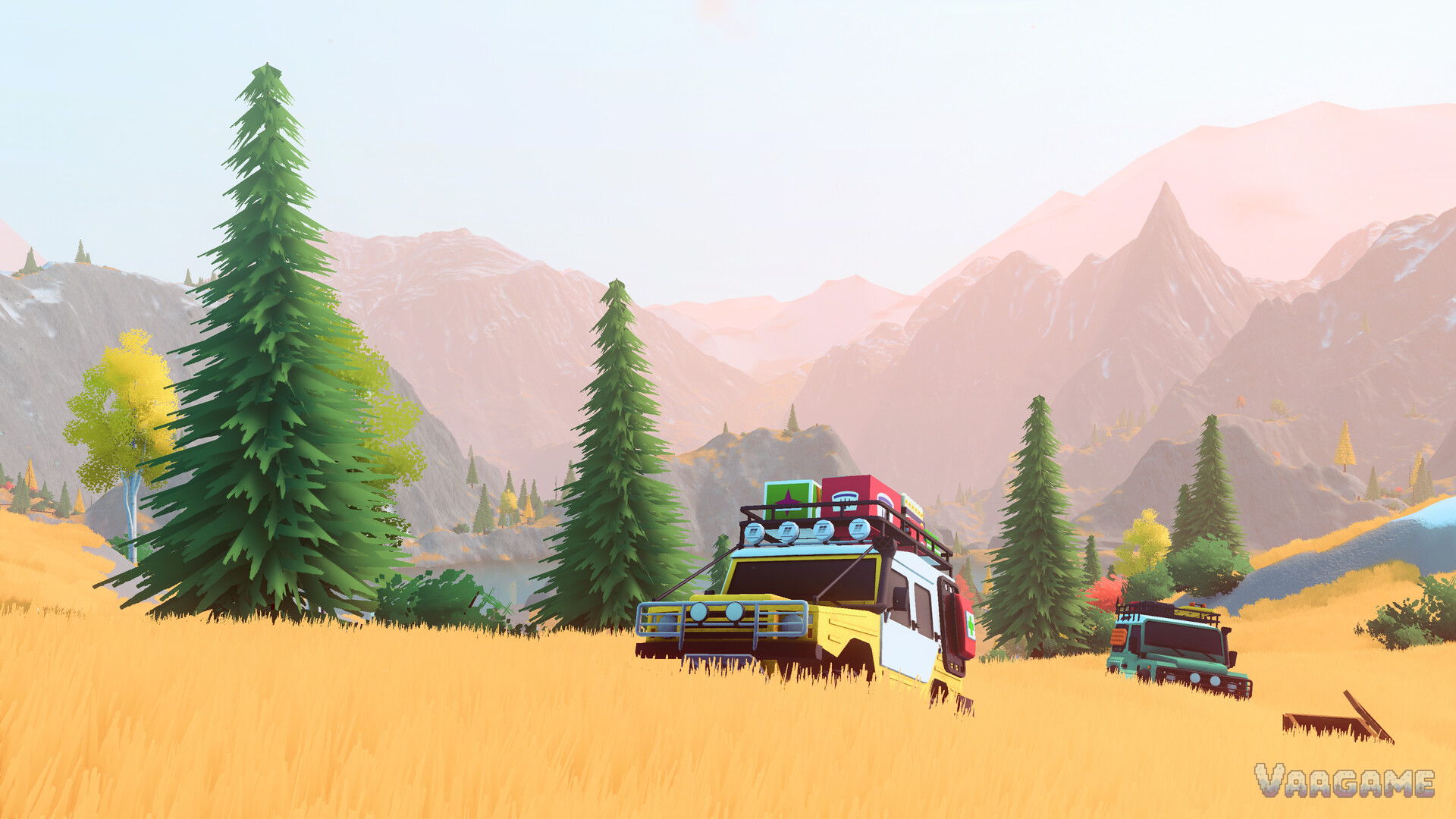
Canada's Valhallas are where every over the hill journey begins and where most players will spend their first dozen hours: three connected areas — Emerald Lake, Gimli Ridge and Asgard Mountain — that escalate from gentle lakeland tuition to genuine high-country work. This guide is about the routes between and through them: how the areas connect, what changes as you climb the arc, and the order of play that makes the northern half of the game flow. It deliberately contains no marker-by-marker lists — this site's route guides explain how to travel, not where every collectible sleeps.
At a glance
The arc: Emerald Lake (starter area) → Gimli Ridge → Asgard Mountain, roughly easy to demanding
Connections: Portals link the world, with ferries and tunnels tying the Canadian areas together
Your skeleton: Cabins are fast-travel points and time-advancers — unlock them before chasing discoveries
The rule of the range: Each area teaches the skill the next one examines (kit work, then terrain reading, then both under weather)
After Canada: The Algerian desert opens later in the journey; this guide ends at that gate
1. The shape of the Valhallas
Think of the Canadian range as one mountain system cut into three school terms. The areas are distinct maps, but they share a logic: valley floors for travelling, technical ground for objectives, and cabins scattered as the anchors everything else hangs from. Portals handle the jumps between the game's far-flung maps, while the Canadian areas themselves are stitched together with ferries and tunnels as well as portals — launch reviewers (Checkpoint Gaming, Entertainium, Traxion) all describe the same connective tissue, and you will feel it: moving up the arc is a journey with thresholds, not a teleport menu, until your cabin network is built.
That structure produces the range's central rhythm. Arrive somewhere new with a thin map, find the cabins and camps to build your safety net, then spend discoveries outward from that net until the route onward reveals itself.
2. Emerald Lake: the classroom
Emerald Lake is the game's starter area in everything but name — it hosted the June demo, and its teaching intent shows. Lakeshore tracks, forgiving valley floors and early objectives are arranged so that each core system introduces itself gently: your first cabin (fast travel, sleeping to advance time), your first crate, your first challenge trail, your first recovery that the winch solves in one clean pull.
Play it as tuition, in this spirit:
Build the cabin skeleton first. Every cabin you reach is a fast-travel node and a time machine; with three or four of them, Emerald Lake becomes a hub you cross in minutes.
Let the lake teach water. The shoreline shelves here are the shallow end of the fording skill. Cross kindly water now, while a flooded engine is an embarrassment rather than an expedition failure.
Finish a challenge trail here, not later. The area's set-piece trails are calibrated as introductions. Their lessons (planks, tilt, low gear) are the prerequisites the Ridge assumes you have.
The area also introduces the game's people: a mechanic and the memorably named Crazy Gunther are among the services marked on Emerald Lake — your first hint that merchants and mechanics, not menus, are where vehicles change (this collection's cabins guide covers the service network properly).
3. Gimli Ridge: the step up
The Ridge is where the Valhallas stop supervising you. The connecting journey — the area is reached as you work up the range, with the ferry among its links — sets the tone: getting there is part of the content, and the ground on arrival is more technical. Expect the mix to tilt: narrower lines, more rock, recoveries that need the full kit rather than one polite pull, and route choices that reward the map-reading habit of checking what a valley offers before descending into it.
Two habits carry you through the Ridge:
Camp-to-camp planning. Your carried kit (planks, portable anchor) is spent more freely here; campsites stop being scenery and become logistics. The cabins guide's advice — restock before the hard section, not after — applies with interest.
Weather respect. Higher country means the dynamic weather bites sooner. A route that was a morning drive can become an afternoon recovery when the rain arrives; the bell and the cabin network are your levers.
Note what the Ridge does to your sense of progress: in Emerald Lake, distance was the measure. On the Ridge, self-sufficiency is — how far from your last camp you can work, how much kit a section costs, how honestly you can retreat. Players who make the mental switch find the Ridge shorter than it looks; players who keep measuring in kilometres keep being surprised by it.
4. Asgard Mountain: the high end
Asgard Mountain is the Canadian arc's summit in every sense — the high country where winter conditions, serious altitude and the range's hardest driving combine. Snow appears in the Valhallas' official imagery for a reason: this is where late inputs, slick rock and long recovery distances all show up together.
Honesty about pace belongs here: the achievement data from launch week suggests very few players had completed the Canadian set at all (the area-completion achievements sit in the low single digits of unlock rates), so arriving at Asgard properly equipped — full kit, water protection bought, cabin network beneath you — already puts you in committed company. Treat the area as a campaign: establish your fast-travel skeleton on arrival slopes, work objectives in widening loops, and never let a new valley talk you into descending before you know your way back up.
5. How the connections really work
A clarification worth having in one place, because the map can confuse new players:
Cabins move you within explored country — they are the fast-travel network, and sleeping at one advances time.
Portals are the world's long-distance structure: the links that take you between the game's separated maps and regions, including onward to entirely different country once later destinations unlock.
Ferries and tunnels are the in-between scale: regional links that keep the Canadian arc feeling like one traversable range rather than three islands.
Build all three layers and the Valhallas shrink to a comfortable size — which is exactly when the game opens the desert and makes the world big again.
FAQ
How many areas are in Canada? Three: Emerald Lake, Gimli Ridge and Asgard Mountain, in the Valhallas range. Together with Algeria's two maps they make the launch world's five areas.
How do I get from one Canadian area to the next? By travelling: the areas are linked by a mix of portals, ferries and tunnels, and progressing through the arc opens the way onward. Once cabins are discovered, fast travel handles the repeat journeys.
How do I reach Algeria? The Algerian desert opens after the Canadian journey is under way — it is the game's second region, not a starter choice. This collection's Algeria guide takes it from there.
Can I go back to earlier areas? Freely. Portals and your cabin network make the whole explored world revisitable, and earlier areas keep their unfinished objectives, crates and photo opportunities waiting.
Which Canadian area is hardest? Asgard Mountain, by design: altitude, winter weather and the longest recovery distances. The arc is a curriculum — Lake teaches, Ridge examines gently, Asgard examines properly.
Related guides
over the hill Beginner's Guide: The Winch, Your First Upgrades and What To Do First
over the hill Algeria Guide: Desert Routes, Mesas and How To Reach High Places
over the hill Cabins, Campsites and Merchants: Fast Travel, Supplies and NPC Services
over the hill Challenge Trails Guide: Trail Types, Preparation and Resetting After a Fail