

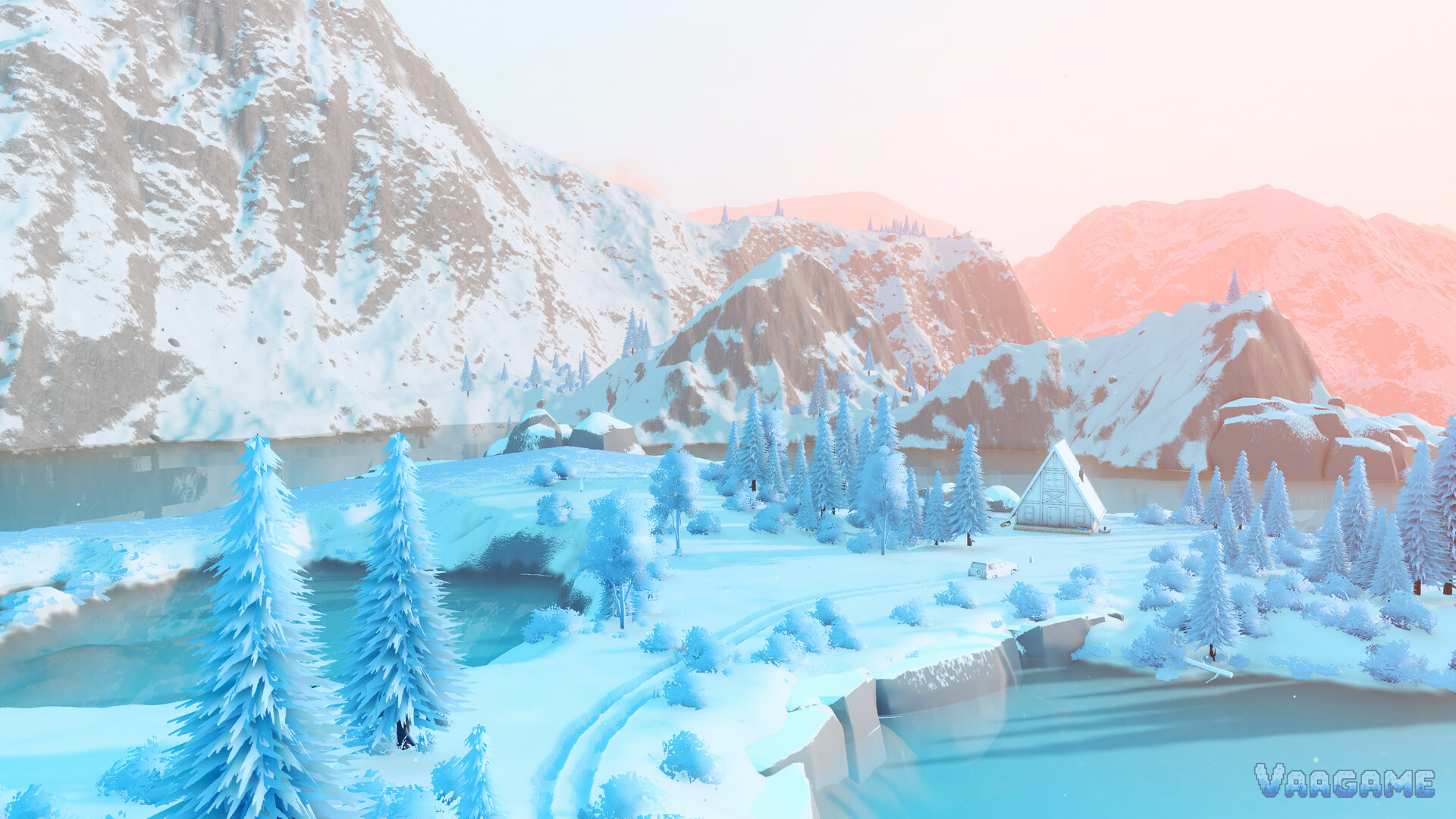
Exploration in over the hill looks freeform, but it runs on a quiet infrastructure of three stop types: cabins, campsites, and the merchants and mechanics who turn Pebbles into progress. Learn what each one actually does and the whole game reorganises itself — routes become chains between anchors, hard trails become logistics puzzles, and the map stops being a wilderness and starts being a network you own. This guide covers each stop type in turn, then the network-building strategy that ties them together.
At a glance
Cabins: Fast-travel points; staying at one advances time (skip night, wait out weather); reaching one pays Pebbles
Campsites: Where your carried recovery kit — planks, anchors and the rest — replenishes
Merchants & mechanics: Where upgrades, equipment and customisation are bought; named NPCs include the Mechanic and Crazy Gunther at Emerald Lake
The strategy: In any new area, cabins first, collectibles second — build the skeleton, then flesh it out
Supporter Edition note: The edition adds an exclusive campsite (tent and campfire) alongside its cosmetics and soundtrack
1. Cabins: your fast-travel skeleton and time machine
Cabins are the most valuable discoveries in the game, because each one does three jobs at once. It is a fast-travel point, folding the explored map down to short hops. It is a bed: staying at a cabin advances time, which is your cleanest control over the day/night cycle and the dynamic weather — sleep through a storm, wake to a dawn departure, or deliberately set out at golden hour for the photography. And it is a payday: reaching discoveries, cabins included, pays out Pebbles, so the skeleton literally funds itself as you build it.
The named cabins visible on community mapping (Pavilion Lake Cabin, Malachite Lodge and their kin) hint at the density to expect: the Valhallas are dotted with them, and the same logic continues in Algeria. Every one you reach permanently de-risks its neighbourhood — a cabin within winching distance of a hard trail changes that trail from an expedition into an attempt you can repeat.
2. Campsites: where the kit comes back
If cabins are the skeleton, campsites are the supply chain. Your carried recovery items — planks, the portable winch point and the rest of the kit — are consumables in effect, and campsites are where they replenish (launch coverage from Polygon describes the loop plainly). That single rule quietly governs hard-route planning:
A difficult trail is really a question: can I get from this camp to the next with the kit I am carrying?
A recovery that spends your last plank is not finished when the truck moves — it is finished at the next campsite.
Scouting a hard section and retreating to camp is a legitimate, costed strategy, not a failure.
Camps also frame the game's rhythm at its most pleasant: they are the stops the world is photographed around, the places convoys gather, and the natural save-your-sanity points before a night section. The Supporter Edition even adds an exclusive campsite of its own (with tent and campfire) to the world — a cosmetic-flavoured extra, but a telling one: camps are identity in this game, not just mechanics.
Watch where camps sit and a second pattern emerges: they bracket the hard ground. A campsite at the foot of a technical section is the game quietly telling you the intended rhythm — restock, attempt, return — and experienced route planning is mostly learning to hear it. When you find a camp with no obvious hard country near it, that is information too: the hard country is probably one valley further than you have looked.
3. Merchants and mechanics: where Pebbles become progress
The third stop type is people. Merchants and mechanics are where the game's economy cashes out — per the official description and launch coverage, they are where you buy vehicle upgrades and equipment, and where customisation (colours, accessories, cosmetic parts) happens. Emerald Lake introduces the pattern early with its Mechanic and the colourfully named Crazy Gunther among the area's marked services; expect the same division of labour — someone who wrenches, someone who sells — across the world.
Two economy facts keep expectations straight:
Shopping and exploring feed each other. Upgrades and equipment are also found out in the world (the store description says so plainly), so a Pebbles balance is not the only path to a better truck — the map itself is a shop that pays you to browse it.
There are no verified public price lists. Launch-week documentation of exact costs is unreliable wherever you find it; this collection's upgrades guide therefore teaches priority and order instead of prices, and so should your spending.
4. Building the network: a new-area routine
Put the three stops together and a routine emerges — the one the route guides in this collection assume:
Arrive and orient. Short, safe drives from your entry point; learn the local surfaces at low stakes.
Hunt cabins. Until two or three are on your map, nothing else matters — they are travel, time control and income in one discovery.
Note the camps. Mark (mentally or on the map) which campsites bracket the hard ground; those brackets are your future attempts.
Meet the people. Find the merchant and mechanic; even a window-shop tells you what this area's economy offers and what to save for.
Only then, objectives. With the skeleton built, run discoveries, recoveries and challenge trails outward from safety — and let each success extend the network further.
5. Time management: the underrated cabin skill
Because cabins advance time, they are also your scheduling tool — and scheduling is a driving skill in a game with a full day/night cycle. Sleep to skip a night you do not want to drive. Wait out a storm rather than spending the weather bell. Time a departure so the high pass is crossed in morning light and the viewpoint is reached at golden hour — the photography achievements reward exactly this kind of planning. Players who treat cabins as mere teleporters use half the building.
FAQ
Can I fast travel to any cabin? Fast travel works between cabins you have reached — which is precisely why building the network comes first in a new area. An undiscovered cabin is a destination, not a shortcut.
Where do my planks and anchors come back? At campsites. Carried recovery items replenish there, so a route that spends kit needs a camp at the end of it.
Where do I buy upgrades and change my truck's colour? At merchants and mechanics out in the world — upgrades and equipment are bought there (and sometimes found), and customisation such as colours and accessories is handled at the same stops.
Does staying at a cabin cost anything? No stay fee appears in any launch documentation we could verify, and arriving pays you Pebbles rather than charging you. If a guide quotes you an exact cabin price, file it with the other unverified launch-week price lists — none is reliably documented yet.
Related guides
over the hill Beginner's Guide: The Winch, Your First Upgrades and What To Do First
over the hill Valhallas Guide: Emerald Lake, Gimli Ridge and Asgard Mountain Routes
over the hill Upgrades and Equipment: What To Buy First With Your Pebbles
over the hill Crates and Customisation: How Cosmetics, Colours and Accessories Work