

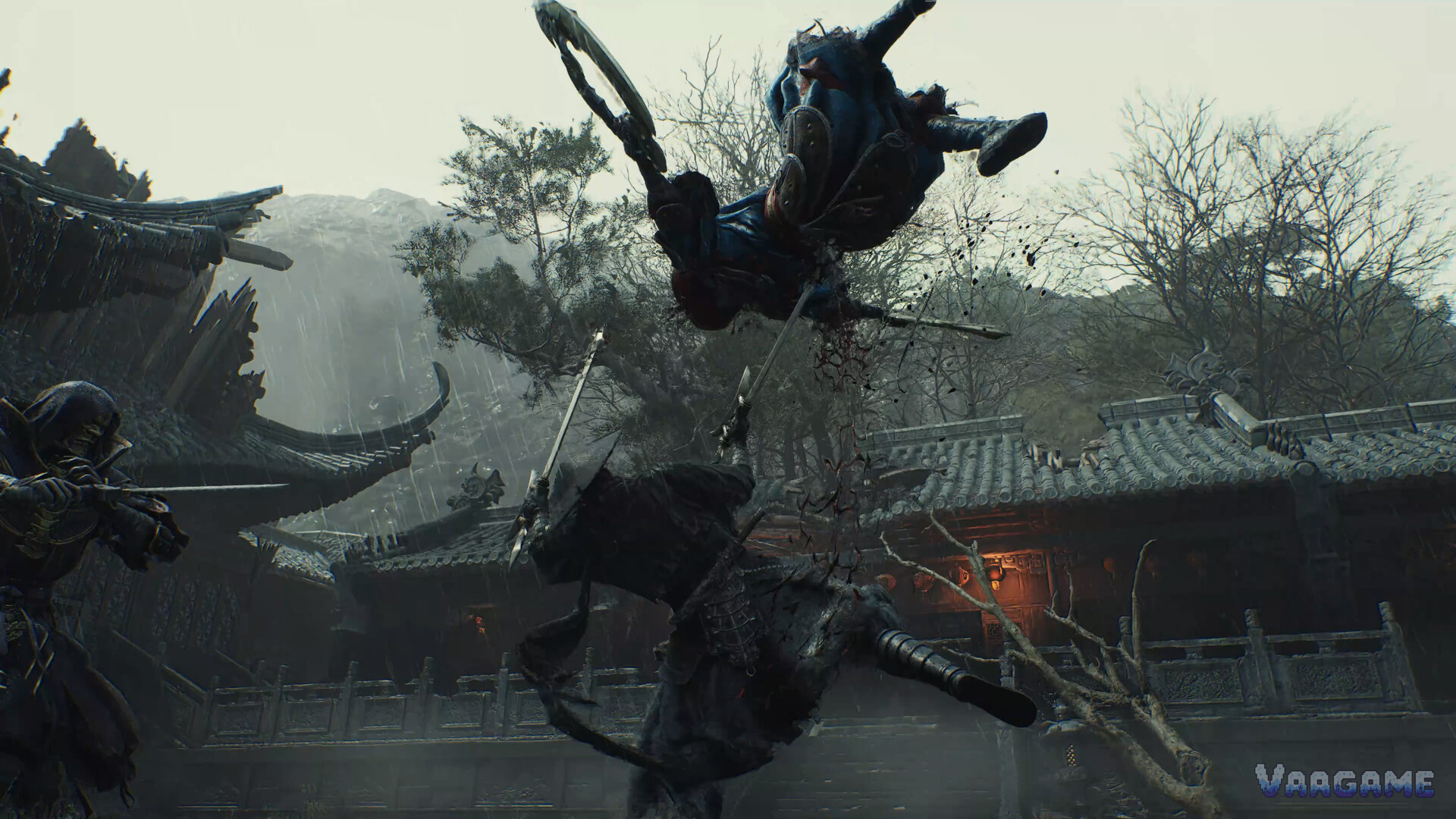
Start on Pathbreaker for the combat balance the designers tuned the game around, or on Wayfarer if story and learning come first, then use this guide to buy, install, and plan your first week without wasting opening hours.
This guide contains affiliate links. If you buy through them, Vaagame may earn a commission at no extra cost to you.
At a glance
Game: Phantom Blade Zero, a single-player action game from S-GAME, built in Unreal Engine 5
Release: October 29, 2026, at 02:00 UTC, which is 10:00 Beijing time
Platforms: PS5 and PC through Steam, Epic, and WeGame in China
Price: Standard $59.99, Deluxe $69.99; China ¥268 and ¥328
Main story: about 25 to 30 hours; with side content, about 40 to 50 hours
Player reviews before launch: 0; the review picture below comes from named media outlets
Status: pre-launch guide; media scores and review claims are labelled as pre-launch
Last verified: October 26, 2026 (pre-launch facts)
Quick answer
Pick Pathbreaker for intended balance, Wayfarer for the easiest story-first run, Hellwalker only for harder AI and new boss moves.
Check the SSD requirement and official specs before buying on PC, then run the built-in benchmark after install.
Learn three combat ideas: Sha-Chi is a shared attack and defence resource, blue attacks can be parried, red attacks must be dodged.
Do not fear a wrong weapon choice: the Reforging Talisman refunds all materials, and five skill trees reset per pre-launch reviews.
Explore the eight ink maps at your own pace; the game gives general direction, not a pile of markers.
1. What you are playing: a kungfu-punk action game with a 66-day countdown
Phantom Blade Zero is a single-player action game developed and published by S-GAME in Beijing, built in Unreal Engine
5. You play Soul, a swordsman framed for killing his organisation leader, left for dead after a duel with a sworn brother, and kept alive by a mysterious doctor with an artificial heart.
Kungfu punk is the game's own blend: wuxia martial arts with steampunk machinery and body modification. The game is a spiritual sequel to the Rainblood series, sharing ideas and mood with those games while remaining fully playable with no earlier experience.
Soul has 66 days left; the producer has said running out of time without finishing leads to a bad ending. The game has multiple endings, detailed nowhere in this guide. Donnie Yen has served as creative consultant since 2023 and provided face and motion capture for Soul's father, Mo Yuan.
2. The pre-launch verdict in one place: strong combat, and zero player reviews so far
There are no player reviews before launch, so this section uses named media impressions, to be refreshed with real player reviews after release. Media scores describe what reviewers played before launch and can move as more reviews arrive.
The pre-launch aggregate picture is strong. Metacritic sits at 88 from roughly 31 to 33 reviews (about 30 positive, 1 mixed, 0 negative); OpenCritic sits at 91 from roughly 24 reviews, with 100 percent recommending. Reviewers praise combat, bosses, and weapon variety; story, invisible walls, and performance fluctuation are the repeated shortcomings.
Swipe horizontally to view all columns.
| Outlet | Pre-launch score |
|---|---|
IGN | 9 out of 10 |
Push Square | 9 out of 10 |
GameSpot | 8 out of 10 |
Eurogamer | 3 out of 5, the only mixed review |
PCGamesN | 10 out of 10 |
DualShockers | 9.5 out of 10 |
VGC | 4 out of 5 |
3. Check your PC against the official specs before you buy
The spec table below assumes upscaling at its stated resolution and frame rate targets, and an SSD is required at every tier. Treat 16GB of memory as the floor, since both tiers list it, and run the built-in benchmark after install to settle settings.
Two PC points need care: DLSS 4.5, including multi frame generation, is confirmed, while FSR and XeSS are unconfirmed, so do not plan a purchase around them. The official storage requirement is unannounced; the reported PC download size of about 145GB is a coverage figure, not an official number.
Pre-launch reviews warn about Steam Deck: even at minimum settings, the game stayed below 30 frames per second, near 10 in busy scenes. On that evidence, the Deck is wait-and-see, while a desktop PC or PS5 is safer.
Swipe horizontally to view all columns.
| Tier | CPU | GPU | Memory and storage | Target |
|---|---|---|---|---|
Minimum | Intel i7-8700K or AMD R5 3600 | GTX 1660 6GB or RX 5500 XT 8GB | 16GB, SSD required, DirectX 12 | 1080p, 30 frames, with upscaling |
Recommended | Intel i5-10600K or AMD R5 5600X | RTX 3060 Ti 8GB or RX 6700 XT 12GB | 16GB, SSD required | 1440p, 60 frames, with upscaling |
Ray tracing | As recommended or better | RTX 5060 8GB | 16GB, SSD required | 1080p, 60 frames |
Path tracing | As recommended or better | RTX 5080 16GB | 16GB, SSD required | 4K, 60 frames |
4. Spend where it matters: a value hardware plan with no invented prices
Buy for the resolution you actually play at: a 4K path-tracing card is wasted money on a 1080p screen. Match your tier first, then spend the rest on a fast SSD and cooling that holds steady frame rates.
At 1080p, target the recommended tier over the bare minimum: the minimum aims at 30 frames with little headroom for busy fights. At 1440p, the recommended tier is the best value; ray tracing or path tracing hardware suits only players who already own a matching high-refresh or 4K display.
Four parts carried verified US tracker prices on October 26, 2026 (pricehistory.app): Gigabyte RTX 3060 Ti Eagle OC 8G $413.76, TEAMGROUP Vulcan Z 16GB kit $149.99, Corsair CX650 650W $71.19, Thermaltake Versa H17 $49.99. No current US tracker price could be confirmed for an RX 6700 XT 12GB, an i5-10600K or Ryzen 5 5600X, or a 1TB NVMe SSD: a $298 SN580 tracker figure diverged from its own history and is not used. No build total is given for an incomplete parts list.
Check price on Amazon: Gigabyte RTX 3060 Ti Eagle OC 8G — https://www.amazon.com/dp/B098PK1BGK?tag=vaagame20-20
Check price on Amazon: TEAMGROUP Vulcan Z 16GB kit — https://www.amazon.com/dp/B0924J3VGT?tag=vaagame20-20
Check price on Amazon: Corsair CX650 650W — https://www.amazon.com/dp/B0CQMSTN94?tag=vaagame20-20
Check price on Amazon: Thermaltake Versa H17 — https://www.amazon.com/dp/B0797GHT9F?tag=vaagame20-20
1080p value pick: a graphics card in the recommended class, such as the Gigabyte RTX 3060 Ti Eagle OC 8G ($413.76 on pricehistory.app, checked October 26, 2026), plus 16GB of memory and a 1TB NVMe SSD (US tracker price unconfirmed as of October 26, 2026).
1440p sweet spot: a card at or above the recommended tier, such as a GeForce RTX 5060 class card (tracker price unconfirmed, same check date), with 16GB of memory and a fast NVMe SSD.
High-end path tracing tier only: a card in the RTX 5080 class, such as an RTX 5080 class card (tracker price unconfirmed, same check date), for 4K path tracing, and only alongside a 4K display.
Do not cut the SSD or the memory to afford a stronger card: the official specs require an SSD, and 16GB is the listed floor at every tier.
5. Buy, preload, and survive day one
Preload opens at 10:00 Beijing time on October 27; the game unlocks worldwide at 02:00 UTC on October 29, which is 10:00 Beijing time. If a store page shows October 28, that is a timezone display difference for the same moment; the buying guide at the end of this article breaks it down fully.
Choose difficulty with a clear head. Wayfarer is the easiest story-oriented entry, Pathbreaker the standard balance baseline, and Hellwalker the hardest starting tier, with stronger adaptive AI and new boss moves. Sixty-Six Days is a New Game Plus tier, unlocked only after one clear, adding permanent death to Hellwalker with a 66-death allowance.
First, learn Sha-Chi, the shared combat resource: it powers heavy attacks and is spent when you block, so attacking and defending draw on the same pool.
Second, read enemy glow colours. A blue-glowing attack can be blocked, and a well-timed block, called a parry, costs no Sha-Chi of your own, sharply cuts the enemy's Sha-Chi, and opens a Ghoststep move around the back. A red-glowing attack cannot be blocked or parried, so dodge it, and a perfectly timed dodge counts as a complete evasion.
Third, use the basic combo shape: light attack into Sha-Chi heavy attack. Switching weapons during combat restores some Sha-Chi according to pre-launch reviews, so a weapon swap is a resource tool, rather than decoration.
Fourth, relax about death while learning. Pre-launch reviews report no stamina bar, no death penalty, bosses resuming from the phase where you died, and difficulty switching at any time.
6. Your first week: explore, collect weapons, and keep your build flexible
The world is semi-open across eight hand-painted ink-style maps. Direction in complex areas is deliberately vague to reward exploration, maps give general direction rather than a pile of markers, and fast travel points exist per review and demo coverage. Walk a new area once for its layout, then return for anything you skipped.
Weapons are the long-term hook. There are more than 30 main weapons, each from a boss per the producer, and more than 20 Phantom Edges (25 shown in a demo). Phantom Edges are secondary blades, carried two at a time alongside two main weapons; weapons unlock forms and moves as they level up.
Keep your build flexible in week one. The Reforging Talisman resets a weapon level and refunds all materials, removing fear of a wasted build, and pre-launch reviews report five resettable skill trees. Try one main weapon and one Phantom Edge properly before judging them: a weapon's feel changes as forms and moves unlock.
Set a sane week-one goal: finish the opening area comfortably, learn parry timing on ordinary enemies, and make weapon switching feel natural. At about 25 to 30 hours for the main story, or 40 to 50 with side content, week one is for foundations; later guides here go deeper on combat, growth, and exploration.
FAQ
Do I need to play the Rainblood games first?
No. It is a spiritual sequel sharing ideas and mood with Rainblood, telling a story new players can follow from the start.
Can I change difficulty after I start?
Yes, per pre-launch reviews. Keep a separate save before switching back to Wayfarer: unconfirmed media coverage reports a save lock after that switch.
Will picking the wrong weapon ruin my build?
No. The Reforging Talisman resets a weapon level and refunds all materials, and all five skill trees reset per pre-launch reviews.
Should I play on Steam Deck at launch?
Pre-launch reviews advise waiting: even at minimum settings, frame rates stayed below 30, near 10 in busy scenes. A desktop PC or PS5 is safer.
How long is the game?
Producer and review coverage put the main story at about 25 to 30 hours. With side content, that rises to 40 to 50 hours.
Related guides
Phantom Blade Zero Buying and Editions Guide: Standard vs Deluxe, Pre-Order Rewards, and Unlock Times