

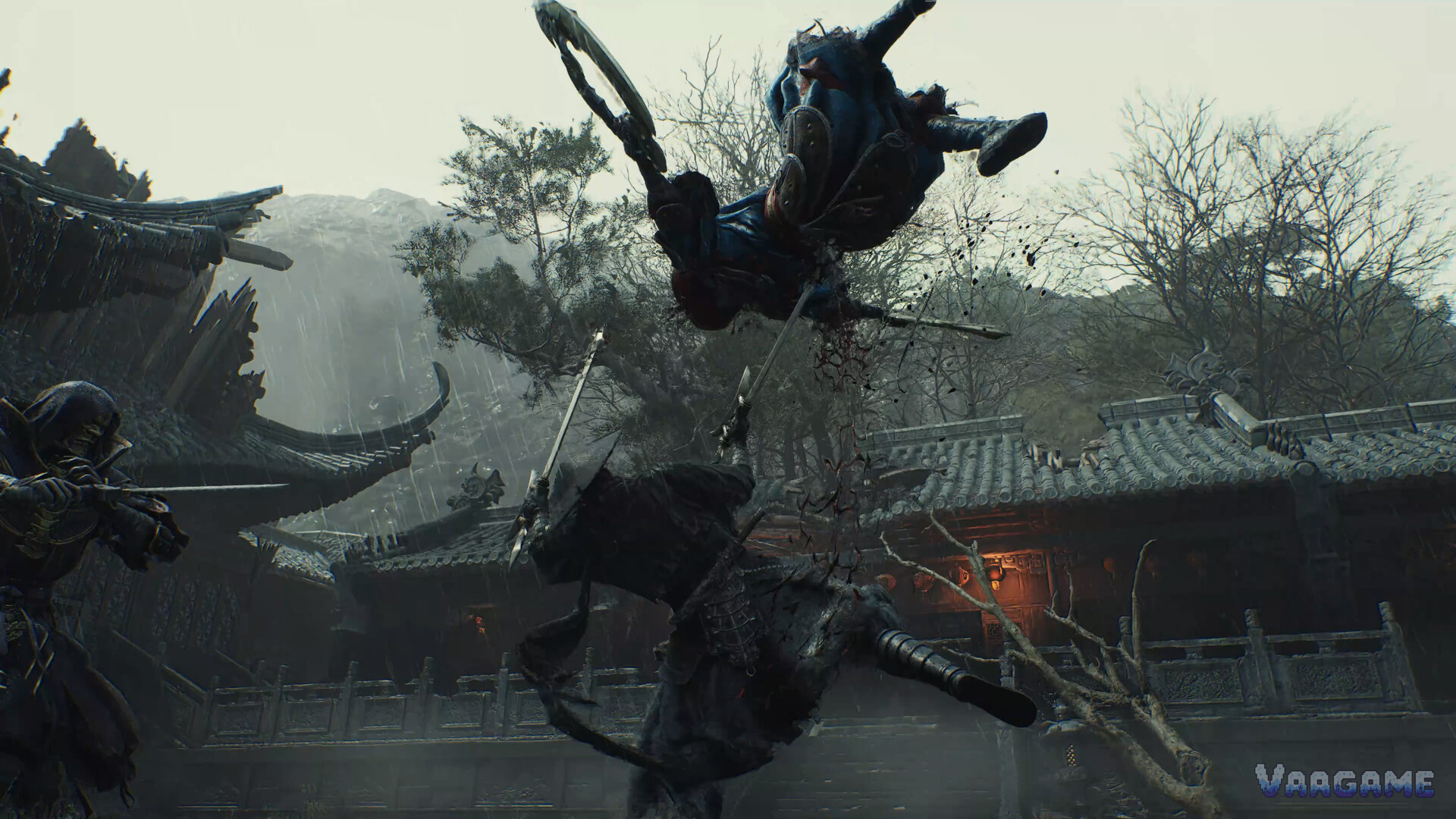
Phantom Blade Zero combat runs on one shared resource: Sha-Chi powers your heavy attacks and pays for your blocks, so every fight is a choice about when to spend it and when to save it.
At a glance
Game
Phantom Blade Zero, a single-player kungfu-punk action game by S-GAME
Core resource
Sha-Chi, shared by attack and defence
Key buttons
Square light, Triangle heavy, L1 block or parry, R1 dodge
Source basis
September Beijing hands-on plus review consensus
Player reviews
None before launch; not player reviews
Last verified
October 26, 2026 (pre-launch facts)
Quick answer
Light attacks cost no Sha-Chi; Triangle heavy attacks draw on the same pool blocking uses.
A blocked hit always costs Sha-Chi, so blocking a long enemy string can leave you empty.
Time L1 against a blue glowing attack to parry without spending your own Sha-Chi and to drain enemy Sha-Chi heavily.
A red glowing attack cannot be blocked or parried. Dodge with R1, and a well-timed dodge counts as a perfect dodge.
Pre-release reviews agree: no stamina bar, no death penalty, and boss fights resume from the death phase.
1. Light attacks, heavy attacks, and the combo that links them
Square is your light attack. It is fast, it chains easily, and it builds pressure without spending Sha-Chi. Use it to test an enemy and to punish a short opening after a dodge.
Triangle is your Sha-Chi heavy attack. Sha-Chi, sometimes written Sha Chi, is an independent combat resource, separate from health. A Triangle attack hits harder, and that power is why it shares a pool with defence.
The basic link is Square into Triangle. Start with light attacks to create an opening, then spend Sha-Chi on a heavy finish when the enemy is exposed. Open with Triangle every time, and you may need to block with an empty pool.
2. Sha-Chi is one pool for attack and defence
Treat Sha-Chi as a budget with two kinds of spending. Heavy attacks spend it on damage, and blocking spends it on absorbing hits. Neither side is free, and neither refills because you waited through an enemy combo.
Enemies have Sha-Chi as well. Damage and well-timed defensive moves drain the enemy pool, and when it is empty the enemy is broken open. That is the central loop: spend wisely, drain the enemy pool, and strike when the enemy cannot defend.
Switching weapons during combat restores part of your Sha-Chi, according to pre-release reviews. It is a useful reset in a long fight, and it pairs with the two-main-weapon system in the weapons guide.
3. Blue attacks: block them, or parry on time for a bigger payoff
A blue glowing attack can be blocked with L1. Blocking is the safe answer when timing is unsure. The cost is real, though: every blocked hit deducts Sha-Chi, so a long blocked string can leave you unable to answer back.
Pressing L1 at the right moment against a blue attack performs a parry. A timed parry costs no Sha-Chi of your own and drains a large amount of enemy Sha-Chi. Pre-release reviews also note that an accessory can widen the parry timing window.
After a successful parry, Ghoststep lets you move around behind the enemy. Ghoststep is a short repositioning move to the enemy back after a parry, turning defence into an attack from a safer angle. Practise one habit: parry, Ghoststep, then attack.
4. Red attacks: only a timed dodge works
A red glowing attack cannot be blocked and cannot be parried. Holding L1 will not save you, and trying to parry it wastes the opening you could have used to move. The only hands-on answer is R1 to dodge.
Timing matters more than distance alone. A dodge pressed at the right moment counts as a perfect dodge, giving you a clean window to answer back. Learn the red cue first, then the timing: see red, commit to the dodge, then look for your counter.
In practice, colour is your fastest read in a busy fight. Blue means a choice between blocking and parrying, and red means exactly one choice. Making that read automatic is worth more than memorising any single combo.
Swipe horizontally to view all columns.
| Cue | Response | Sha-Chi effect |
|---|---|---|
Blue glowing attack | Block with L1, or parry with timed L1 | Block costs Sha-Chi; parry costs none and drains enemy Sha-Chi heavily |
Red glowing attack | Dodge with R1 only | Timed dodge counts as a perfect dodge |
Enemy Sha-Chi empty | Attack while the enemy is broken open | Enemy cannot defend in that window |
5. Three review-confirmed habits that lower the learning curve
First, there is no stamina bar, according to pre-release reviews. No separate meter covers running, attacking, or dodging, so attention stays on Sha-Chi and enemy cues.
Second, death carries no penalty in pre-release reviews, and a boss fight resumes from the phase where you died. A failed attempt still teaches you the boss pattern, and you do not restart the whole fight to test one new answer.
Third, difficulty can be switched at any time, according to pre-release reviews. This guide does not rank the four modes; the difficulty guide covers them in full. If a boss pattern is unreadable at your current setting, adjust and keep learning.
FAQ
What is Sha-Chi?
Sha-Chi is an independent combat resource shared by attack and defence. Triangle heavy attacks spend it, blocking spends it when you are hit, and draining an enemy pool breaks that enemy open.
How do I parry?
Press L1 at the right moment against a blue glowing attack. A timed parry costs no Sha-Chi of your own, drains much enemy Sha-Chi, and can be followed by Ghoststep to move behind the enemy.
How do I deal with red glowing attacks?
Red glowing attacks cannot be blocked or parried, so dodge with R1. A dodge pressed at the right moment counts as a perfect dodge and opens a clean window to counter.
Is there a stamina bar or a death penalty?
Pre-release reviews agree there is no stamina bar and no death penalty. Boss fights resume from the phase where you died.
Related guides
Phantom Blade Zero Buying and Editions Guide: Standard vs Deluxe, Pre-Order Rewards, and Unlock Times
Phantom Blade Zero Weapons Guide: 30+ Boss Weapons and How to Choose