

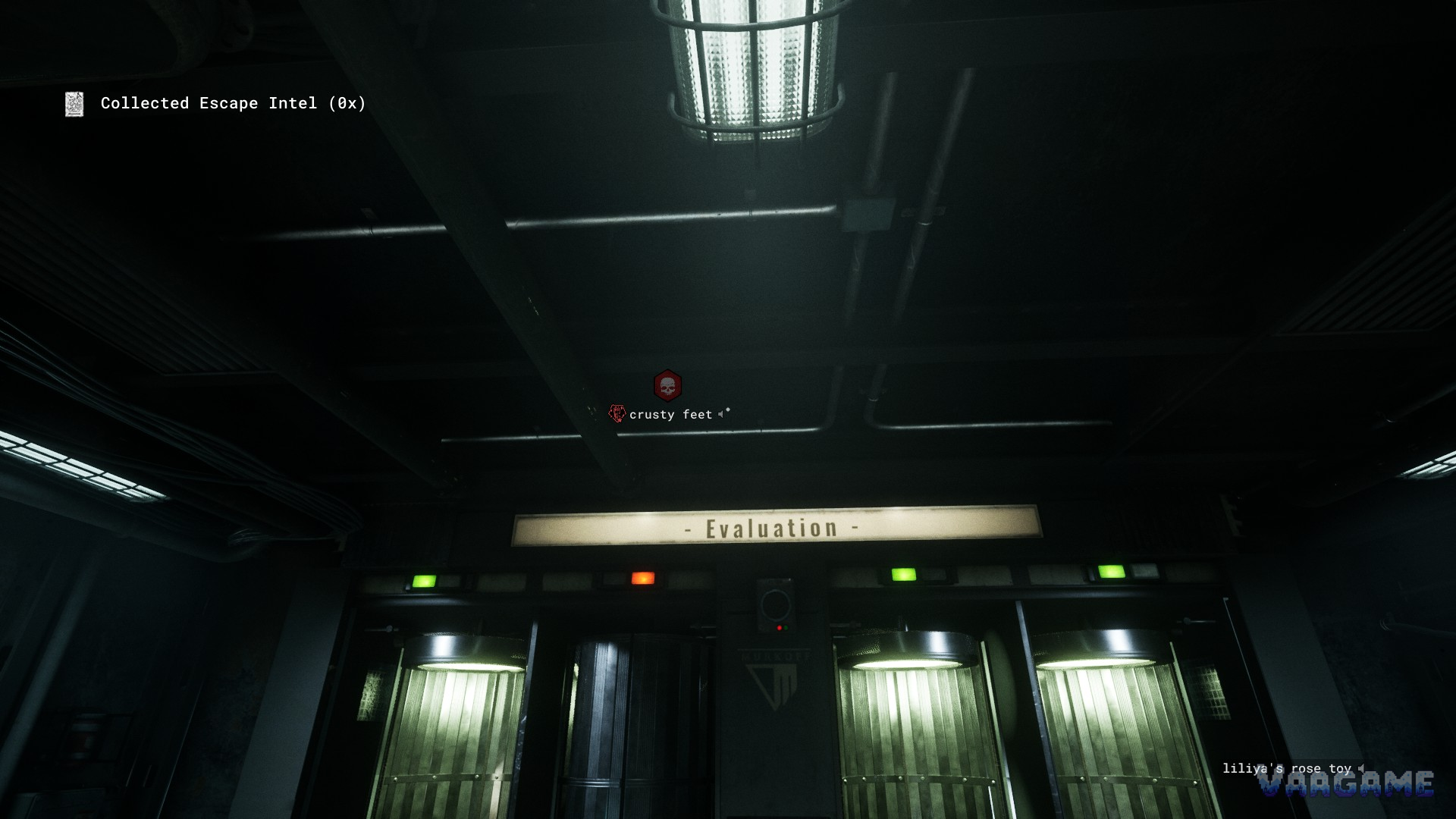
Difficulty in The Outlast Trials is not a slider you nudge. It is four named tiers, each unlocked by your Therapy Level, each adding a concrete package of stronger enemies, denser patrols, deadlier traps, and scarcer supplies. On top of those tiers sit Variators, extra modifiers that change the rules of a run in specific ways. Picking the right tier is less about bravery than about honesty: the tier that matches your build and your group is the tier that teaches you the most, and the tier above it is the one that teaches you by killing you.
Quick answer
Four tiers: Introductory (Therapy Level 1), Standard (Level 5), Intensive (Level 10), Psychosurgery (Level 25).
Higher tiers stay unlocked permanently once your Therapy Level qualifies. You do not re-earn them.
A completion on a higher tier does not count toward the lower tier grade. If you want a lower-tier grade, play that tier.
Variators are modifiers stacked on top of difficulty, used in limited-time programs and Escalation. No complete Variator catalog is published here because no verified full list exists.
At a glance
What: the four difficulty tiers, their unlock levels, and the Variator system.
Unlocks: Therapy Levels 1, 5, 10, and 25.
Hardest tier: Psychosurgery, with the longest list of added restrictions.
Last verified: November 1, 2026.
Swipe horizontally to view all columns.
| Tier | Unlock | What changes |
|---|---|---|
Introductory | Therapy Level 1 | Lowest prescription dose, for learning the basics of therapy |
Standard | Therapy Level 5 | Average horror and pain levels; no Variators in the base tier |
Intensive | Therapy Level 10 | Stronger enemies, higher enemy density, more and deadlier traps |
Psychosurgery | Therapy Level 25 | Strongest enemies II, higher density, more unreliable doors, deadliest traps II, fewest items II, plus longer Rig cooldown, smaller backpack, no player names, no intel |
1. Reading the tiers honestly
Introductory exists to teach. It is the lowest prescription dose, and it is where mechanics, maps, and enemy behaviors should be learned, because mistakes there cost the least. Standard is the baseline the game is balanced around: average horror and pain, and in the base tier, no Variators. Intensive is where the game stops being polite. Enemies hit harder, there are more of them, and traps become a real planning constraint rather than background decoration. Psychosurgery is the maximum trauma tier, and its list reads like a dare: the strongest enemies at their second level, more unreliable doors that add extra barricades, traps, or blocked doors, the deadliest traps at their second level, and the fewest items at their second level, plus longer Rig cooldowns, a smaller backpack, no player names, and no intel. The last three restrictions are easy to underestimate. Losing player names and intel removes the information layer that co-op teams rely on, which is why Psychosurgery punishes uncoordinated groups far more than it punishes careful solo players.
2. Variators: modifiers on top of difficulty
Variators are gameplay modifiers applied on top of a difficulty tier. Documented examples include Sharp Glass, Stay Together, and No Rigs, and the concept is straightforward: a Variator changes one rule of the run, such as what you can carry, how close your group must stay, or what the environment does to you. They appear in limited-time programs and in Escalation, and some Psychosurgery effects are themselves implemented in Variator form. That last point explains why Psychosurgery feels less like a single difficulty and more like a bundle: it is a tier plus a set of stacked modifiers. Because Variators are program-specific and rotate, this guide does not publish a full Variator list. Any list that claims completeness without naming the program and date it was taken from is a snapshot pretending to be a catalog.
3. Escalation retune in Season 7.2
Season 7.2 retuned the Escalation Therapy difficulty curve, and the numbers are worth knowing before you queue. Tier 1 covers the first 20 trials, Tier 2 covers trials 21 through 30, and Tier 3, the endgame, starts at the 31st trial. From the 31st trial onward, a permanent Variator called BREAKING POINT is added. That structure changes how to think about Escalation: the first 20 trials are the on-ramp, the next 10 are the filter, and everything from 31 onward is a different game with a permanent modifier you cannot opt out of. If your build cannot survive Tier 2 comfortably, Tier 3 will not be fixed by enthusiasm.
4. Which tier should you play?
Learning a new trial or enemy: Introductory. Learn the map before you learn the pain.
Normal progression and grading: Standard. This is the baseline, and its grades are the ones most guides assume.
Testing a finished build: Intensive. If your build cannot handle Intensive, it is not finished.
Endgame only: Psychosurgery. Go in with a coordinated group, a finished build, and no expectation of a clean run.
Frequently asked questions
Does playing a higher tier unlock the lower tier grade?
No. Higher-tier completions do not count toward lower-tier grades, according to community difficulty documentation. Play the tier whose grade you want.
Do Variators apply on Standard?
The base Standard tier has no Variators. Variators arrive through limited-time programs, Escalation, and the higher-tier packages, not through Standard itself.
Verification note
Four tiers, unlock levels, and tier effects: Outlast Wiki difficulty table, consistent with Red Barrels Season 1 press material on the four tiers.
Higher-tier grades not counting downward: community difficulty documentation, phrased cautiously as a community-source rule.
Variator examples Sharp Glass, Stay Together, and No Rigs: Outlast Wiki Variator page; no full catalog is claimed.
Escalation retune tiers and BREAKING POINT: Steam official Season 7.2 news.
Name note: the Steam store pages, including the Simplified and Traditional Chinese pages, still show the English title The Outlast Trials, and no official Chinese name has been verified. Chinese-speaking players commonly use the Chinese community name, but that is a community name, not an official one.
Last verified: November 1, 2026.