

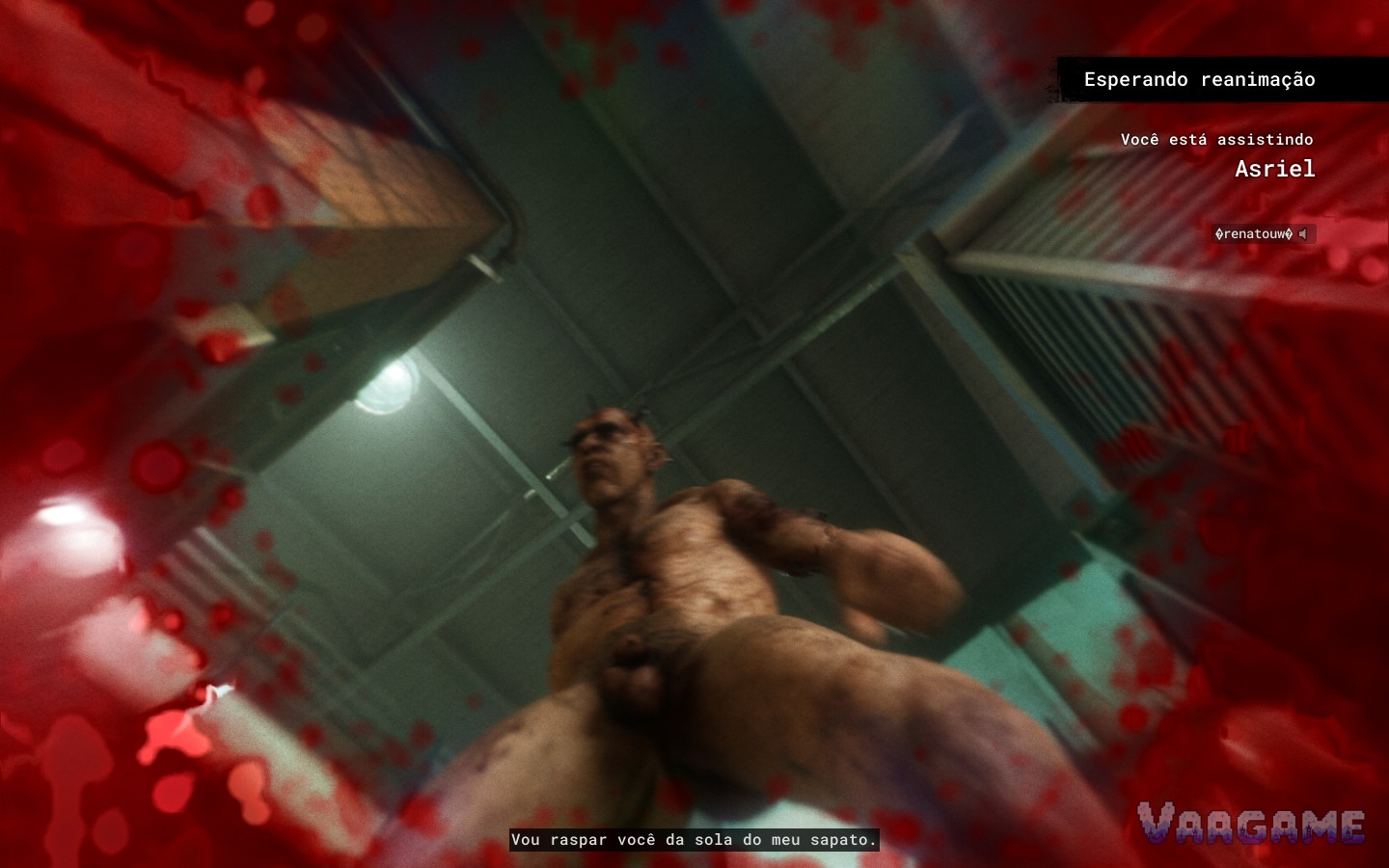
Ex-Pop, short for Experimental Population, is the name for Murkoff test population turned into trial enemies. Prime Assets are the high tier inside that population, and they get their own guide. Everyone else is here: the standard enemies you meet in every trial, the Specialists with one trick each, and the apparition that is not an enemy in the usual sense at all. The rule that governs all of them is printed on the store page in two words: hide or flight. You do not clear rooms in this game. You survive them.
Quick answer
Core rule: avoid, hide, and run. Throwables, Rigs, and traps interrupt enemies, but there is no general kill system. Do not build a plan around killing.
Standard enemies: Grunts, Big Grunts, Pouncer, Pusher, Screamer, and Imposters. Learn the Pouncer and the Pusher first, because they punish the two habits new players trust most: hiding spots and teammates.
Specialists: Berserker, Night Hunter, Scapegoat, Pitcher, Climber, Trickster, The Biter, and The Jaeger. Each has one signature behavior, and each is countered differently.
Skinner Man is separate. It is a Psychosis apparition, not a member of the Ex-Pop roster, and it is handled by outrunning it or using an antidote, not by fighting.
At a glance
What: every non-Prime-Asset enemy type, identified by behavior.
Rule: hide or flight, per the store page. No general kill system is documented.
Hardest to spot: Imposters pretending to be teammates, and the Jaeger seeing through walls.
Last verified: November 1, 2026.
1. The rule: hide or flight
The Outlast games have always been built around not fighting, and the Trials keeps that contract. Bricks and bottles found on trial floors can interrupt an enemy, a thrown object to the head counts toward the Bullseye badge, and Rigs and hacked traps can turn an encounter around. None of that adds up to a kill system. A claim found in third-tier sources, that specific task items can execute specific enemies, is not adopted here as a general mechanic, because it is not verified to a usable standard. Plan as if every enemy you meet will still be alive after you escape it, because that is the plan that works in every trial. The corollary is that sound, light, and doors are your real weapons. Night vision lets you move in the dark, closed doors buy seconds, and silence buys everything else.
2. Standard enemies
Swipe horizontally to view all columns.
| Enemy | Behavior | What to do |
|---|---|---|
Grunts | Standard melee enemies, the baseline patrol | Avoid, break sightlines, move on |
Big Grunts | Higher damage and durability than Grunts | Do not trade hits; distance is everything |
Pouncer | Ambushes from hiding spots with a grab | Check hiding spots before you use one |
Pusher | Grabs, then releases a neurotoxin causing Psychosis | Keep antidotes ready; a teammate kick helps |
Screamer | Standard enemy named for its screaming behavior | Treat as a Grunt that announces you |
Imposters | Disguised as a teammate Reagent, attacks at close range | Verify teammates before closing distance |
Two of these deserve emphasis because they punish trust. The Pouncer lives in the hiding spots new players run to first, so the refuge habit itself becomes the trap. The Pusher is worse in co-op, because the grab happens to your teammate and the Psychosis spreads the problem to the whole group if nobody carries an antidote. Imposters complete the set: in a game where co-op is the default social mode, an enemy that looks like a teammate attacks the assumption that help is coming. When a teammate approaches silently and too directly, keep your distance until their behavior proves them.
3. Specialists: one trick each
Swipe horizontally to view all columns.
| Specialist | Signature behavior | Counter |
|---|---|---|
Berserker | Blind, but extremely sensitive to sound | Move silently; sound is what finds you |
Night Hunter | Night vision ability, fears strong light | Strong light is your friend |
Scapegoat | Carries explosives | Distance, always |
Pitcher | Throws molotovs from range, creating burning zones | Do not cross burning ground to chase |
Climber | Specialist climber enemy type | Watch vertical routes, not just doors |
Trickster | Specialist trick enemy type | Expect misdirection; verify before committing |
The Biter | Mechanical jaw, chained neck, reinforced legs, abnormal speed | Distance and doors; never a straight race |
The Jaeger | Henrietta Grubbs; detects hiding spots through walls | Hiding spots are not safe from her; keep moving |
The Biter is the newest standard face here, and it arrived with Season 7, Project Boneyard, on July 14,
2026. Its backstory is grim even by this game standards: a former forced-labor prisoner who protested through self-harm, had arms removed, and was rebuilt by Murkoff doctors with a mechanical jaw that bites, a chained neck, and reinforced legs that grant abnormal speed. It first appeared only in three trials: the main trial Locksock the Warden and the two MK-Challenges Bribe the Judges and Cancel the Broadcast. That limited debut is useful knowledge. If you are not in one of those trials, the Biter is not your problem yet, and if you are, speed and doors matter more than stealth alone. The Jaeger is the opposite problem: a Project Relapse Specialist who sees hiding spots through walls. Against her, the hiding habit that saves you from Grunts is a liability, and movement is the only reliable answer.
One naming caution belongs here. The Project Breach press material names a new enemy called The Molotov, and community lists name a ranged firebomb thrower called the Pitcher. Whether those two names are the same enemy is not fully verified, so this guide uses Pitcher for the firebomb thrower and does not merge the two names. If a future official note confirms they are one enemy, the entry will be updated to say so.
4. Skinner Man: the apparition, not the roster
When your Sanity meter empties, the Skinner Man appears: a Psychosis hunting apparition that chases you until the Psychosis fades or you use an antidote. Surviving it counts as a positive grading point, Survived psychosis, which is why experienced players do not always panic when it shows up. Whether it counts as an Ex-Pop entry is a source disagreement, so this guide lists it separately and does not fold it into the enemy tables. The practical advice is short. Run, keep doors between you and it, and use an antidote if you have one. Fighting it is not the mechanic; outlasting it is.
Frequently asked questions
Can I kill enemies?
There is no documented general kill system. Throwables, Rigs, and traps interrupt and delay enemies, and that is the documented toolkit. Do not plan around killing.
Do enemies get stronger with more players?
No verified answer is available. Some secondary sources speak generally about difficulty adjusting with player count, but no citable numbers exist, so this guide does not claim that enemy counts or health scale with group size.
Verification note
Enemy roster and behaviors: Outlast Wiki character navigation crossed with the Destructoid Season 7.1 enemy table; entries listed are those where the two agree.
Hide-or-flight rule: Steam store page.
The Biter debut and details: Red Barrels Season 7 patch notes.
Pitcher versus The Molotov identity is unverified and the two names are not merged here.
No general kill system is claimed, and no per-player enemy scaling is claimed; both are documented gaps.
Skinner Man is listed separately as a Psychosis apparition, not folded into the Ex-Pop tables.
Name note: the Steam store pages, including the Simplified and Traditional Chinese pages, still show the English title The Outlast Trials, and no official Chinese name has been verified. Chinese-speaking players commonly use the Chinese community name, but that is a community name, not an official one.
Last verified: November 1, 2026.