
At a glance
The short version
- Game
- Nature Travel
- Guide type
- Real Life Locations
- Read time
- 8 min read
- Last updated
- Nov 10, 2026
Quick answer
The best months are October and November, when the rain has gone, the sea is calm, and the light is clear.
Guide details
Swipe horizontally to view all columns.
| Item | What to know |
|---|---|
Where | Ha Long Bay, Quang Ninh province, northern Vietnam, 165 km east of Hanoi; UNESCO site Ha Long Bay – Cat Ba Archipelago |
Best time | October to November; November is inside the window now, with the driest air and clearest views of the year |
How long | Two days and one night is the best choice; a day trip gives about 4 hours on the water for 12 hours away from Hanoi |
Difficulty | Easy: the boat does the work; Sung Sot Cave needs a climb up steep steps, and Ti Top Island has a short steep climb to the viewpoint |
Tickets | Official bay fee: day routes VHL1/VHL2/VHL5 250,000 VND (about $9.60); route 2 overnight, 1 night 550,000 VND (about $21), 2 nights 750,000 VND; usually included in the cruise price |
Nearest town | Ha Long City, 2.5–3 hours from Hanoi by expressway; shared limousine van about 260,000–330,000 VND (about $10–13) one way from the Old Quarter |
Cost, checked 10 November 2026 | Day cruise $35–150 per person; overnight 2 days 1 night mid-range $90–200, luxury $250 and up |
Why the bay looks like this
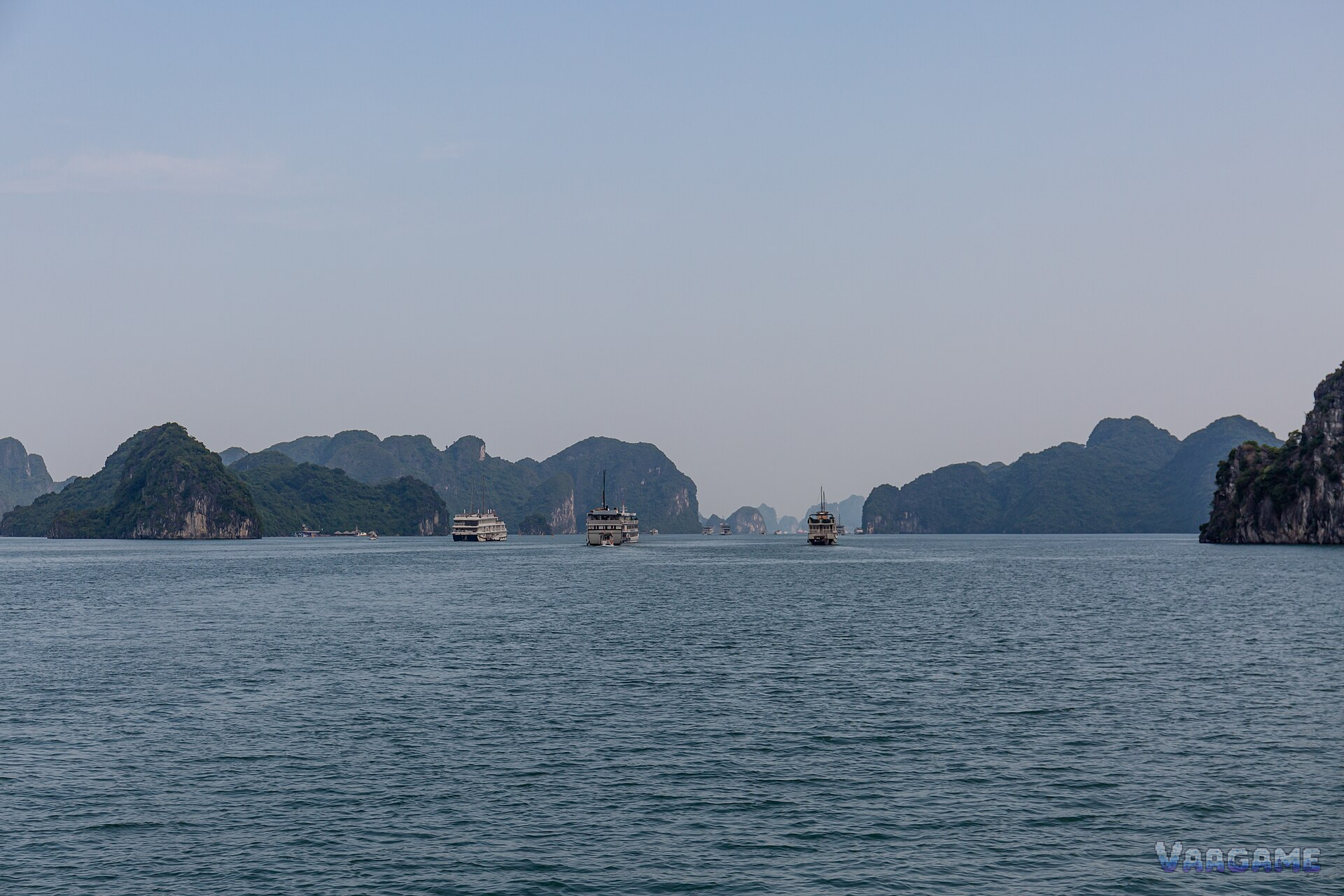
Ha Long Bay is limestone that the sea took over. Rain, waves, and changing sea levels worked on the rock for millions of years, dissolving it into towers and arches and caves. The result is a tower karst seascape: steep green islands standing alone in the water, each one a hill that the sea drowned. UNESCO lists the whole property, Ha Long Bay – Cat Ba Archipelago, at 65,650 hectares with 1,133 islands and islets: 775 in Ha Long Bay itself and 358 in the Cat Ba Archipelago. The bay was first listed in 1994 and 2000, and the Cat Ba side was added in 2023.
The islands look close together from the boat, but they are spread over a wide bay, and most are uninhabited rock and forest. The shapes have local names — Fighting Cocks, Stone Dogs, Incense Burner — for what the rock looks like from the water.
The caves are the other half of the place. Sung Sot, the Surprise Cave, is the largest cave open to visitors in the bay: two chambers covering about 10,000 square metres, with a ceiling up to about 30 metres high, on Bo Hon Island. It was found by the French in
1901. The cave sits about 25 metres above sea level, so you climb a steep flight of steps through the forest to reach it, then walk a path of about 500 metres through the chambers. Smaller caves work differently: Luon Cave is a sea tunnel at water level, and you pass through it by kayak or bamboo boat into a hidden lagoon.
The water is part of the view. In October and November it runs calm and green, and the islands reflect in it. In summer it is warmer and rougher, and in February and March low cloud and drizzle flatten the light.
What order to see it in
Book the standard route 2 itinerary, on an overnight boat. It runs Sung Sot Cave, Luon Cave, and Ti Top Island, in that order, and it is the route the official fee covers. Four steps, in order.
Day 1, around noon: board at Tuan Chau or Ha Long International Passenger Port and sail out as lunch is served. The first hours are the panorama: the boat threads between the karst towers while the day boats are still out. Sit on the sundeck, not inside, for this part.
Day 1, afternoon: visit Sung Sot Cave on Bo Hon Island. Climb the steps through the forest, walk the two chambers, and come back down to the boat. The cave is the biggest single stop on the route, and it takes about an hour with the climb.
Day 1, late afternoon: kayak or take a bamboo boat through Luon Cave into the lagoon. The arch is low, the water is still, and the kayak is the quietest way to see the bay up close. Then the boat anchors for the night. This is the part the day trip misses: sunset over the karst, dinner on deck, and a quiet morning on the water.
Day 2, morning: climb Ti Top Island for the panorama, or swim at its small beach. The climb is short and steep, and the top gives the 360-degree view that defines the bay. The boat sails back to port around late morning, and the bus reaches Hanoi by mid-afternoon.
If you only have one day, the same three stops run as a day cruise: about 5 to 6 hours on the water, back in Hanoi late in the evening. It works, but it is a long day for a short time on the water, and you miss the sunset, the night anchorage, and the empty morning.
Best time to go, and what not to do
October to November is the best window. October runs 22 to 28°C with the sea still warm enough to swim, and November runs 19 to 26°C, drier still, with about 35 millimetres of rain across six rainy days and five and a half hours of sunshine a day. Late October to late November is the most reliable stretch of the year. December to February is dry but cooler, 16 to 23°C, often cloudy. March and April are the second window, mild and clear, while February and March bring the worst visibility of the year. Typhoon season runs June to November, peaking July to October, and the port authority suspends sailings during storm warnings.
What not to do:
Do not book a day trip and expect a sunset. Day boats return to port in the afternoon, hours before sunset. The sunset and the sunrise belong to the overnight boats only. If the sunset matters to you, book the overnight.
Do not mix up Ha Long Bay and Lan Ha Bay. Lan Ha Bay sits on the Cat Ba Island side, under Hai Phong, and it is quieter. It belongs to the same UNESCO property, but it is a different bay with different routes and different fees. If a listing says Lan Ha Bay, that is where the boat goes. Check the route before you pay.
Do not ignore the sailing status in typhoon season. When a storm approaches, the port authority suspends departure permits, and overnight cruises are usually suspended first, hours before the day boats. Sailings resume only after the weather office issues its final bulletin. Check the forecast the morning you travel, and confirm the refund terms when you book.
Do not climb Sung Sot Cave in flip-flops. The steps up through the forest are steep, the cave floor is wet, and the path takes 40 to 60 minutes of walking. Wear shoes with grip, and carry water.
Do not swim outside the marked areas. Ti Top Island has a beach for swimming. The open water between the islands is boat traffic, not a swimming spot.
Practical information
Get to Ha Long City from Hanoi by expressway, 2.5 to 3 hours. Shared limousine vans run from the Old Quarter for about 260,000 to 330,000 VND one way, about $10 to $13. Most cruise operators include the transfer in the price, so ask before you book a van separately. The seaplane transfer from Hanoi stopped on 1 April 2026: the road is the only way in.
The official bay fee for 2026 is 250,000 VND, about $9.60, for the main day routes VHL1, VHL2, and VHL5; 200,000 VND for the quieter routes VHL3 and VHL4. An overnight on route 2 costs 550,000 VND, about $21, for one night and 750,000 VND for two nights. The fee is set by the Quang Ninh provincial council, and almost every operator includes it in the headline price. Ask anyway, because a small number of budget boats collect it at the pier.
Day boats take visitors roughly 07:30 to 17:30 from 16 April to 31 October, and 07:30 to 17:00 from 1 November to 15 April. A day cruise costs $35 to $150 per person. An overnight cruise costs $90 to $200 per person for a mid-range boat, with budget boats from about $90 and luxury boats from $250 up. November is peak season, so book the overnight boat ahead.
Bring a dry bag for your camera and phone, sun protection, a light layer for cool evenings on deck, and shoes with grip for the cave steps and the Ti Top climb. November evenings on the water are cool, and the mornings start early. Prices and opening times on this page were checked on 10 November 2026; the weather decides what sails, so confirm with your operator before you go.
Gear for the water
The bay is a boat trip, and everything you carry gets wet sooner or later: spray on deck, a kayak paddle dripping into your lap, a swim at Ti Top. The one piece of gear that changes the trip is a roll-top dry bag that works as a backpack: it holds a change of clothes, a camera, and sun protection, keeps them dry through the kayak and the swim, and carries on your back up the cave steps and the Ti Top climb.
Prices change — check the current price on Amazon.
Bottom line: go in October or November, take the overnight boat, and let route 2 do the work: Sung Sot Cave in the afternoon, a kayak through Luon Cave, sunset at anchor, and Ti Top Island in the morning. The day trip shows you the same three stops, but the overnight trip is the one that gives you the bay to yourself at sunset and sunrise. Facts and prices on this page were checked on 10 November 2026; the weather decides what sails, so confirm with your operator before you go.