
At a glance
The short version
- Game
- Nature Travel
- Guide type
- Real Life Locations
- Read time
- 8 min read
- Last updated
- Nov 9, 2026
Quick answer
7 kilometres of basalt cliff.
Guide details
Swipe horizontally to view all columns.
| Item | What to know |
|---|---|
Where | Iguazú River, Argentina–Brazil border: Iguazú National Park (Argentina) and Iguaçu National Park (Brazil) |
Best time | September to November, and March to May; November is inside the window now |
How long | Two days: one full day Argentina, half a day Brazil |
Difficulty | Easy: flat walkways and short trails; the Lower Circuit and the boat ride get you wet |
Tickets | Argentina ARS 60,000 (about US$39) for foreign adults, eco-train included; Brazil R$134 (about US$25–28), transport included |
Nearest airport | Puerto Iguazú (IGR, Argentina) or Foz do Iguaçu (IGU, Brazil), 20–30 minutes from the parks |
Cost, checked 9 November 2026 | Two park tickets about US$64–67, plus the boat ride US$80–90 if you take it |
Why the falls look like this
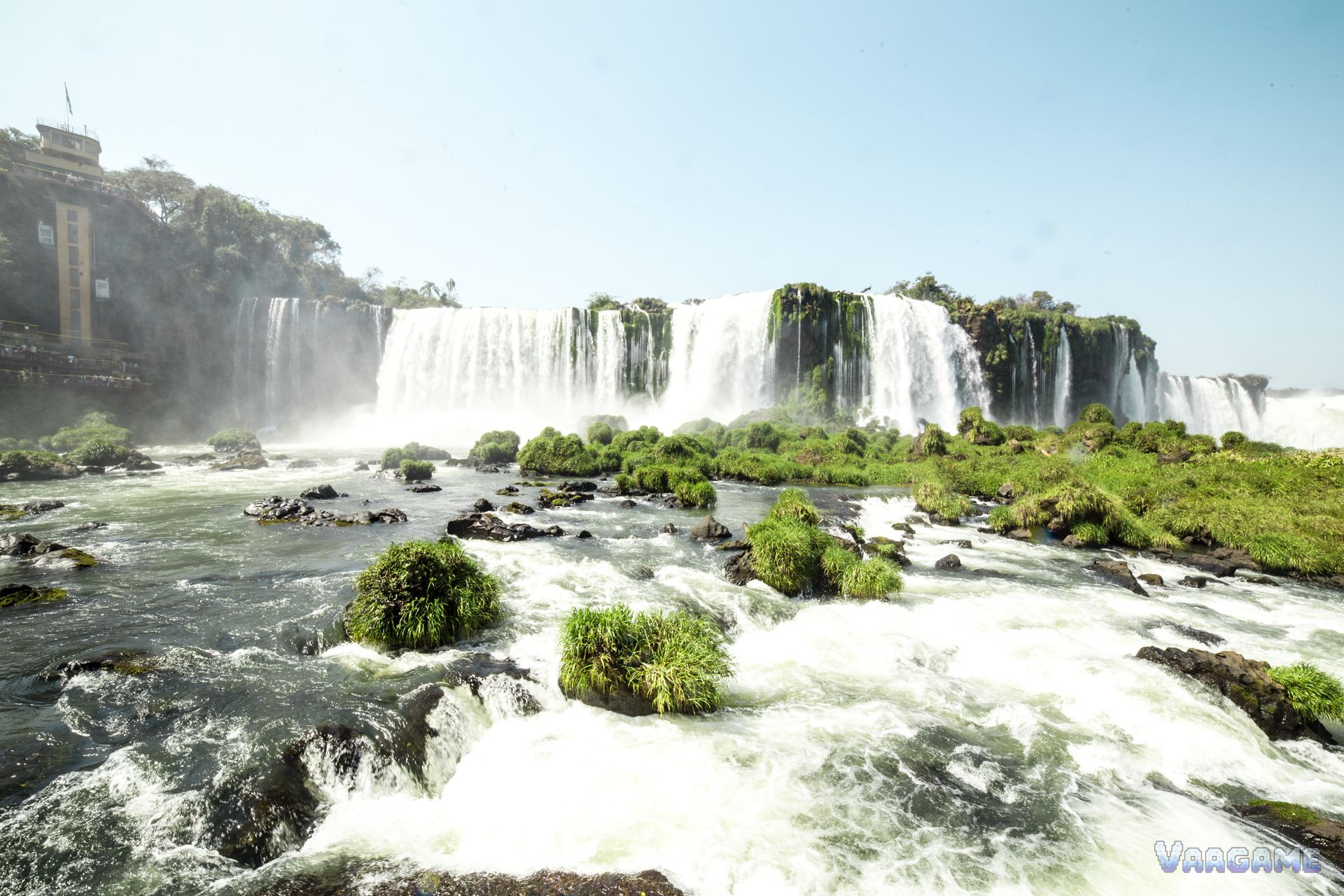
The Iguazú River runs over a basalt plateau left by ancient lava flows, then meets a cliff edge and falls. The edge runs about 2.7 kilometres, and the river splits into roughly 275 separate falls as it drops up to 82 metres. That is why Iguazu looks nothing like a single tall waterfall: it is a whole cliff of water, with green islands of rock and forest breaking the flow into hundreds of curtains.
The numbers explain the noise. On an average day the river carries about 1,500 cubic metres of water a second over the edge. In flood it carries several times that, and the whole system turns white. October 2026 was one of those floods: the river ran so high that both parks closed circuits as a precaution, and the walkways to the Devil's Throat were taken apart or shut. The water has dropped since, and the parks are open again, but the flood is a reminder that the falls are a river first and a viewpoint second. Check the flow before you go, and expect the walkways to close when it rises.
The Devil's Throat is the centre of it. The river bends into a U-shaped chasm about 80 metres deep, and about half of the whole river pours over that one edge. Stand on the Argentine side when it reopens and you look straight down into the throat; stand on the Brazil side and you see the whole U at once, with the spray rising above the forest. Both views are the same water, and they feel completely different.
The forest is part of the visit, not a backdrop. The falls sit in Atlantic rainforest, and the trails run through it: toucans and butterflies over the walkways, coatis trotting along the paths looking for food. On a sunny morning between 10:00 and 13:00, the spray throws rainbows across the gorge, sometimes two at once. The rainbows are the reason to be there before noon, not after.
What order to see it in
Do the Argentina side first, then Brazil. Argentina is the close-up day; Brazil is the panorama. Five steps, in order.
Day 1, morning, Argentina side: start with the Upper Circuit. It takes 1 to 1.5 hours on flat walkways above the falls, and it stays mostly dry. You look across the top of the water, not up at it, and you get the scale of the place before you get wet.
Day 1, late morning, Argentina side: walk the Lower Circuit, about 2 hours. The walkways run at the base of the falls, close enough that the spray reaches you. The San Martín falls are the highlight here: a wide curtain you can walk right up to. Bring the rain jacket for this one.
Day 1, afternoon, Argentina side, optional: take the Gran Aventura boat ride, about US$80–90. A truck drives you through the forest, then the boat runs into the spray under the San Martín and Tres Mosqueteros falls. You will get soaked. Book ahead in November, when the boats sell out.
Day 2, morning, Brazil side: walk the Falls Trail, about 1.5 kilometres, 1 to 2 hours. This is the postcard view: the whole 2.7-kilometre cliff in one frame, with the Devil's Throat at the far end. The close-up walkway into the Devil's Throat has been closed since 11 October 2026, pending a technical assessment, so the trail viewpoint is the closest you get for now. Check the park page the morning you go.
Day 2, after the trail: if the river is high and the light is good, stay for the rainbows. The best light for them is 10:00 to 13:00, and the Brazil side faces the sun in the morning. Then cross back to your base town; the border takes time, so do not plan a flight the same afternoon.
Best time to go, and what not to do
September to November and March to May are the best windows. Temperatures sit between 20 and 28°C, the rain is lighter, and the crowds are thinner than in summer. December to February brings the highest water, but also heat above 35°C, heavy humidity, and the biggest crowds of the year. June to August is cooler and quieter, with lower water. November sits inside the good window, with the high-water season starting in December.
What not to do:
Do not build the trip around the Devil's Throat balcony. The Argentine circuit has been closed since 3 August 2026, when the park took the walkways apart ahead of forecast floods, and there is still no reopening date. The Brazilian walkway has been closed since 11 October
2026. Both parks are open, and the rest of the falls are fully visitable, but the balcony is not. Check the park pages the morning you go, and treat a reopening as a bonus, not a promise.
Do not try both sides in one day. Argentina needs a full day, Brazil half a day, and the border crossing between them takes time. One day means rushing the Upper Circuit and skipping Brazil entirely, which is the panorama.
Do not feed the coatis. They roam the trails in groups and will take food from hands and open bags. Keep food sealed and bags closed; a coati bite means a clinic visit.
Do not forget the Brazil e-visa if you hold a US, Canadian or Australian passport. Since 10 April 2025 Brazil requires an e-visa for those nationalities, applied for online through the VFS Global portal, US$80.90, for stays of up to 90 days. EU passport holders are visa-exempt for under 90 days. Sort it before you book flights, not at the border.
Practical information
Fly to Puerto Iguazú (IGR) on the Argentina side or Foz do Iguaçu (IGU) on the Brazil side; both airports sit 20 to 30 minutes from the parks. Base yourself in Puerto Iguazú or Foz do Iguaçu — both towns are a short drive from the falls, and the parks are a day trip from either. Cross the border with your passport; the crossing is routine but can take an hour at busy times.
Tickets in 2026: the Argentina side charges foreign adults ARS 60,000, about US$39, including the Ecological Train, with 50% off a second consecutive day. The Brazil side charges R$134, about US$25–28, including internal transport. Both parks are open every day from 8:00 to 18:00, with last entry at 16:30. Arrive at opening: the first hour is the quietest, and the tour buses arrive after 9:00.
Bring a light rain jacket — the Lower Circuit and the boat ride will soak you — plus a waterproof pouch or dry bag for your phone and camera, sun protection, insect repellent, and water. Wear shoes with grip: the walkways are wet all day, and they get slippery. Prices and opening times on this page were checked on 9 November 2026; the river decides what is open, so confirm with the parks before you go.
Gear for the spray
The walkways do the damage, not the rain. The Lower Circuit runs at the base of the falls, the boat drives into the spray, and a normal jacket gives up in minutes. The one piece of gear that changes the visit is a light waterproof shell that packs into its own pocket: it keeps you dry on the walkways, folds away on the Brazil side when the sun comes out, and weighs almost nothing in a day pack.
Prices change — check the current price on Amazon.
Bottom line: give Iguazu two days: Argentina for the close-up walkways, Brazil for the panorama. Come in September to November or March to May, arrive at opening, and plan around the Devil's Throat balcony being closed — the rest of the falls are open, and the Upper and Lower Circuits plus the Brazil trail are the trip. Facts and prices on this page were checked on 9 November 2026; the river decides what is open, so confirm with the parks before you go.