
At a glance
The short version
- Game
- Game Travel
- Guide type
- Real Life Locations
- Read time
- 8 min read
- Last updated
- Nov 8, 2026
Quick answer
They sit inside the outlet glaciers Breiðamerkurjökull and Falljökull in southeast Iceland, reached from the Jökulsárlón glacier lagoon or the Skaftafell base camp.
Guide details
Swipe horizontally to view all columns.
| Item | What to know |
|---|---|
Where | Outlet glaciers Breiðamerkurjökull and Falljökull, Vatnajökull ice cap, southeast Iceland |
Best time | December to February; season November to March |
How long | 2.5 to 4 hours for the tour, plus about 5 hours driving each way from Reykjavík |
Difficulty | Guided only; walking on glacier ice with crampons, short walk to the cave |
Tickets | Book a guided tour in advance; no ticket sold at the cave; free cancellation up to 24 hours ahead on most tours |
Nearest town | Höfn, about 80 km east of Jökulsárlón (about 1 hour); fuel and food also at Skaftafell |
Cost, checked 8 November 2026 | Cave tours $161–$170.51 per person; Crystal Ice Cave from 21,890 ISK |
Why the ice is blue
Vatnajökull is Europe's largest ice cap, covering about 8 percent of Iceland. Its outlet glaciers flow slowly toward the sea, and two of them, Breiðamerkurjökull and Falljökull, hold the caves. Every summer, meltwater runs over the surface of the ice, drops through shafts and carves tunnels along the bedrock. The flow peaks in July, and while the water is running, the tunnel is a river with no headroom.
In autumn the water drops away and stops. The roof refreezes and holds its shape, and what is left is a chamber you can walk into. Nobody builds a cave here. The glacier writes one every year and takes it back by May, when spring melt refills the drains, thins the roofs and slumps the entrances. A warm week in January, with rain and wind off the Atlantic, can end a cave even sooner.
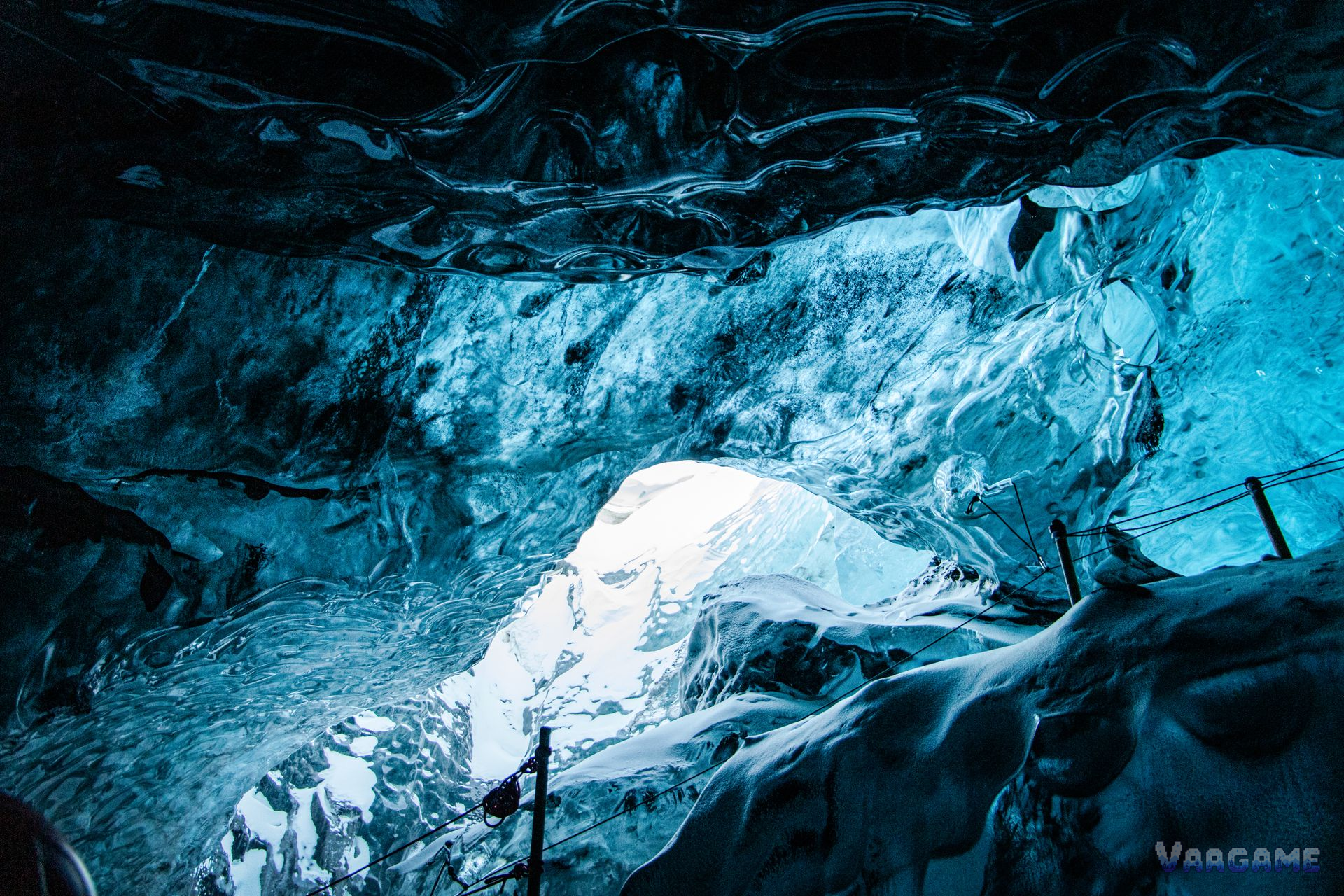
The blue is the point. Glacier ice is dense and compressed, and over time the air bubbles are squeezed out. That ice absorbs red light and lets blue through, so the walls glow a deep, clear blue, brightest where the ice is oldest and most compressed. The Crystal Ice Cave, in Breiðamerkurjökull above the Jökulsárlón lagoon, is named for how clear its ice runs. Photographs do not exaggerate the colour; on a bright day the blue fills the whole chamber.
The same cave is never there twice. Guides start scouting in September, once the meltwater has gone, walking the glacier outlets and crawling into what has opened up. Some years the good cave is a short walk from the lagoon. Other years it sits an hour of super-jeep track away, or last winter's best chamber has collapsed into a hole. No operator will name your cave when you book, because the guides take the group to whichever chamber is safe that morning.
What order to see it in
You do not pick a cave; the guides do. What you pick is the tour and the meeting point. Four steps, in order.
Book the cave early in your trip, not on the last morning. Tours run November to March, and the Christmas fortnight sells out first. Book the earliest day that fits, so a cancelled departure can move to the next day. Most tours cancel free up to 24 hours ahead.
Drive to the meeting point the day before, or leave Reykjavík early. Jökulsárlón is about 380 km, roughly 5 hours, along Route 1 in good conditions, longer in winter. Skaftafell base camp sits on the same road, about 80 km west of the lagoon. Check road conditions on umferdin.is and the weather on vedur.is that morning, and take a 4x4 from October to April.
Meet your guide at the lagoon car park or the Skaftafell base camp. Crampons and a helmet are included; bring waterproof boots above the ankle, or rent boots at the meeting point. The group drives or rides by super jeep to the glacier edge, then walks across the ice to the cave entrance.
Walk in behind the guide and take your time inside. The cave is smaller than the photographs suggest, and the light changes as clouds move. Stand still for a minute and let your eyes adjust; the blue deepens as they do. Do not touch the walls or climb on the ice; the roof is assessed daily, and the guide's word is final.
Walk out, hand back the gear, and look at the lagoon before you drive on. Jökulsárlón is worth 30 minutes on its own: icebergs calve off Breiðamerkurjökull and drift across the water, and the same glacier you just walked on feeds the lake. It is the same ice, seen from outside.
Best time to go, and what not to do
December to February is the season at its best. The ice is hard and clear, the light is low, and the blue is at its deepest. November opens the season, but the ice is softer and rain is more common; March is the other edge, when spring melt starts to thin the roofs. October can work in a cold autumn, and some caves opened in October for the 2025–26 season, but October is never certain. From April to October there is no natural Vatnajökull cave to enter at all.
If your trip falls in summer, the honest alternatives are the Katla ice cave under Mýrdalsjökull near Vík, open all year with black volcanic ash folded through pale blue ice, and the man-made ice tunnel in Langjökull, open all year. Glacier hikes on Vatnajökull itself run every month from $97, walking the same outlet glaciers past crevasses and blue-ice hollows, with no cave. They cost about $60 less than a cave tour, and in July they are the right choice.
What not to do:
Do not enter a cave without a guide, and never walk onto a glacier alone. Crevasses hide under snow, and caves collapse. On 25 August 2024 part of an ice arch collapsed during a guided tour on Breiðamerkurjökull, killing a US tourist and seriously injuring his partner. Since then the park has tightened the rules: summer cave tours stopped, only contracted companies operate, and every cave is checked daily.
Do not count on a natural cave between April and October. The caves are drainage channels, and while meltwater is running they are rivers, not rooms. A July booking gets you a glacier hike, not a cave.
Do not navigate by old trip reports or photographs. Cave locations change every year, and an entrance photographed two winters ago may no longer exist. Trust the operator's meeting point, not a pin from a blog post.
Do not book the cave for your last morning. A warm week can flood a cave and close it with no warning, and guides cancel the departure when the morning check fails. Book early in the trip, and keep the free 24-hour cancellation as your safety net.
November daylight is short, so use it well. Drive in daylight, meet the guide on time, and do not plan a long drive after the tour in the dark. The cave is the centre of the day, not the start of a night drive.
Practical information
From Reykjavík it is about 380 km to Jökulsárlón, roughly 5 hours along Route 1 in good conditions, longer in winter. Skaftafell base camp is on the same road, about 80 km west of the lagoon. December daylight in south Iceland is about 4 to 5 hours, so plan the drive in daylight and the cave tour for the middle of the day. From October to April, a 4x4 is strongly recommended.
Cave tours cost $161 to $170.51 per person, and run 2.5 to 4 hours. The Crystal Ice Cave tour from Jökulsárlón runs about 2.5 hours from 21,890 ISK; the Skaftafell Blue Ice Cave and Falljökull glacier hike runs 4 hours at $164.83. Prices change with the season, so check the operator page for your date. Most tours cancel free up to 24 hours ahead and take no payment at booking. There is no ticket to buy at the cave itself — the tour is the ticket, and it must be booked in advance. Most tours set a minimum age of 6 or 8, depending on the tour.
Bring layers and a windproof, waterproof outer shell — the south coast is known for sudden, powerful gusts. Wear waterproof boots above the ankle; crampons and a helmet come with the tour. Pack a warm hat, gloves and a spare pair of socks, and keep your camera battery close to your body, since cold drains batteries fast. Check safetravel.is, vedur.is and umferdin.is every morning before you set out.
Gear for the icy walk
The tour supplies crampons for the glacier, but the walk from the car park, the lagoon shore and the paths at Skaftafell ice over in winter. Slip-on ice grips that pull over your shoes are the one piece of gear that changes the visit: they turn a careful shuffle into a normal walk, and they weigh almost nothing in a day pack.
Prices change — check the current price on Amazon.
Bottom line: book a guided tour for November to March, meet at Jökulsárlón or Skaftafell, and allow 2.5 to 4 hours plus about 5 hours of driving each way from Reykjavík. Come in December to February for the deepest blue, book early in your trip, and never enter a cave without a guide. Facts and prices on this page were checked on 8 November 2026; cave dates move with the weather, so confirm with the operator before you go.