

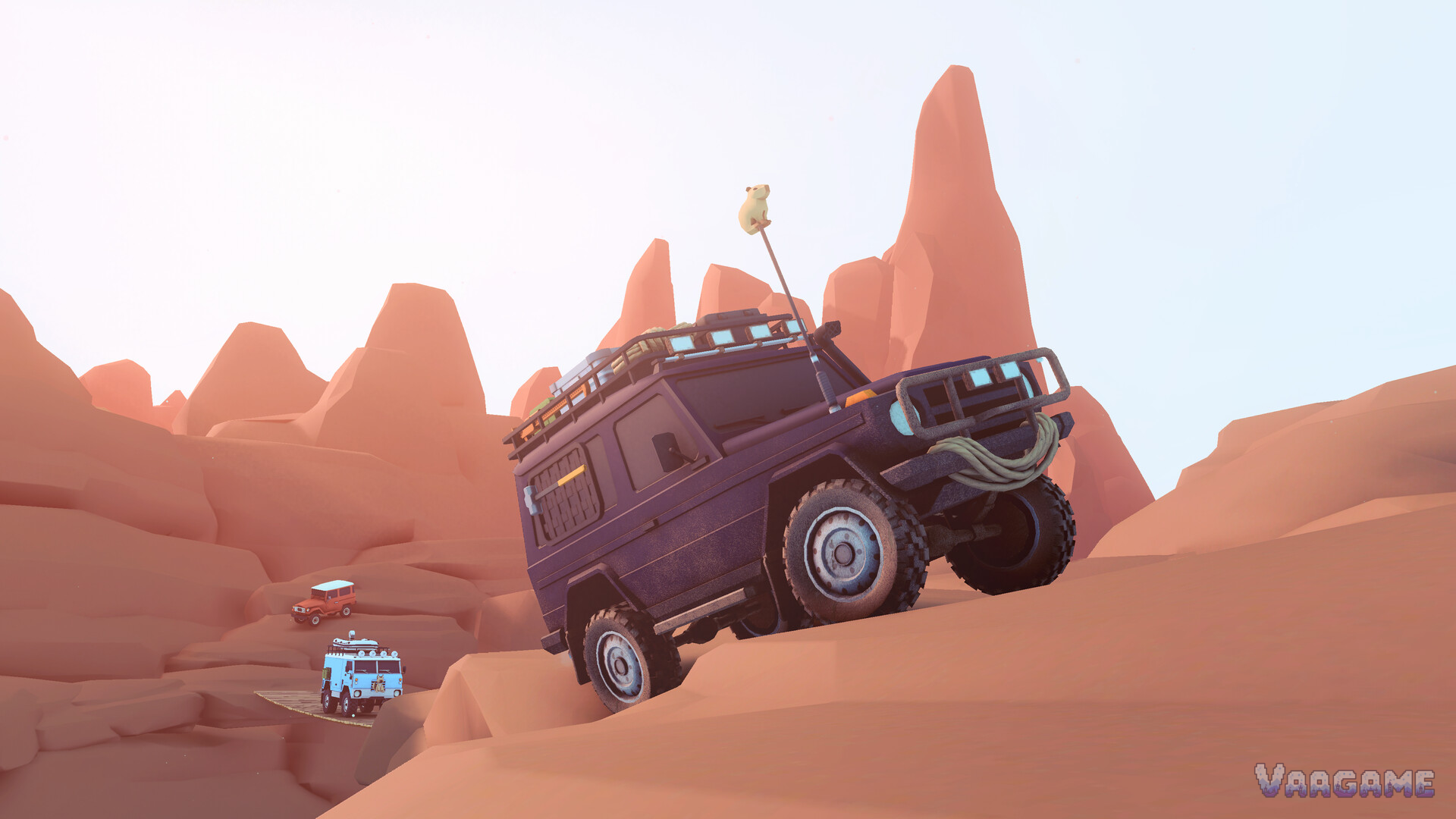
The winch is the single most important skill in over the hill. There are no recovery trucks coming to fetch you, no reset button that feels good to use — when your 4x4 bellies out in a bog or sits tilted on a rock step, the cable on your front bumper, a well-chosen anchor point and low gear are how the journey continues. This guide covers what the winch can and cannot do, how to pick and place anchor points (including the portable winch point for bare rock), the exact order of operations for the three classic stuck situations, and how the support items — planks, the jack and the weather bell — fit around the pull.
At a glance
The winch's job: Pull your vehicle out of bogs, up steps and back onto line — it is a finesse tool, not a tow truck
Best anchors: Trees, solid rock, another vehicle — high and in line with your direction of travel
The golden rule: Winch early, in low gear, before wheelspin digs you deeper
No natural anchor? Place the portable winch point — it exists for treeless rock country
Rolled over? Jack first, winch second; pulling a flipped truck just drags it
Kit refills: Carried recovery items replenish at campsites, so plan hard trails camp to camp
1. What the winch can and cannot do
The winch attaches to anchor points near your vehicle and pulls. That simplicity hides the technique: the cable multiplies a good line, it does not rescue a bad one. Reviewers of the launch build consistently describe the winch as deliberately modest in power — treat that as a design statement rather than a fault. It will not drag a high-centred truck sideways out of deep mud, and it will not hold a bad angle against physics. What it does superbly is convert a nearly-makeable slope into a made one, walk a bogged truck out metre by metre while the wheels help, and give a tilted vehicle the nudge that puts weight back on its tyres.
Two habits follow from that. First, winch early: the moment a climb or crossing starts to fail, stop and rig the cable — every extra second of wheelspin excavates the hole you then have to pull out of. Second, the winch and the gearbox are one system: almost every successful recovery in this game is a low-gear pull, wheels turning gently while the cable takes the peak load.
2. Choosing an anchor point
Anchor choice is where recoveries are won. Work through these principles in order:
High beats low. An anchor above your vehicle pulls slightly upward, lifting weight off the bellied chassis and back onto the driven wheels. A ground-level anchor drags the nose down into the obstacle.
In line beats sideways. The cable should continue your intended line of travel as closely as the terrain allows. Side pulls swing the truck, load one side's suspension, and on a slope can start the roll you were trying to prevent.
Solid beats convenient. Trees and rock outcrops are the natural anchors. Another vehicle is an excellent anchor — heavier than it looks and positioned exactly where a friend chose to stop (see section 6).
Short beats long. A short pull to a near anchor, then re-rigging, gives you control. One heroic long pull gives the truck time to wander off line.
Where there is nothing to tie to — the bare-rock country above the treeline is the classic case — place the portable winch point. It is a carried item, it occupies an inventory slot, and it converts "no anchor, no recovery" into a normal pull. If you are heading into rocky high country, it is the first item to check before you leave camp.
3. The standard recovery order
Whatever the situation, the sequence is the same. Print it on the inside of your eyelids:
Stop. Wheels still, pride aside. Assess before you act — most recoveries get harder because the first response was throttle.
Read the problem. Are you bellied (chassis grounded), bogged (wheels dug in), tilted (roll risk) or flooded (engine stalled in water)? Each has a different first move (section 4).
Rig the anchor. Choose by the principles above; place the portable point if the terrain offers nothing.
Engage low gear. Then pull and drive together — gentle throttle, cable taking the strain peaks.
Re-rig as you gain ground. Short pulls, fresh angles. Walk the truck out in stages rather than forcing one long drag.
Restock at the next campsite. Planks and placed anchors are carried items; a hard recovery spends them, and campsites are where they come back.
4. The three classic stuck situations
Bogged in mud or soft ground. The wheels have dug themselves pits. Rig a high, in-line anchor ahead, add planks under the driving wheels if you carry them, and pull in low gear with the wheels turning just enough to help the cable. If the truck moves a metre and stalls, repeat — you are building a ramp out of the hole, not losing.
Rolled or heavily tilted. Do not winch a truck that is on its side or past the point of balance — the cable will drag it, not right it. Use the jack first to reposition and right the vehicle, then winch from the new, stable position if the ground still will not let you drive out.
Stranded in water. If deep water has stalled the engine, time matters more than elegance: winch to the nearest bank on the shortest line that keeps the pull in line with the truck, get the vehicle out and onto dry ground, and treat the episode as the game teaching you its fording lesson. The engine waterlogging protection upgrade exists precisely because this happens in lake country (the upgrades guide in this collection covers the priority order).
5. Planks, the jack and the bell: the support order
The winch gets the glory, but the kit works as a set:
Planks go down before the pull when the ground itself is the problem — bridging a washout, spreading weight over a bog, repairing a broken boardwalk crossing. If you place planks and then do not need the winch at all, that is the kit working perfectly.
The jack is the reset for orientation problems: rolls, heavy tilts, a wheel dropped into a hole the winch cannot address. Jack first, drive or winch second.
The weather bell changes the conditions rather than the vehicle. Storms and heavy rain turn marginal surfaces into traps; ringing the bell to clear the weather before a hard section is a legitimate recovery decision, and it is why experienced players save it rather than spending it on a damp afternoon.
All three consume inventory, and inventory replenishes at campsites. A recovery that spends your last plank has a cost that shows up two valleys later — plan routes camp to camp on the hard trails.
6. Recovery in co-op: the second winch
In multiplayer, per the developer's official FAQ, players can winch each other free — and a parked friend is the best anchor in the game: heavy, precisely placed, and able to reposition as the pull develops. The FAQ also describes shared repair help and group navigation, with completion still counted per player once each person reaches the checkpoint themselves. This collection's co-op guide covers the progress rules in full; the recovery takeaway is simpler: on a convoy run, the last vehicle in line is never truly stuck as long as the one ahead can turn around.
FAQ
Why does my winch feel weak? Because it is meant to. Launch reviewers noted the same thing: the winch is tuned as a finesse tool that rewards anchor height, a straight pull line and low gear working with it. If a pull fails, the fix is almost always geometry — re-anchor higher, add planks — rather than more force.
There is nothing to attach to. What now? That is exactly what the portable winch point is for: a placeable anchor you carry for bare rock and open ground. It needs an inventory slot, which is why the upgrades guide ranks extra slots so highly.
I rolled the truck somewhere remote. Am I done? No. The jack repositions and rights a rolled vehicle; after that, winch or drive out from the new position. Rolling is an expected event in this game, not a run-ender.
Can a friend pull me out in co-op? Yes — per the official FAQ, mutual winching is part of co-op play, and a second vehicle makes an excellent anchor. Completion and unlocks remain personal, so your friend rescues your truck, not your checklist.
Related guides
over the hill Beginner's Guide: The Winch, Your First Upgrades and What To Do First
over the hill Driving Guide: Gears, Terrain Reading and Vehicle Control
over the hill Challenge Trails Guide: Trail Types, Preparation and Resetting After a Fail
over the hill Co-op Guide: How Multiplayer, Progress and Crossplay Work