

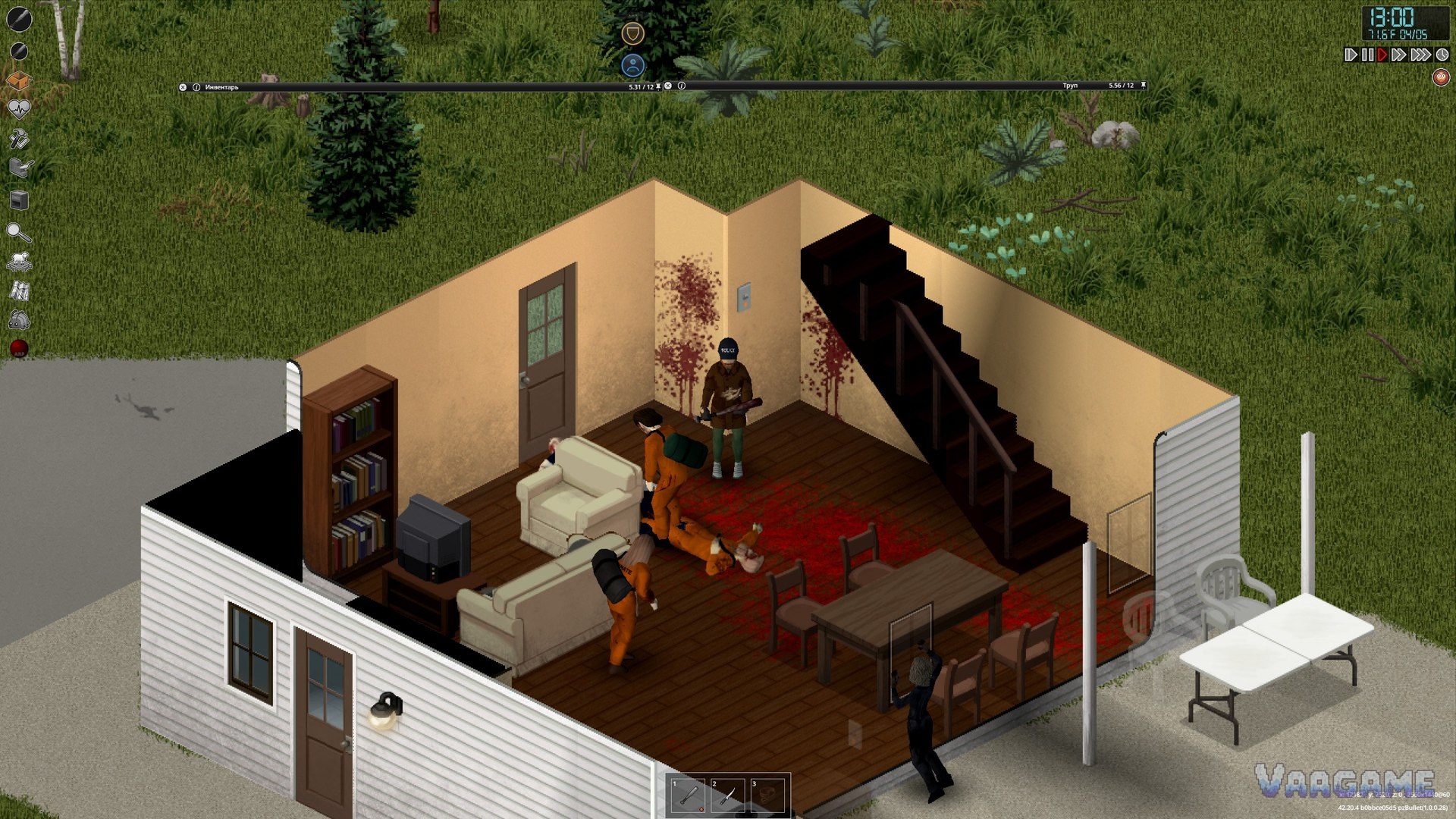
First Aid in Build 42 is the skill that decides whether an injury is a five-minute problem or the end of the run: it raises the quality of every treatment you perform and the amount of information the Health panel shows you. The system underneath it is strict — bleeding is stopped in a fixed order, deep wounds hide their Stitch option until the glass is out, dirty bandages quietly stop protecting you, and none of it touches the Knox virus. This guide covers the full loop for Build 42.20: wound types, the treatment order, dressings and sterilizing, fractures and burns, the two different infections, and exactly which actions pay First Aid XP.
Quick answer
Work the order: stop the bleeding, remove glass, disinfect, stitch deep wounds, then bandage clean — the panel hides Stitch while glass is still lodged.
A proper Bandage has strength 4.0, a Rag 2.0, and a Dirty Bandage just 0.5 — sterilizing keeps the same strength and adds disinfection on application.
Zombie wounds roll Knox at 7% for a scratch, 25% for a laceration, 100% for a bite, rolled the moment the wound lands. No bandage, antibiotic or disinfectant changes that roll.
An Infected Wound on the panel is a different thing entirely: an ordinary infection that slows healing and adds pain, treated with disinfection and clean dressings.
First Aid XP is paid per treatment, not per injury: remove glass 15, stitch 15, splint 15, clean burn 10, first clean bandage 5, remove bullet 20; disinfecting alone pays 0.
At a glance
Swipe horizontally to view all columns.
| Topic | Build 42 facts |
|---|---|
Skill effect | Better treatment quality + more Health panel information |
Knox odds (zombie wounds) | Scratch 7% / Laceration 25% / Bite 100% |
Bandage strengths | Bandage 4.0 / Rag 2.0 / Dirty Bandage 0.5 |
Sterilizing | 0.1 L alcohol, or 0.5 L of very hot water |
Top XP actions | Remove bullet 20 / Glass, stitch, splint 15 |
Skill books | First Aid Vol. 1–5, multipliers ×3 / ×5 / ×8 / ×12 / ×16 |
Version basis | Build 42.20 (data references verified for 42.19–42.20.4) |
Wound types: what the Health panel is telling you
Every injury sits on a body part in the Health panel, and the wound type — not the body part — decides the treatment. Zombie-caused wounds additionally roll for the Knox virus the moment they are applied; wounds from glass, falls, fire and tools never do.
Swipe horizontally to view all columns.
| Wound | Typical causes | Knox risk | Core treatment |
|---|---|---|---|
Scratch | Zombie contact, glass, branches | 7% from zombies | Disinfect, bandage |
Laceration | Heavier zombie contact, blades, glass | 25% from zombies | Disinfect, bandage, keep dressings clean |
Bite | Zombie bite | 100% | Bandage the bleeding — the virus has no treatment |
Deep wound | Knives, large glass, shrapnel | None | Remove debris, stitch, bandage |
Fracture | Falls, vehicle collisions | None | Splint, then rest |
Burn | Fire, explosions, campfires | None | Clean Burn if flagged, bandage |
Bullet wound | Gunfire | None | Remove bullet, stitch, bandage |
Two consequences follow from that table. First, a scratch from a window frame and a scratch from a zombie are the same wound with different stakes — treat both properly, but only one of them can end the run three days later. Second, pain, bleeding and health loss are managed per wound: a character with three untreated minor wounds can be in more danger than one with a single stitched deep wound.
The treatment order
Medical actions are done from the Health panel, right-clicking the wound or using the item on the body part. The order matters because later steps are blocked or wasted when earlier ones are skipped:
1. Stop life-threatening bleeding first. A deep wound can wait a minute; a body part pouring blood cannot. Bandage the worst bleeder even before you have disinfected anything.
2. Remove lodged glass. With glass shards in the wound, the Stitch option does not appear at all. Use tweezers, a Suture Needle Holder or another glass-removal tool; bare hands always work but take longer and add more pain.
3. Disinfect. Alcohol-based disinfectant, rubbing alcohol or other valid alcohol items clean the site and cut the chance of an ordinary wound infection. It can add short-term pain, and on its own it pays no XP.
4. Stitch deep wounds. Use a Suture Needle, or a sewing needle plus thread. First Aid level quietly matters here: stitch quality improves as the skill rises.
5. Bandage with a clean or sterilized dressing. This is the step that locks in the earlier work — and the one most often done badly, with whatever dirty rag is closest.
6. Monitor, then remove stitches. Watch the part for an Infected Wound flag, replace dressings as they dirty, and remove the stitches from the same panel once the site has improved. At First Aid above 6, the panel can show cues that a stitched wound is ready.
Dressings: bandages, rags and sterilizing
Not all dressings are equal, and the gap is large enough to change outcomes:
Swipe horizontally to view all columns.
| Dressing | Strength | Notes |
|---|---|---|
Bandage | 4.0 | The standard; becomes Dirty after use |
Bandage (Sterilized) | 4.0 | Same strength, disinfects the wound when applied |
Rag | 2.0 | Ripped sheets and clothing; the early-game fallback |
Rag (Sterilized) | 2.0 | Same strength, guards against infection on apply |
Bandage (Dirty) | 0.5 | Barely protects; replace it as soon as you can |
Sterilizing is a crafting step, not a stronger bandage: a clean Bandage or Rag becomes its Sterilized version with 0.1 L of Rubbing Alcohol, Vodka or Whiskey, or with a kept container holding 0.5 L of water that is already very hot. The sterilized dressing disinfects the wound at the moment it goes on — that application effect is the whole point.
Dressing hygiene is a repeating loop. Bandages dirty over time as they work; a dirty dressing protects at a fraction of its clean value and raises the risk of the wound becoming infected, and dirty or bloody clothing worn over an open wound pushes the same risk up. Carry spare clean dressings, swap them when they turn, and wash or replace the layer of clothing sitting over a healing wound.
Deep wounds, glass and bullets
Deep wounds are the wounds that punish improvisation. They bleed hard, they do not close with a bandage alone, and they frequently arrive with something still inside them. The full sequence is the treatment order above with nothing skipped: glass or debris out first (15 XP for a successful glass removal), disinfect, stitch (15 XP for the first stitch on that wound), clean bandage over the top.
Lacerations are different: they cannot be stitched. Their treatment is disinfection, a good dressing, and discipline about keeping that dressing clean while they close on their own.
Bullet wounds are rare in civilian play but follow the same logic one step further: remove the bullet (20 XP, the single best-paying First Aid action), then stitch, then bandage. Tweezers are the tool for both glass and bullets, which is why a pair belongs in every medical kit rather than in a base drawer.
Fractures and burns
A fracture — usually from a fall or a vehicle collision — is a mobility injury. Nothing is bleeding, but the limb will not bear weight, and the break will not close like a cut. The treatment is a splint, applied from the Health panel (15 XP for the first splint on that injury), followed by rest: a splinted fracture recovers far faster than an unsplinted one, and trying to fight or sprint on it just stretches the recovery out. Herbal support exists for the patient player: a comfrey poultice, made from foraged comfrey, is the traditional adjunct for fracture recovery — which means the medic and the forager are the same person more often than not (see the Foraging guide for medicinal plants and the Herbalist knowledge needed to identify them).
Burns share the scratch care loop — bandage and wait — with one extra step. When a burned part is flagged as needing cleaning, the panel offers Clean Burn: a timed action that consumes a suitable dressing, clears the flag and pays 10 XP, at the cost of some temporary pain (lower First Aid means more pain). Bandage with a sterilized dressing if you have one, disinfect when the wound is dirty, and replace dressings as they soil. Deliberately standing in a fire to farm that 10 XP is a trade every experienced player refuses: burns bring severe pain and a long recovery.
The two infections
The word "infected" causes more wrong decisions in Project Zomboid than any zombie. There are two completely different things sharing it:
Ordinary wound infection is the state flagged on a body part in the Health panel. It is a bacterial-style complication of an untended wound: healing slows, pain rises, and it responds to exactly the care in this guide — disinfection, clean or sterilized dressings, antibiotics if it takes hold, and rest. It never turns anyone into a zombie.
The Knox virus is the zombie infection, and it never appears on the panel at all. It is rolled when a zombie wound is applied — 7% for scratches, 25% for lacerations, 100% for bites under default settings — and from that moment no vanilla treatment affects it. Disinfectant, antibiotics and clean bandages are still worth using on the wound itself; they are simply not a cure, and burning your rare medical supplies hunting for one is how a doomed character also becomes a badly supplied next character. If you are bitten on default settings, bandage the bleeding, stay mobile, and put your affairs — and your loot — in order.
One setting note, because it is widely misunderstood: under Everyone's Infected, bites still apply the virus; only Transmission set to None switches bite infection off entirely.
Levelling First Aid: what actually pays XP
First Aid is trained by treating, full stop. The base XP awards (before skill books and trait multipliers) are fixed per action, and several of them are one-time per wound state — which is why the grind folklore about re-wrapping the same wound forever does not work.
Swipe horizontally to view all columns.
| Action | Base XP | Repeat rule |
|---|---|---|
Remove bullet | 20 | Each successful removal |
Remove lodged glass | 15 | Each successful removal |
Stitch a wound | 15 | First stitch on that wound state only |
Apply a splint | 15 | First splint on that injury only |
Clean a burn | 10 | While the part still needs a wash |
Apply a bandage | 5 | First qualifying bandage; dirty bandages pay 0 |
Disinfect | 0 | Never an XP action |
Read the matching First Aid skill book before treating in bulk: Vol. 1 covers levels 1–2 at up to ×3; Vol. 2 covers levels 3–4 at ×5; Vol. 3 covers levels 5–6 at ×8; Vol. 4 covers levels 7–8 at ×12; Vol. 5 covers levels 9–10 at ×16. A volume does nothing outside its level band. Recorded medical VHS tapes (titles such as Combat Wound Management, Rosewood Medical First Aid and Emergency First Aid) also grant small amounts of First Aid XP when watched.
The honest training routes are unglamorous: treat every real injury completely instead of slapping on a rag; in multiplayer, be the person who treats everyone else — the doctor earns the XP for treatments on other players; and keep clean bandages stocked so the 5 XP bandage award is never wasted on a dirty wrap. What higher levels buy you is quality, not magic: shorter treatment times, better bandage durability, less pain added by procedures, better stitch quality, and more information on the Health panel — including those stitch-readiness cues above level 6.
The medical kit: what to carry
A working kit is small. The point is that every item in it unlocks a step of the treatment order:
Dressings: clean Bandages as the standard; sterilized bandages for deep wounds and burns; ripped sheets as backup. Spare clean dressings to replace dirty ones.
Disinfection: Disinfectant or Rubbing Alcohol; whiskey or vodka doubles as sterilizing stock.
Tools: Tweezers (glass and bullets), a Suture Needle — or a sewing needle plus thread — and a Suture Needle Holder if you find one.
Support: Painkillers for procedure pain and fracture discomfort; Antibiotics reserved for ordinary wound infections that have taken hold; a crafted splint or the materials for one after any fall.
Stock it from pharmacies, clinics, hospital wings and ambulances, and restock dressings from any clothing you can rip. The kit lives in a dedicated bag or fanny pack so that it is on the patient — or on the medic — when it is needed, not in a crate at base.
Troubleshooting
Swipe horizontally to view all columns.
| Problem | What is actually happening |
|---|---|
The Stitch option never appears | Glass is still lodged in the wound — remove it first; Stitch stays hidden until then |
The wound shows Infected | That is the ordinary wound infection, not the virus: disinfect, swap in clean or sterilized dressings, rest |
Bandages keep turning dirty almost immediately | The wound is still open and working; keep replacing them — a Dirty Bandage protects at 0.5 strength |
Health still falls after everything is bandaged | Check every body part for a second bleeding wound, and treat pain and exhaustion; one missed bleeder sinks the whole treatment |
Antibiotics are not curing a bite | They cannot: antibiotics treat ordinary wound infection. A bite's Knox roll happened when the wound landed |
FAQ
Does disinfecting a zombie scratch remove the infection chance?
No. The Knox roll happens when the wound is applied — about 7% for a scratch, 25% for a laceration, 100% for a bite on default settings. Disinfecting is still correct care for the wound itself and prevents ordinary wound infection, but it never re-rolls or removes the virus.
What is the difference between an Infected wound and being infected?
An Infected flag on the Health panel is an ordinary, treatable wound infection: slower healing, more pain, no zombification. The Knox virus is never shown on the panel and has no vanilla treatment. The two share a word and nothing else.
Can lacerations be stitched?
No. Only deep wounds take stitches. Lacerations are disinfected, dressed with a clean bandage, and kept clean while they close on their own.
How do I make sterilized bandages?
Sterilize a clean Bandage or Rag with 0.1 L of Rubbing Alcohol, Vodka or Whiskey, or with a kept container holding 0.5 L of very hot water. The sterilized version has the same strength (4.0 for a bandage, 2.0 for a rag) and disinfects the wound when applied.
What is the fastest way to level First Aid?
There is no loop that beats real treatment: read the current First Aid book, then treat injuries completely — glass removal and stitching pay 15 XP each, splints 15, burn cleaning 10, and the first clean bandage on a wound
5. In multiplayer, treating other players pays the doctor the same XP. Self-injury routines waste health and supplies for the same awards.
Do I need to remove stitches?
Yes. Once a stitched wound has had time to improve, remove the stitches from the Health panel. At First Aid above 6 the panel can show readiness cues; leaving stitches in indefinitely is not part of the treatment.
Related guides
Infection and Wounds: the two infections, in depth
Foraging: medicinal plants and Herbalist knowledge
Winter Survival: hypothermia and the cold chain
Character Builds: medical occupations and traits