

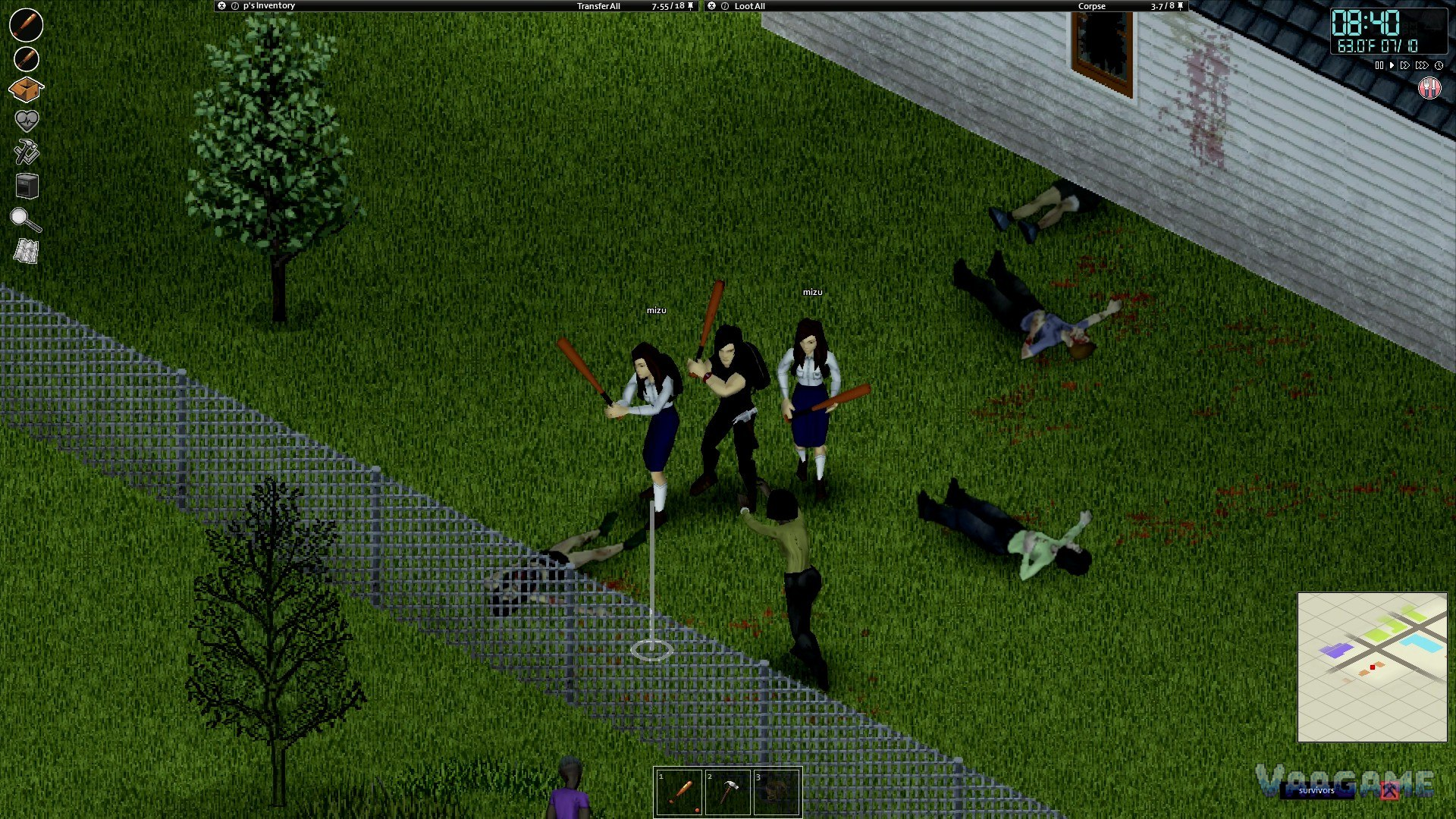
Maintenance is the quiet skill that decides how long your weapons live. In Build 42 it works on a simple formula — your Maintenance level plus half your weapon skill — but everything around that formula is full of traps: machetes refuse glue, the katana cannot be sharpened at all, the crowbar has no repair recipe, and every adhesive fix can fail and damage the weapon it was meant to save. This guide covers the whole system for Build 42.20: the durability roll, the three condition bars, the full repair matrix with its level gates, sharpening, break salvage and reassembly, the separate rules for guns, and how Maintenance XP is actually earned.
Quick answer
Durability rolls use Maintenance level + (weapon skill ÷ 2), whole numbers — raise the matching weapon skill and the weapon lasts longer too.
About 50% of qualifying melee hits roll a Maintenance check worth 2 base XP; shoves and stomps never pay, and many repair, sharpening and assembly recipes pay direct XP.
Repairs are tiered and gated: duct tape is the best everyday fix, epoxy is the best overall (Maintenance 3), and wood glue quietly needs Carpentry 2.
Know the exceptions before you waste materials: machetes and knives take no adhesive repairs, the katana cannot be sharpened, and the crowbar cannot be repaired at all.
A broken composite weapon survives as parts — it splits into a head or blade plus a handle, and Maintenance 1 with a hammer puts it back together.
At a glance
Swipe horizontally to view all columns.
| Topic | Build 42 facts |
|---|---|
Skill effect | Melee weapons lose condition less often |
Durability modifier | Maintenance + (weapon skill ÷ 2) |
XP from combat | ~50% of qualifying hits, 2 base XP (durable weapons pay less) |
Best repair | Fix With Epoxy — Maintenance 3 |
Best everyday repair | Fix With Duct Tape — no gate |
Hidden gate | Fix With Wood Glue needs Carpentry 2 |
Unrepairable | Crowbar (none); Katana (no sharpening); Machete (sharpen only) |
Skill books | Maintenance Vol. 1–5, multipliers ×3 / ×5 / ×8 / ×12 / ×16 |
Version basis | Build 42.20 (repair data verified for 42.20.4) |
What Maintenance actually does
Every time a melee weapon is used, the game rolls against that weapon losing condition. The roll is softened by a single modifier: your Maintenance level plus half your current skill with that weapon class (weapon skill ÷ 2), using whole numbers. A character with Maintenance 4 fighting with an Axe skill of 6 rolls as if they had 7 protection on every axe swing; the same character picking up an unfamiliar spear starts from a much weaker modifier.
Two consequences follow. First, Maintenance is not a substitute for weapon skill — a level 0 Maintenance character with high Long Blade protects a sword better than a high-Maintenance character who can barely swing one. Second, firearms are outside this system entirely: guns follow separate condition rules, and Maintenance is the melee durability path only.
The three bars: Condition, Head Condition, Sharpness
Many Build 42 melee weapons track more than one kind of wear, and repairing the wrong bar is the most common beginner mistake:
Condition — the main bar: the handle and the weapon as a whole. This is what adhesive and epoxy repairs restore.
Head Condition — tracked separately on weapons with a distinct head, such as axes and picks. Repairs restore it too; sharpening does not.
Sharpness — blades dull as they cut. A dull blade still has full condition but does reduced work; sharpening restores Sharpness only, and only while Sharpness sits below the Condition cap — if condition is too low, repair first, then sharpen.
A weapon at zero in its main condition breaks — but in Build 42, breaking is not always the end, as the salvage section below explains.
The repair matrix
Repairs live in the crafting interface under the Repair category, and they are consumable fixes, not restorations: every adhesive or epoxy repair can fail, and a failed attempt can damage the item further. A successful fix restores a fraction of the missing condition — the better tiers restore more — and repeat repairs on the same weapon give diminishing returns, so no weapon is immortal.
Swipe horizontally to view all columns.
| Recipe | Materials | Requirement | Result tier |
|---|---|---|---|
Fix With Adhesive Tape | Tape ×3 | None | Standard |
Fix With Glue | Glue ×2 | None | Standard |
Fix With Zipties | Zip Ties ×1 | Maintenance 1 | Standard |
Fix With Duct Tape | Duct Tape ×2 | None | Better |
Fix With Wood Glue | Wood Glue ×2 | Carpentry 2 | Better |
Fix With Epoxy | Epoxy ×1 + Fiberglass Tape ×1 + a sharp tool (kept) | Maintenance 3 | Best |
Fix With Epoxy And Rags | Epoxy ×1 + Ripped Sheets / Denim Strips ×2 | Maintenance 4 | Standard fallback |
Read the table as a ladder. Early on, glue and adhesive tape keep common weapons alive; duct tape is the fix worth hoarding, because it reaches the better tier with no level gate. Wood glue matches duct tape's tier but asks for Carpentry 2 instead of a Maintenance level — the first of several places where Maintenance quietly leans on other skills. Epoxy is the best repair in the game and the reason to push Maintenance to 3; the rags variant at Maintenance 4 exists for when fiberglass tape runs out, not because it is stronger.
Which weapons take which route
The matrix only works on weapons that accept it. The exceptions matter more than the rule:
Swipe horizontally to view all columns.
| Weapon | Adhesive / epoxy repair | Sharpening | Notes |
|---|---|---|---|
Fire Axe, Hand Axe | Yes | Yes | Has both Head Condition and Sharpness |
Baseball Bat, Nightstick | Yes | No | Blunt weapons have no edge to restore |
Machete | No | Yes | Sharpen only — tape and glue do not apply |
Kitchen Knife, Hunting Knife | No | Yes | Small blades are sharpen-only |
Katana | No | No | Has Sharpness, but no sharpening recipe accepts it |
Crowbar | No | No | No vanilla repair exists — replace it |
The practical lesson is about expectations. The crowbar is everyone's favourite early weapon precisely because it is durable and common — but its condition is a countdown with no reset button, so a high-Maintenance character still retires crowbars. The katana is the opposite tragedy: a top-tier blade whose sharpness can only go down. Save both for the fights that deserve them.
Sharpening
Sharpening restores Sharpness and nothing else — it never touches Condition or Head Condition, and every method carries a failure chance that can damage the blade instead.
Whetstone — used in-hand and kept afterwards; the standard field sharpener. A Crude Whetstone is crafted from 2 stones once you know the recipe (Maintenance 1, auto-learned at 2).
File — also used in-hand, but with a high chance to fail and damage the blade. It doubles as the tool for the Fix Saw recipe at Maintenance 2.
Grindstone — the workstation route: build it from 4 planks, 4 nails and 1 stone wheel, with a hammer kept for the build. The stone wheel comes from the blacksmithing station chain, which is why long-term blade users end up touching the forge (see the Blacksmithing guide).
When it breaks anyway: salvage and reassembly
Build 42 changed what "broken" means for composite weapons. Instead of vanishing, many of them split into their components — a head or blade, plus a handle — and those pieces are the raw material for reassembly. On a surface, with a hammer kept in hand, the assembly recipes all open at Maintenance 1: a salvaged blade goes onto a small handle, an axe or pick head goes onto a handle, and a large head goes onto a long handle.
The bottleneck is the long handle. Long handles come from carving: a plank or a large branch, worked with a sharp knife at Carving 3 — one more skill feeding the Maintenance loop. Salvage can also create new weapons outright: at Maintenance 2, a broken machete's blade can be turned into a Machete Knife, a short blade that outlives the weapon it came from.
Guns are a different system
Firearms do not use the adhesive matrix at all. A damaged gun is repaired by consuming a second, compatible gun as a donor, and the gate is Aiming rather than Maintenance: shotguns open at Aiming 2, pistols and revolvers at Aiming 3 with the same model as donor, rifles at Aiming 4, and assault rifles at Aiming
5. Treat a same-model duplicate as a spare part, not as vendor trash.
How Maintenance leans on Carpentry and Blacksmithing
Maintenance looks like a lone combat skill, but its best tools are made by other skills. The better tier of everyday repair needs Carpentry 2 for wood glue. The grindstone needs a stone wheel from the blacksmithing station chain. The long handles that reassembly consumes are carved, not found. And the Blacksmith occupation starts with a point of Maintenance alongside its forge skills, because forged blades are maintained through exactly the sharpening and assembly routes in this guide. Levelling Maintenance in isolation works; levelling it alongside Carpentry, Carving and a little Blacksmithing works noticeably better.
Levelling Maintenance
Maintenance XP arrives from two streams. In combat, about half of qualifying melee hits roll a check worth 2 base XP — less on very durable weapons (a Metal Pipe pays roughly 1.33), because weapons that rarely lose condition also teach less per swing. Pushes, shoves and stomps never qualify, and some badly held two-handed swings lose their roll. The second stream is direct recipe XP: Fix With Duct Tape pays 10, Fix With Adhesive Tape 5, Fix With Epoxy 15, and many sharpening, spear-assembly, improvised-weapon and tire-armour recipes pay Maintenance XP where the recipe lists it.
Swipe horizontally to view all columns.
| XP stream | Base award | Notes |
|---|---|---|
Qualifying melee hit | ~50% chance of 2 XP | Very durable weapons pay less (Metal Pipe ≈ 1.33) |
Fix With Duct Tape | 10 XP | Best XP-per-fix among the ungated repairs |
Fix With Adhesive Tape | 5 XP | Cheap and available from day one |
Fix With Epoxy | 15 XP | Pays best; needs Maintenance 3 to perform |
Shove / stomp / push | 0 | Never a Maintenance action |
Read the matching book before a long fight or a repair session: Maintenance Vol. 1 covers levels 1–2 at up to ×3; Vol. 2 covers levels 3–4 at ×5; Vol. 3 covers levels 5–6 at ×8; Vol. 4 covers levels 7–8 at ×12; Vol. 5 covers levels 9–10 at ×16. The volumes are titled Basic Repairs, Better Tools, Made Easy, Home Guide to Tool Repairs, Maintaining High Grade Tools and Understanding Biomechanics of Tool Use.
Starting points help more here than in most skills. The DIY Expert occupation (the renamed Repairman) starts at Maintenance 2 with a +100% XP boost, and several other occupations — Carpenter, Construction Worker, Lumberjack, Chef, Burger Flipper and Blacksmith among them — start at
1. Among traits, Tinkerer adds Maintenance 1 for 4 points, Handy adds Maintenance 1 for 8 points alongside Carving, Masonry and Woodwork boosts, and the Blacksmith and Bushcrafter traits each include a point as well. And abandon the old folklore: bashing a door from inside a car is not an infinite farm — object hits can pay XP when the checks pass, but doors take damage, weapons still lose condition, and real fighting under a read book pays faster.
Troubleshooting
Swipe horizontally to view all columns.
| Problem | What is actually happening |
|---|---|
The Fix menu will not accept my machete | Blades do not take adhesive repairs at all — machetes and knives are sharpened, not glued |
There is no Sharpen option for my katana | Correct, and permanent: the katana has Sharpness but no sharpening recipe accepts it |
My repair restored almost nothing | Fixes restore a fraction of the missing condition, and repeat repairs on the same weapon diminish — the weapon is near the end of its life |
The repair damaged my weapon | Adhesive and epoxy fixes can fail, and failure can damage the item; low tiers fail hardest on valuable weapons |
Sharpen is greyed out on a dull axe | Sharpness cannot exceed the Condition cap — repair condition first, then sharpen |
FAQ
Does Maintenance affect firearms?
No. Firearms follow separate condition rules and are repaired by consuming a compatible donor gun, gated by Aiming. Maintenance is the melee durability skill.
Can I repair a crowbar?
There is no vanilla recipe that repairs a crowbar. Its durability is high, but when it is spent, it is spent — which is why crowbars are treated as consumables on long runs.
Why did my duct tape fix barely help my axe?
Repairs restore a fraction of the missing condition rather than a fixed chunk, and each successive repair on the same weapon restores less. A heavily repaired weapon is living on borrowed condition; plan its replacement.
What is the fastest way to level Maintenance?
Fight real fights with a read book active: about 50% of qualifying melee hits grant a check worth 2 base XP, and post-fight repairs add direct recipe XP on top — 10 for a duct tape fix, 15 for epoxy once you reach Maintenance
3. Training on spare blunt weapons keeps your good blades out of the grind.
Do the Lucky or Unlucky traits change repair outcomes?
Neither trait exists in Build
42. Repair success and weapon wear are governed by the recipe tier, your levels and the durability roll — not by luck traits.
Related guides
Blacksmithing: forged blades and the grindstone chain
Carpentry Levelling: the skill behind wood glue
Masonry: the third leg of the DIY Expert build