

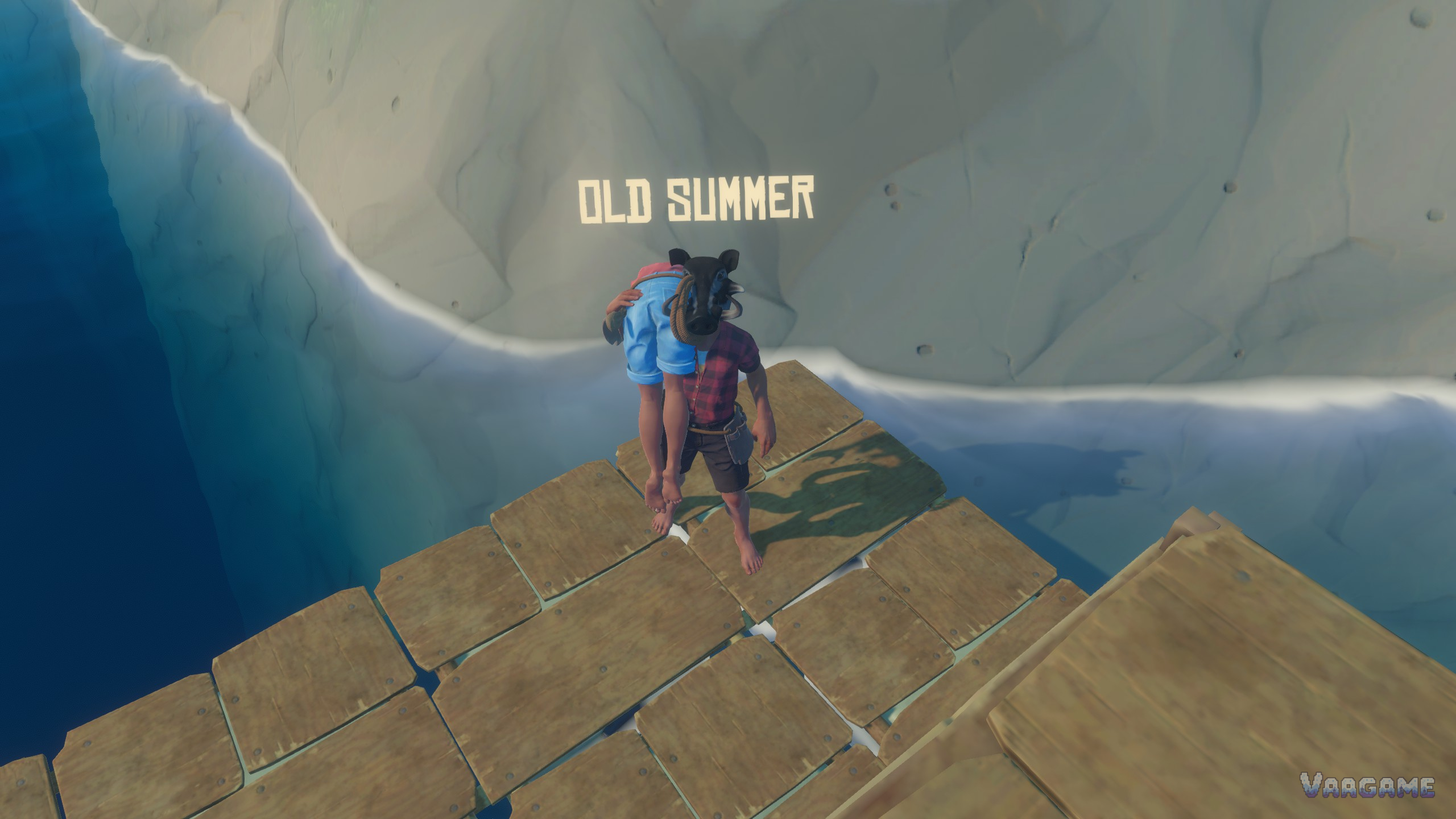
Raft is a better game with friends, and not just because the hook work gets shared. One player fishes while another builds, one watches the shark while another explores the island, and a dead teammate is a rescue instead of a restart. But co-op has one structural fact that shapes everything: the world belongs to the host. Understand that before you build, and the rest is easy.
At a glance
How it works: one player hosts a world, friends join it from the main menu; each player needs their own copy of the game
The host rule: the world lives with the host, so when the host is offline, that world is not available to the crew
Player count: no hard in-game cap is published; guides commonly cite up to 8 players, with the practical limit set by the host machine
No dedicated servers: the hosting player is the server, so host hardware and connection quality set the experience
Agree before building: who hosts long-term, who can build where, and what happens to shared storage
1. How to host a world
From the main menu, choose New World for a fresh raft or Load World for an existing one, and make sure the Friends can join option is enabled. That option is the whole gate: with it on, your Steam friends can see and join your world; with it off, they cannot. If you want a private crew rather than any friend dropping in, set a password on the world and share it only with the crew. The password is the difference between a crew and a crowd.
Pick the host like you are picking a landlord, because that is what the role is. The host needs the most reliable connection and a machine that can carry the world plus the crew, and ideally the host is the player most likely to be online when the crew wants to play. A world hosted by the friend with the worst connection or the least free time is a world the crew slowly stops visiting.
2. How to join a friend
Joining is the mirror of hosting. Add each other on Steam first, because co-op joining runs through the Steam friends list: a stranger cannot browse into your world the way they might in a server-browser game. Then, from the main menu, choose Join World, find your friend world in the list, select it, and enter the password if the host set one. If the world does not appear, the usual causes are the host not being in-game yet, Friends can join being off, or a version mismatch after an update.
Guests should know what they are not getting. You are visiting the host world, not copying it home: the world, the raft, and everything built in it stay with the host. If the crew splits or the host stops playing, guests do not take the raft with them. That is the single most misunderstood co-op fact in Raft, and it is worth saying out loud before anyone invests twenty hours in a shared deck.
3. Co-op roles that actually help
The best co-op split follows the survival loop, not job titles. In the first week, one player hooks and fishes while another builds and cooks, and whoever is free watches the shark. On island days, one player stays with the raft and the anchor while the rest explore, because an unguarded raft is a drifting raft. Later, split by system: one player owns farming and cooking, another owns research and crafting, another owns building and shark defense. The split that fails is everyone doing everything at once, which means nobody owns the purifier when it runs dry.
Swipe horizontally to view all columns.
| Role | Owns | Why it helps |
|---|---|---|
Hook and fish | Debris income and the food pipeline | Keeps planks, plastic, and fish flowing while others build |
Build and defend | Foundations, nets, armor, and the shark | One owner means the shark never gets ignored |
Cook and farm | Grill, crops, and the hunger meter | Turns raw catches into a real food supply |
Explore and navigate | Islands, anchor duty, sail, and the receiver | Keeps the raft safe while the crew is ashore |
4. Dying, reviving, and rescue etiquette
Co-op turns death from a run-ender into a team job. When a teammate goes down, another player can reach them, carry them, and bring them back, which is why the buddy system matters more than any single weapon: never explore an island alone, never swim alone, and never let the only swimmer be the only one who knows where the raft is. The rescue that fails is usually the second death, the rescuer who swims out alone to save someone and joins them. Go in pairs, or do not go.
Set a revive rule before it matters. The downed player stays put and calls out their position instead of crawling toward danger; the nearest player with a clear path goes, while everyone else holds the raft, the shark, and the cooking. A crew that argues about who rescues while the timer runs is a crew that loses two players instead of saving one.
5. Co-op limits and honest trade-offs
More players means more mouths before it means more hands. Every extra player adds thirst and hunger to the loop, so a four-player crew needs a bigger food and water pipeline than a solo player, not just a bigger raft. If the crew grows faster than the farm and the nets, the raft gets crowded and hungry at the same time, and the game feels harder, not easier. Grow the pipeline first, then grow the crew.
The other trade-off is scheduling. Because there are no dedicated servers and the world lives with the host, the crew plays on the host schedule, and progress made without someone is progress they return to rather than progress they made. Crews that last agree on a session rhythm, a host backup plan, and a rule for who may build or demolish shared structures. None of that is in the game menus. All of it decides whether the raft survives the players.
Frequently asked questions
How do I play Raft with friends?
Add each other on Steam, have one player host a New or Load World with Friends can join enabled, then have the others choose Join World from the main menu and select that world, entering the password if one is set.
Can my friends play my world when I am offline?
No. There are no dedicated servers, and the world lives with the host, so the crew can only play that world while the host is online and in it.
How many players can play Raft together?
No hard in-game cap is published. Guides commonly cite up to 8 players, and the practical limit is the host machine and connection, so a crew of 2 to 4 is the smoothest experience for most hosts.
Do guests keep the raft if the host stops playing?
No. The world and everything built in it stay with the host.
What is the best co-op setup for a new crew?
Two to four players, a host with the best connection and most playtime, a password shared only with the crew, and agreed roles: hook and fish, build and defend, cook and farm, explore and navigate.