

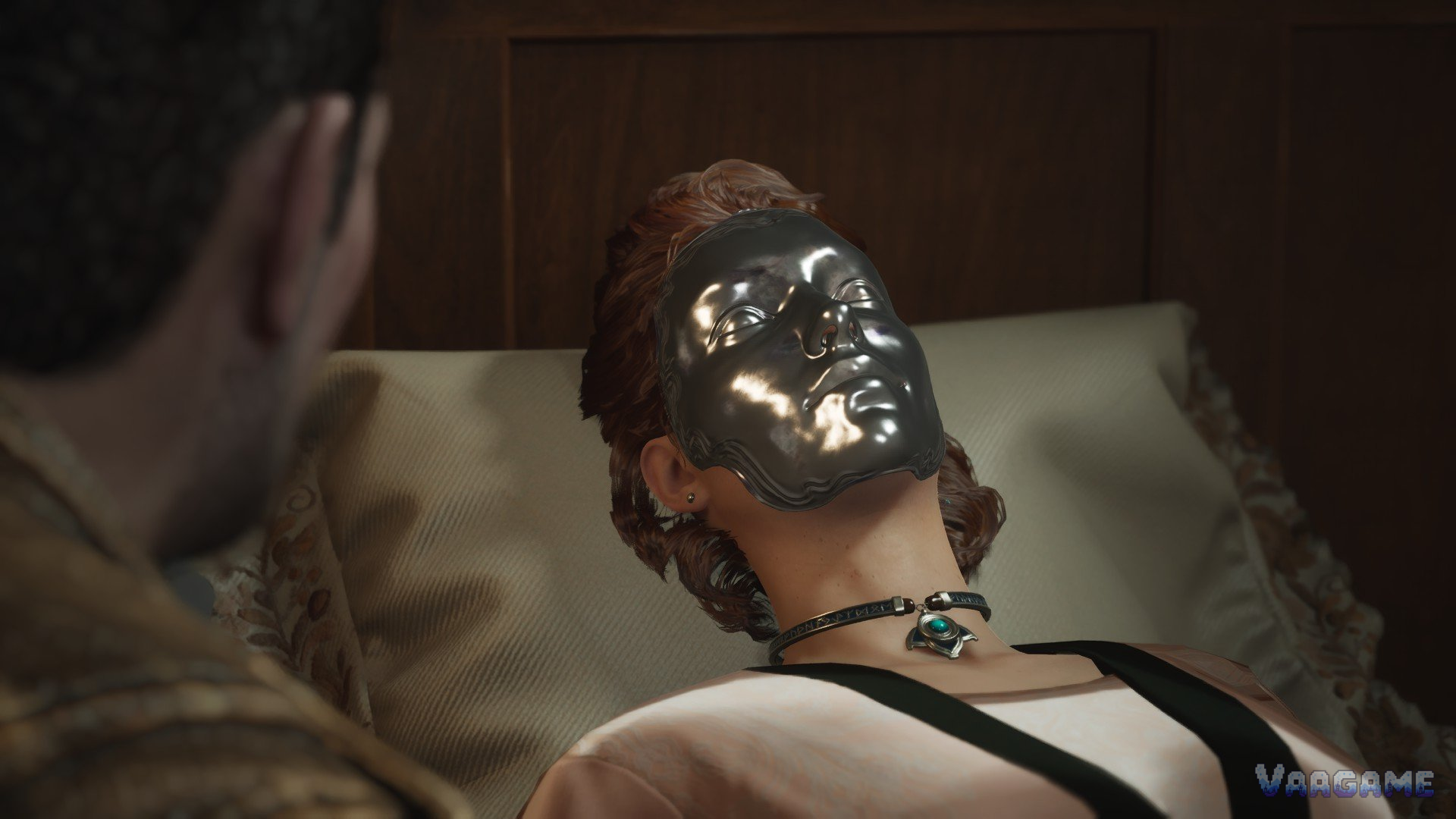
The Sinking City 2 does not have a conventional skill tree, and it does not have a sanity meter, despite its Lovecraftian setting. Your build is a mask. Calvin carries the Nightshade Mask, and at a Talent Table inside a safe room you spend Dream Essence to unlock Talents, then slot them into the mask. Talents are small passive bonuses, not new abilities, and the honest headline is that no single Talent will carry a run. A good loadout fixes the one thing that keeps killing you, and a bad one is a set of bonuses for a playstyle you do not use.
At a glance
First Talent Table: reported in Part 3, in the church safe room, after which Talent Tables appear in safe rooms.
Currency: Dream Essence, earned from story beats, solved puzzles, completed investigations, and Emergency Relief Crates.
Tier gates: buy 4 Basic Talents to open Intermediate, then 4 Intermediate Talents to open Advanced. Eldritch Rewards open by completing in-game goals.
Scale: reports put the full set at 22 Talents costing 60 Dream Essence, against roughly 25 available in one run, so a complete collection needs New Game Plus.
Slots are shape-matched and limited. You can only change your set at a Talent Table in a safe room, never mid-fight.
Learned Talents carry into Ex Oblivione, the New Game Plus mode. That carryover is what makes the second run the completion run.
How the system actually works
Dream Essence is the only Talent currency, and it is deliberately scarce. You earn it by progressing the story, solving puzzles, and connecting clues in the Investigation Space, with Emergency Relief Crates as another reported source. There is no farming loop that tops it up on demand, so every purchase is a choice against the next tier gate. The first decision is therefore not which Talent is strongest in the abstract, but which four Basic Talents you are willing to buy to reach Intermediate, since the gate counts purchases, not power.
Slots are the second constraint, and the one players misunderstand most. Owning a Talent does nothing until it is equipped in a mask slot of the matching shape. Reports describe a starting set of one round slot plus three diamond-shaped slots, with additional slots purchasable for 10 Dream Essence each. That creates a real tension: buying a slot is Dream Essence not spent on a Talent, so widening your loadout delays your next tier. Do not buy slots early unless a second equipped Talent would fix an immediate problem.
The third constraint is honesty about magnitude. In-game Talent descriptions use vague words such as a little and noticeably, and reviewers note that most effects are hard to feel in normal play. Treat Talents as a nudge toward a playstyle, not as a damage multiplier that rewrites combat. If you are dying because you run out of ammunition, a reload or crafting Talent helps more than a small damage bonus, and if you are dying because you stand in the open, no Talent fixes positioning.
The verified Talent list, tier by tier
The Basic tier has six Talents. Carapace of the Damned takes a little less harm from humanoids. Gunslinger’s Trance swaps weapons a little faster. Instruments of Death inflicts a little more harm for a few seconds after swapping weapons. Potent Tincture takes a little less harm for every healing item carried, up to five. Profane Reload reloads noticeably faster. Silent Hunter strikes a little harder with the flashlight off. For a first purchase, the sensible picks are the ones that answer your earliest deaths: Carapace of the Damned if humanoids keep hurting you, Potent Tincture on higher difficulties, or Profane Reload if reloading keeps leaving you exposed.
The Intermediate tier has six Talents. Alchemical Abundance gains noticeably more ammunition when crafting, with the exact per-type bonus covered in the ammo section of the survival guide. Butcher’s Zeal deals enormous melee damage for a few seconds after slaying a foe. Chitinbound takes a little less harm from monsters and aberrations. Feral Surge inflicts a little more harm on creatures near you. Strange Evasion takes less harm for a few seconds after dodging. Unhallowed Salve recovers noticeably more from healing items. The Advanced tier has six more: Crimson Threshold inflicts more harm when low on health, Deathless Vigor withstands noticeably more punishment, Inner Beast deals significantly more melee damage with an empty magazine, Opening Gambit makes the first bullet hit a little harder, Vengeful Spirit lets you kill your killer within a few seconds to escape death, and Wandering Bullet inflicts more harm to weak points with unfocused shots.
Beyond those eighteen, reports describe a separate Eldritch Rewards tier and specialist Talents such as Reticle Ritual and Ruptured Core for weak-point shooters, and Pact of the Reaper and Vessel of Destruction for high-risk builds. Their exact tier placement varies between sources, so this guide does not assign them to a tier here. Unlock them when they appear, judge them by the same test as every other Talent, and do not plan a whole run around an Eldritch pick you have not unlocked yet.
Three loadouts that make sense
The survivor loadout is for players who keep dying to attrition. Start with Carapace of the Damned and Potent Tincture, add Chitinbound and Unhallowed Salve at Intermediate, and finish with Deathless Vigor and Strange Evasion. Nothing here increases damage, and that is the point: it buys time to learn enemy patterns, and healing items become more valuable rather than more numerous. Pair it with the pistol for routine fights and save shotgun shells for close pressure, as the survival guide explains.
The weak-point gunner loadout is for players who already aim well. Start with Profane Reload, add Opening Gambit and Wandering Bullet at Advanced, and keep Silent Hunter only if you genuinely fight with the flashlight off, since a Talent that needs darkness is dead weight in a lit room. This build rewards the combat habit the game itself teaches: shoot the glowing pustules on limbs and torsos, then finish a downed enemy with a stomp instead of spending another bullet. If your aim is shaky, this build will feel worse than the survivor set, not better.
The ammo and melee loadout is for players who run dry. Alchemical Abundance is the centerpiece, and its crafting bonus is worth measuring: plus 2 handgun rounds, plus 2 submachine gun rounds, plus 1 shotgun shell, and plus 1 rifle round per craft, with frag grenades unchanged at one per craft. Add Butcher’s Zeal and Inner Beast so an empty magazine becomes a melee window instead of a death sentence, and add Feral Surge if you fight close. Crimson Threshold and Vengeful Spirit belong to the same high-risk family, but they pay off only if you stay aggressive at low health, which is a habit to choose deliberately, not a passive safety net.
The Night Shade itself, separate from Talents
Do not confuse Talents with the Night Shades own power. Reports describe the mask as chargeable, allowing Calvin to escape death if he takes too much damage, which is especially useful on higher difficulties. Night Ore is the resource that recharges the Night Shade, and it is not a healing item, so carrying it is a separate inventory decision from carrying medicine. The mask is also needed for some puzzles. None of that changes your Talent loadout, but it does mean the mask is worth protecting as a system, not just as a Talent holder.
The second-run plan
Because roughly 25 Dream Essence are available in one run against a 60-point total, the completion plan is two runs, not one long grind. Run one should buy the four Basic Talents that open Intermediate, then the Intermediate picks for one loadout, and should sweep investigations and Emergency Relief Crates, since both pay Dream Essence. Run two, in Ex Oblivione, keeps learned Talents and adds the rest, and the update 1.1.0 guide covers the wider inheritance rules, including inventory and weapon upgrades and duplicate upgrades converting to Dream Essence. Players who only want one strong loadout, not the full set, can stop after run one without missing anything the game requires.