

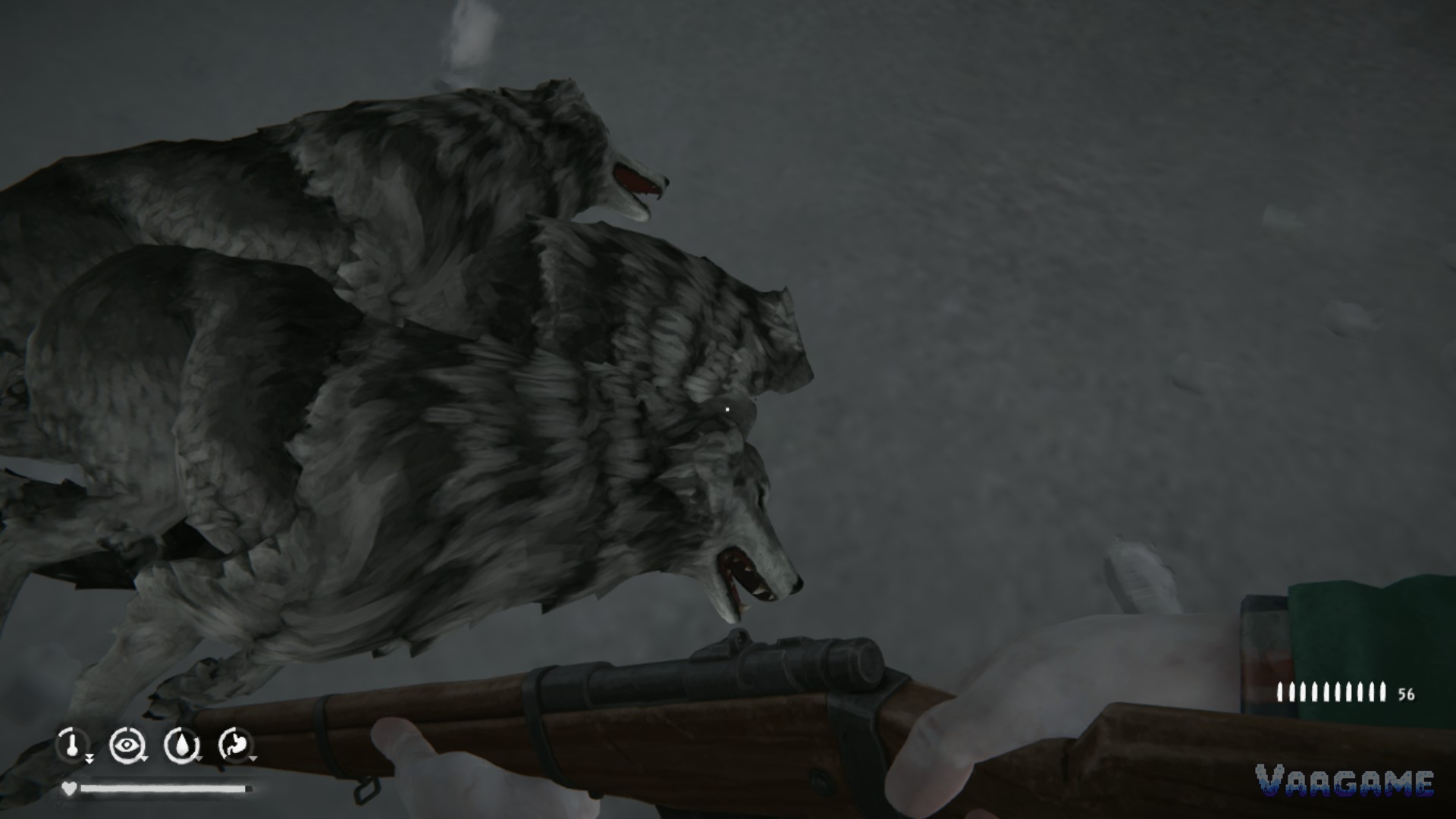
Most animals in The Long Dark are not hunting you, and the ones that are give you warnings first: a wolf stalks and growls, a bear bluffs and charges, and a moose stands its ground. Learn to read those warnings, to carry the right deterrent, and to walk away instead of fighting, and animal encounters stop being random deaths and become problems with known answers.
At a glance
Weapons: rifle, revolver, bow, distress pistol, stones, torch, flare
Deterrents: torch, flare, fire, noise, and distance
Wolves: stalk, growl, charge, struggle if they reach you
Bears and moose: charge and maul or stomp; avoid, do not duel
Checked: 2026-10-25
Quick answer
Do not run from a wolf. Running triggers a chase; walk away calmly or face it with a torch.
A flare or torch stops most wolf charges. Save flares for real encounters.
Never fight a bear or moose on foot. Distance and buildings are the answer.
Timberwolves hunt in packs with morale: break the pack and the pack breaks.
1. The weapons, and what each is for
The rifle is the long-range hunting weapon: powerful, loud, and slow to reload, with scarce ammunition you should save for deer, bears in emergencies, and moose only if you know what you are doing. The revolver is shorter range and faster to handle, useful for a wolf at close range. The bow is quiet, its arrows can be recovered, and it is the best choice for hunting without announcing yourself to every animal nearby. The distress pistol fires a flare that scares animals and can start fires, and stones are for rabbits and for distracting animals, not for fighting wolves.
Swipe horizontally to view all columns.
| Weapon | Best use | Limit |
|---|---|---|
Rifle | Deer hunting, long range | Loud, slow reload, scarce ammo |
Revolver | Close-range defence | Short range, scarce ammo |
Bow | Quiet hunting | Needs close range and practice |
Distress pistol | Scare animals, start fires | Very limited flares |
Torch / flare | Stop a wolf charge | Torch burns out; flares are rare |
2. Wolves: read the stalk, then act
A wolf encounter usually starts before you see the wolf: you hear barking or growling, or you notice a wolf following at a distance. That following is the stalk. The wolf is deciding whether you are prey, and your behaviour decides the answer. Do not run, because running triggers a chase and a wolf runs faster than you. Instead, walk away calmly toward shelter, keep facing the wolf when it gets close, and raise a lit torch or throw a flare if it charges. A wolf that is scared off will often leave, and a wolf that reaches you will start a struggle that costs Condition and can cause bleeding and infection risk.
If a struggle starts, fight back with the weapon the game offers and treat the injuries immediately after: bandage bleeding, disinfect bites, and get indoors. Then change your route. A wolf that attacked once is likely still nearby, and walking the same path again invites a second encounter you do not need.
3. Bears: the animal you do not fight
Bears are the heaviest single threat on Great Bear. A bear may bluff, stand up, or charge without much warning, and a mauling causes severe Condition loss, bleeding, and broken ribs. There is no beginner technique for duelling a bear on foot. The techniques are avoidance: make noise as you travel so you do not surprise one, give a bear a wide berth when you see it, never approach a bear den or a carcass a bear is feeding on, and if a bear charges, get inside a building or a car, or climb where it cannot follow. Hunting a bear is a late-game project with a rifle, distance, and a planned escape, not an early-game experiment.
4. Moose: the roadblock that charges
A moose is not a predator, but it is dangerous because it defends its ground and charges when it feels threatened, and its stomping attack can break ribs and cause heavy bleeding. Moose often stand near roads and water, exactly where you want to walk, which is why they feel like roadblocks. Do not try to scare a moose off with noise the way you would a deer, and do not walk past one at close range hoping it will ignore you. Give it a very wide berth, wait for it to move away, or take another route. If it charges, dodge sideways and get behind cover or indoors, because a moose charge in the open is one of the fastest ways to end a run.
5. Timberwolves: the pack with morale
Timberwolves, found in regions like Bleak Inlet and Blackrock, hunt in packs and behave differently from lone wolves. The pack has a kind of morale: it grows bolder when it outnumbers you and when pack members are unhurt, and it falters when you injure or kill a member, or when you use fire and flares aggressively. The beginner answer to a timberwolf pack is the same as for a bear: do not take the fight if you can avoid it. Travel through timberwolf country with a full fire kit, flares, and a planned shelter, and if the pack engages, hurt one member hard and break for cover while the pack hesitates.
6. Prey animals: deer, rabbits, and the rest
Deer and rabbits flee from you, and they are food, not threats. Ptarmigan, a small game bird added in later updates, can be hunted with stones and small shot. The safety rule for prey is simple: hunt prey where you have a clear escape to shelter, because the noise and blood of a kill can attract the predators covered above. A good hunt ends at your base door, not in the middle of wolf country at dusk.
7. After an attack: the five-minute drill
After any animal attack, run this drill before you do anything else. One: stop bleeding with a bandage. Two: disinfect bites to cut infection risk. Three: check for broken ribs or sprains and treat pain. Four: eat and drink, because Condition recovery needs fuel. Five: get indoors and sleep, because an injured survivor outdoors is a second attack waiting to happen. Injuries are covered in full in the medical guide, but this drill is what keeps a bad encounter from becoming a dead run.
FAQ
Should I shoot every wolf I see?
No. Ammunition is scarce, a missed shot wastes it, and a wounded wolf is more dangerous than a warned wolf. Scare wolves off when you can, and save bullets for hunting and real emergencies.
What do I do if a bear is sleeping near my route?
Take another route or wait. Never try to sneak past a sleeping bear at close range: waking it beside you is the worst version of the encounter.
Are timberwolves everywhere?
No. They are concentrated in specific regions such as Bleak Inlet and Blackrock. If you are in a beginner region, lone wolves are the threat to learn first.