

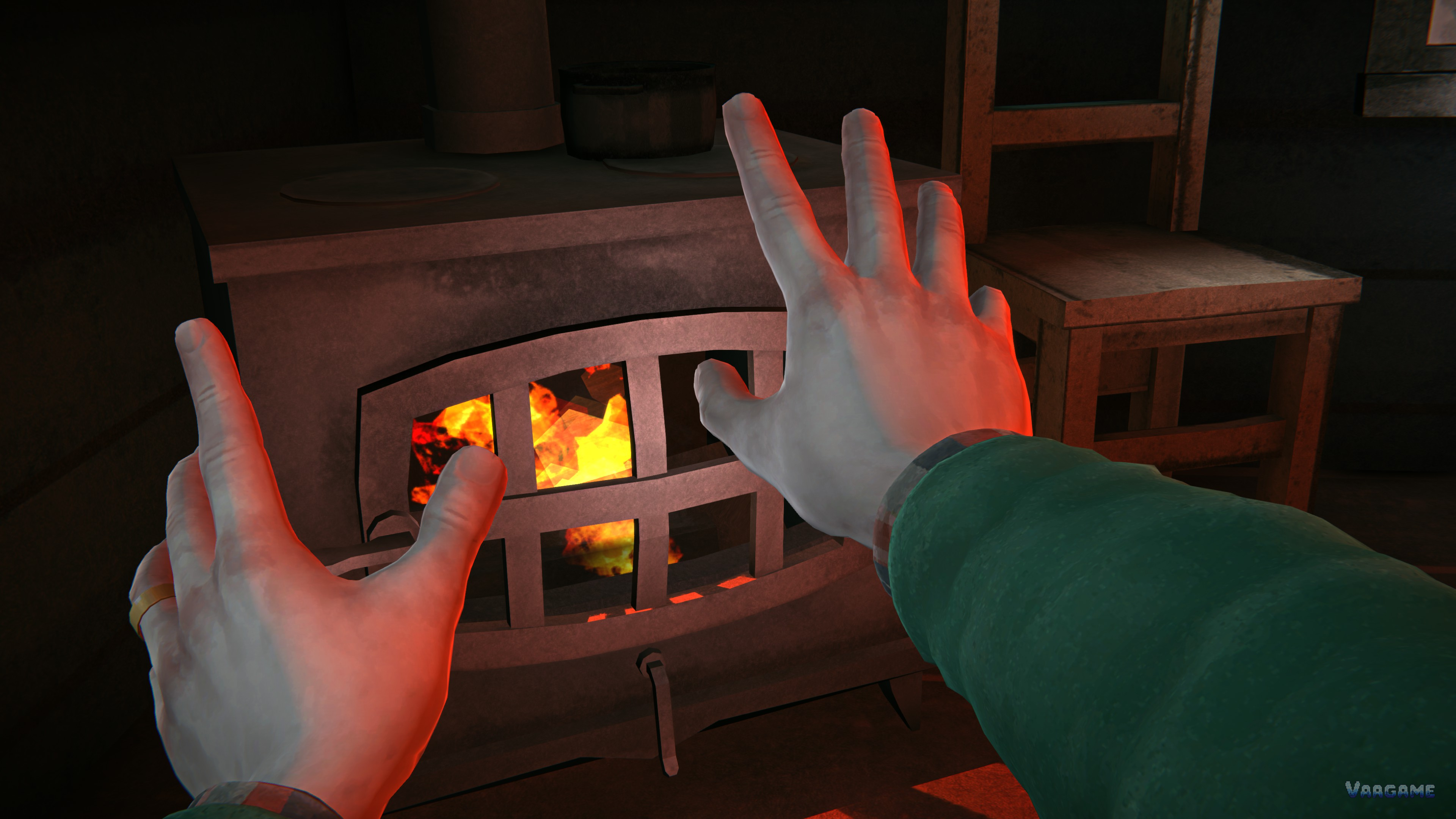
Your Condition only falls when one of your survival needs is empty, so the whole game is keeping five bars out of the red: Warmth, Hunger, Thirst, Fatigue, and carrying weight. Learn what each bar means in plain terms and you can read any bad situation in seconds: cold means find fire or shelter, hunger means eat calories, thirst means drink, fatigue means sleep, and overweight means drop something.
At a glance
Core bars: Warmth, Hunger (calories), Thirst, Fatigue, Weight
Health bar: Condition, 100% down to 0% means death
Base carry weight: 30kg before over-encumbrance penalties
Death rule: Survival mode permadeath (Cheat Death: max 3 revives, Tales DLC)
Checked: 2026-10-25
Quick answer
Warmth is two numbers: air temperature and feels-like temperature with windchill.
Hunger runs on calories, not meals. A 500-calorie snack and a 500-calorie meal are equal fuel.
Thirst kills quietly: always carry water and melt snow at a fire.
Fatigue is a clock. Sleep before the bar empties, or you will collapse where you stand.
1. Warmth and windchill: the bar that kills first
Warmth measures how warm your body feels right now. The game shows you the air temperature and a feels-like temperature that includes windchill, which is the cooling effect of wind on exposed skin and thin clothing. Windchill is why a calm minus 10 degrees can feel survivable while a windy minus 10 degrees drains you fast. Clothing adds Warmth and Windproof bonuses, and wet clothing loses much of its protection, so getting wet in a blizzard is an emergency, not an inconvenience.
When Warmth is empty you start losing Condition and risk hypothermia, a dangerous illness covered in the medical guide. The fix is always the same: get out of the wind, get indoors or behind a rock, make a fire, and change into dry clothes. A fire is the strongest tool here because it warms you and lets you cook and melt snow at the same time.
2. Hunger: think calories, not meals
Hunger is tracked as calories stored in your body. Everything you eat adds calories, and your body burns them over time, faster when you sprint, climb, or work hard. The practical rule is simple: eat to keep the bar comfortably above empty, and carry calorie-dense food for travel. Meat from animals you hunt is the long-term answer, and packaged food you loot is the short-term bridge. Eating raw or spoiled food can cause food poisoning, so cook meat and check the condition of packaged food before you eat it.
3. Thirst: water is weight, and weight is a decision
Thirst drains steadily and quietly, and it is easy to ignore while you are busy looting. You drink from bottles and canteens, and you make potable water by boiling melted snow or unsafe water at a fire. Water is heavy, so carrying litres of it costs carrying capacity that could hold food or tools. The routine that works is: leave base with a full bottle, drink at streams and fires when you can, and refill before you sleep so the night does not start thirsty.
4. Fatigue: sleep is not optional
Fatigue is your need for sleep. It drains through the day and refills only when you sleep in a bed, a bedroll, or a snow shelter. If the bar empties completely you will pass out where you stand, which outdoors in a storm can be fatal. Sleep also passes time, which matters: a long sleep can skip a blizzard, but it also burns calories and water, so never sleep on an empty stomach and a dry bottle if you can avoid it.
5. Weight: the 30kg budget
Your base carrying capacity is 30kg. Go over it and you move slower, tire faster, and cannot sprint properly, which is dangerous when a wolf appears or a storm closes in. Treat 30kg as a budget: clothing you wear counts, tools count, and water and firewood are surprisingly heavy. Before a long trip, drop duplicate tools and low-value loot at base. The moose-hide satchel and technical backpack can raise capacity later, but early on the discipline is simply to carry less.
Swipe horizontally to view all columns.
| Bar | Empty means | First fix |
|---|---|---|
Warmth | Condition loss, hypothermia risk | Shelter, fire, dry clothes |
Hunger | Condition loss over time | Eat calories, cook meat |
Thirst | Condition loss, faster when working | Drink, boil snow at a fire |
Fatigue | Passing out where you stand | Sleep in a bed or bedroll |
Weight over 30kg | Slow movement, no proper sprint | Drop loot at base |
6. Condition: the bar that actually kills you
Condition is your overall health, from 100% down to 0%. It only falls when a need is empty or when you are injured or ill, and it recovers slowly when all needs are met and you rest. That is why the daily routine matters more than any single item: a survivor with full Warmth, food, water, and sleep recovers, while a survivor with a full backpack and empty bars does not. Check Condition the way you would check a fuel gauge, before every trip, not after a crisis.
7. The daily routine that keeps you alive
A working day looks like this. Morning: eat, drink, check the weather and wind, and pick one goal. Midday: travel or loot in daylight, gathering sticks as you go. Afternoon: return toward base, chop firewood, cook food, and boil water. Evening: eat a full meal, drink, repair anything damaged, and sleep in a bed before night cold deepens. Repeat that loop and the bars stop being a crisis and become a checklist.
FAQ
Why am I losing Condition even though I just ate?
Because Condition falls from any empty or critical need, not just hunger. Check Warmth and Thirst first: cold with wet clothes or an empty water bottle drains Condition even on a full stomach.
How much weight can I carry?
30kg at base, before over-encumbrance penalties. Capacity-raising items exist later, but the early answer is to store surplus at your base and travel light.
Does sleeping heal me?
Sleep restores Fatigue and lets Condition recover slowly if your other needs are met. It does not cure illness or injury on its own; those need treatment from the medical guide.