

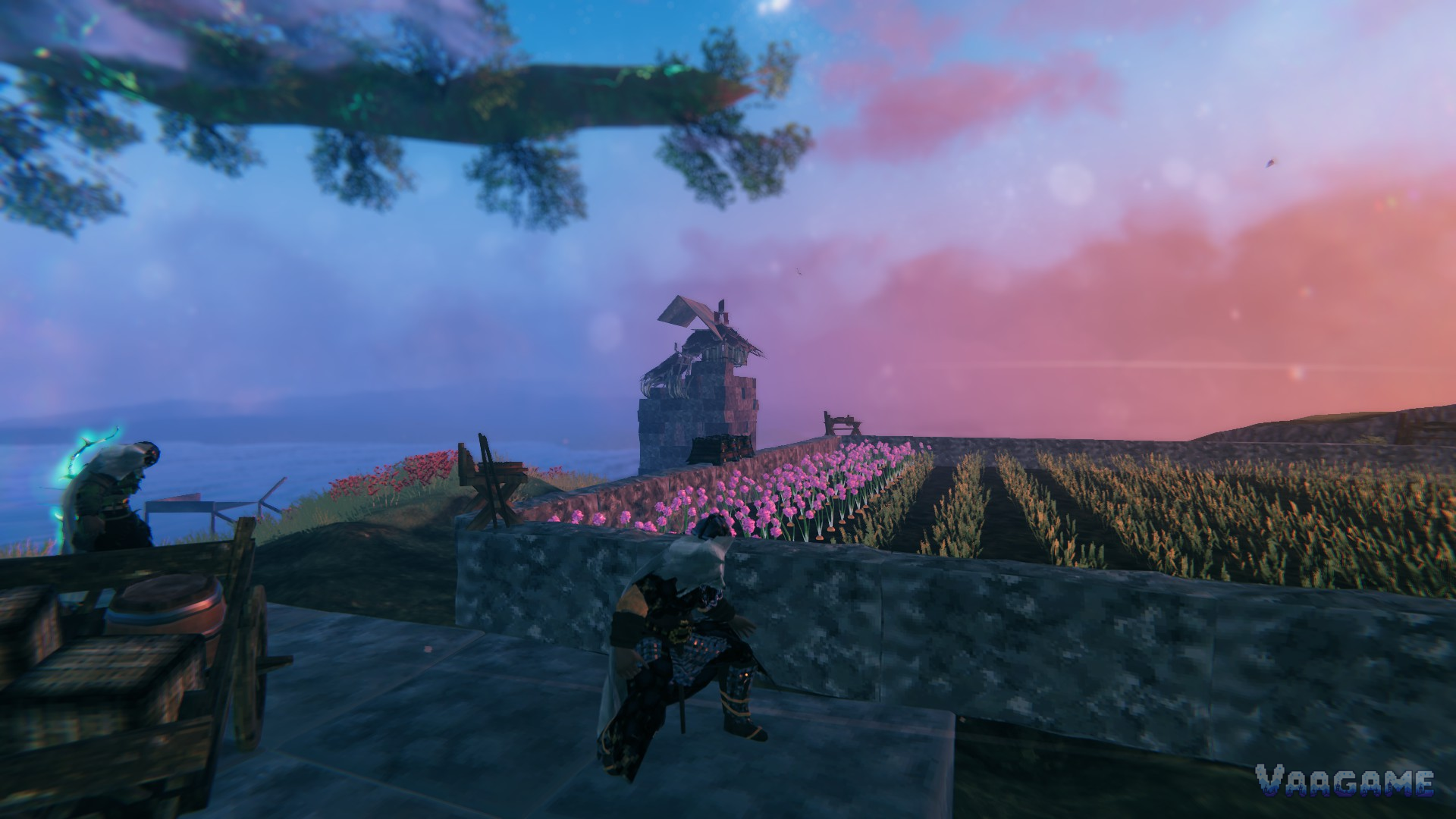
A Valheim farm is not decoration. It is the difference between entering a boss fight with three strong foods and entering it with whatever berries you found on the way. Taming turns that farm into a supply line: boars for early meat, wolves for guards, lox for a mount and heavy meat, hens for eggs. This guide covers both systems as one plan, from the first carrot seed to a breeding pen that feeds a whole group.
Farming basics: soil, space, sky, biome
Every food crop needs cultivated soil, made with the Cultivator, a Forge tool built from 5 core wood and 5 bronze. Till the ground, then plant. Four things can stop a crop, and the game tells you which one when you look at the plant: the wrong biome, not enough space, no open sky above, or unworked soil. Most crops need about 1 meter of free space around them, and any structure overhead blocks growth no matter how high it is. Crops grow on real time, taking roughly 67 to 83 minutes each, so sleeping does not rush a field: the plants grow while you are out doing something else.
Swipe horizontally to view all columns.
| Crop | Plant this | Harvest | Grows in |
|---|---|---|---|
Carrot | Carrot seed | 1 carrot; plant a carrot for 3 seeds | Meadows, Black Forest, Plains, Ashlands |
Turnip | Turnip seed | 1 turnip; plant a turnip for 3 seeds | Meadows, Black Forest, Swamp, Plains, Mistlands, Ashlands |
Onion | Onion seed | 1 onion; plant an onion for 3 seeds | Meadows, Black Forest, Plains, Ashlands |
Barley | Barley itself | 2 barley | Plains only |
Flax | Flax itself | 2 flax | Plains only |
Jotun Puffs | Jotun Puffs itself | 2 Jotun Puffs | Mistlands |
Magecap | Magecap itself | 2 Magecap | Mistlands |
Two seed rules make the whole system self-sustaining. Carrots, turnips, and onions multiply through a seed step: plant the vegetable itself and one plant returns 3 seeds, so a small patch becomes a large one in a single cycle. Barley and flax skip the seed step and multiply directly, returning 2 for every 1 planted. The practical habit is to replant roughly half of every harvest: the farm grows, the kitchen still gets fed, and you never have to go hunting for wild seed plants again.
Where to put each farm
Most groups end up with two farms, not one. The home farm in the Meadows or Black Forest grows carrots, turnips, and onions for everyday cooking, because those crops tolerate the starting biomes and the farm sits inside the walls. The second farm lives in the Plains and grows only barley and flax, because those two crops grow nowhere else, and the Plains farm needs real defenses: Fulings raid, and a barley field outside a wall is a buffet. Mistlands mushrooms get a third, smaller plot later, once the group can hold ground there.
Spacing deserves a practical trick, because the game gives you no ruler. Plant one crop, then without moving your aim, take one full step forward and plant the next. That step is roughly the free space the game wants, and rows planted this way come up healthy instead of stalled. Leave walking gaps between row blocks so you can harvest without trampling the layout, and once you can craft the Scythe after defeating Moder, harvesting a whole field stops being a chore and becomes one walk down the rows.
Taming: calm, fed, and nearby for 30 minutes
Taming has three conditions and no shortcuts around them. The animal must be calm, meaning no red exclamation mark overhead; it must be fed, with the right food dropped nearby; and the area must stay active, meaning a player stays within roughly 64 meters. Taming progresses in ticks and takes 30 minutes uninterrupted, shown by yellow hearts above the animal and a percentage on its hover text. Done cleanly, only three food items are needed, because the animal stays fed for 10 minutes after each meal. The Brew of Animal Whispers halves the time to 15 minutes. Sleeping does not speed taming up, and it wastes the food, so do not sleep through a tame.
Build the pen before you meet the animal. A pit dug with the pickaxe works better than a fence chase, because a panicked animal breaks fences and runs.
Lure by being chased, or drag with the Abyssal Harpoon. Either way, seal the pen before you start feeding.
Sneak away after dropping food. Boars flee from fire, so keep torches and campfires away from a boar pen.
Stay in the area. Leaving unloads the zone, and taming progress stops until you come back.
Night-spawned starred wolves must be fed at night the first time. Trap one during the day, wait nearby so it does not despawn, and feed it after dark.
Swipe horizontally to view all columns.
| Animal | Where | Eats | Pen and notes |
|---|---|---|---|
Boar | Meadows | Raspberries, blueberries, red mushrooms, carrots, turnips, onions | Roundpole fence is enough; keep fire away |
Wolf | Mountains | Boar meat, deer meat, lox meat, neck tail, raw fish, chicken meat, sausages | Strong pen: stone or stakewall; follow and guard commands; will not follow through portals |
Lox | Plains | Barley, cloudberries, flax | Huge pen, no low roof overhead; rideable with a Lox Saddle |
Chicken and Hen | Hatched from eggs | Carrot seeds, turnip seeds, onion seeds, beech seeds, birch seeds, barley, dandelion | Eggs need a heat source to hatch; hens lay eggs when fed |
Asksvin | Ashlands | Smoke puff, vineberry cluster, fiddlehead | Rideable; eggs need heat to hatch like chickens |
Lox deserve a special warning because they break the usual pen logic. They are enormous, they hit like a siege weapon, and their pathfinding is sized like a troll, so a roof too close overhead stops them from eating at all. Give a lox a big open pen with stone walls and open sky, and repair the walls while it calms down instead of building something pretty and watching it get flattened. The reward is a mount that carries you across the Plains and a meat supply that makes late-game cooking easy.
Breeding: stars, caps, and the cull
Breeding is checked every 30 seconds. A fed, calm, tamed animal near a suitable partner gains love points, shown as pink hearts, and after enough points it becomes pregnant and gives birth. Offspring are born tame, they inherit their stars from the parent that gives birth, and they cannot be renamed or commanded until they grow up. That inheritance rule is the whole breeding game: a 2-star animal is worth real effort to tame, because every pup, piglet, and calf it produces carries the same stars, with better drops and combat ability.
Swipe horizontally to view all columns.
| Animal | Love points | Population cap | Grow-up time |
|---|---|---|---|
Boar | 4 | 5 within 10 meters | 50 minutes |
Wolf | 3 | 4 within 10 meters | 50 minutes |
Lox | 4 | 4 within 20 meters | 100 minutes |
Hen | 3 | 10 within 10 meters, counting hens, chickens, and eggs | 30 minutes to hatch, 50 minutes to grow |
Asksvin | 3 | 10 within 10 meters | 30 minutes to hatch, 50 minutes to grow |
The population cap is the mistake that looks like a bug. When breeding stalls, count the animals inside the radius: if the pen is at its cap, no new love points are gained, and the fix is a bigger pen or a cull, not more food. Tamed animals are protected from normal attacks, so culling takes the Butcher Knife or friendly fire. Keep the breeders, cull the unstarred surplus, and never let a pen fill up with animals you do not want, because a full pen breeds nothing.
Which animals are worth it, and when
Boars first, always. They are the earliest tame, the easiest pen, and the first reliable meat supply beyond hunting.
Hens second, for eggs and feathers. Eggs feed cooking, feathers feed arrows, and hens ask almost nothing: seeds and a warm corner.
Wolves when the Mountains open. A pack of tamed wolves guards a base better than a wall, and they follow you into fights. Do not expect them to follow through portals.
Lox when the Plains farm is running, because lox eat barley and flax, and a Plains farm already grows both. A lox without a barley field is a hungry problem.
Asksvin in the Ashlands, once the group can survive there. They are a mount and a meat source for the late game, not an early project.
Moose can also be tamed, but this guide does not list a preferred food for them: the food was not verified from a reliable source at the time of writing, and guessing would waste your evening. Check the official wiki for the current moose diet before attempting one, and treat any guide that lists moose food without a source the same way.
A season plan that actually works
Meadows: plant carrots from Black Forest seed plants, tame the first boars, and keep a small pen inside the walls.
Black Forest: build the Cultivator, formalize the home farm, and start the seed cycle so carrots and turnips multiply.
Swamp: add turnips from wild seed plants, and keep the farm defended, because the Swamp punishes unguarded plots.
Mountains: tame wolves, and accept that wolf pens must be stone-strong before the first wolf arrives.
Plains: open the barley and flax farm behind real walls, then add lox, because the feed and the mount arrive together.
Mistlands and Ashlands: add mushrooms, vineberries, and asksvin only when the group can hold ground there. Late crops are a reward for survival, not a shortcut to it.
The farm repays patience in a way hunting never does. A hunter eats tonight. A farmer eats every night, and a breeder eats every night with a guard pack at the gate and a mount in the yard. Start with one carrot patch and two boars, and the rest of the system grows out of those two decisions.