

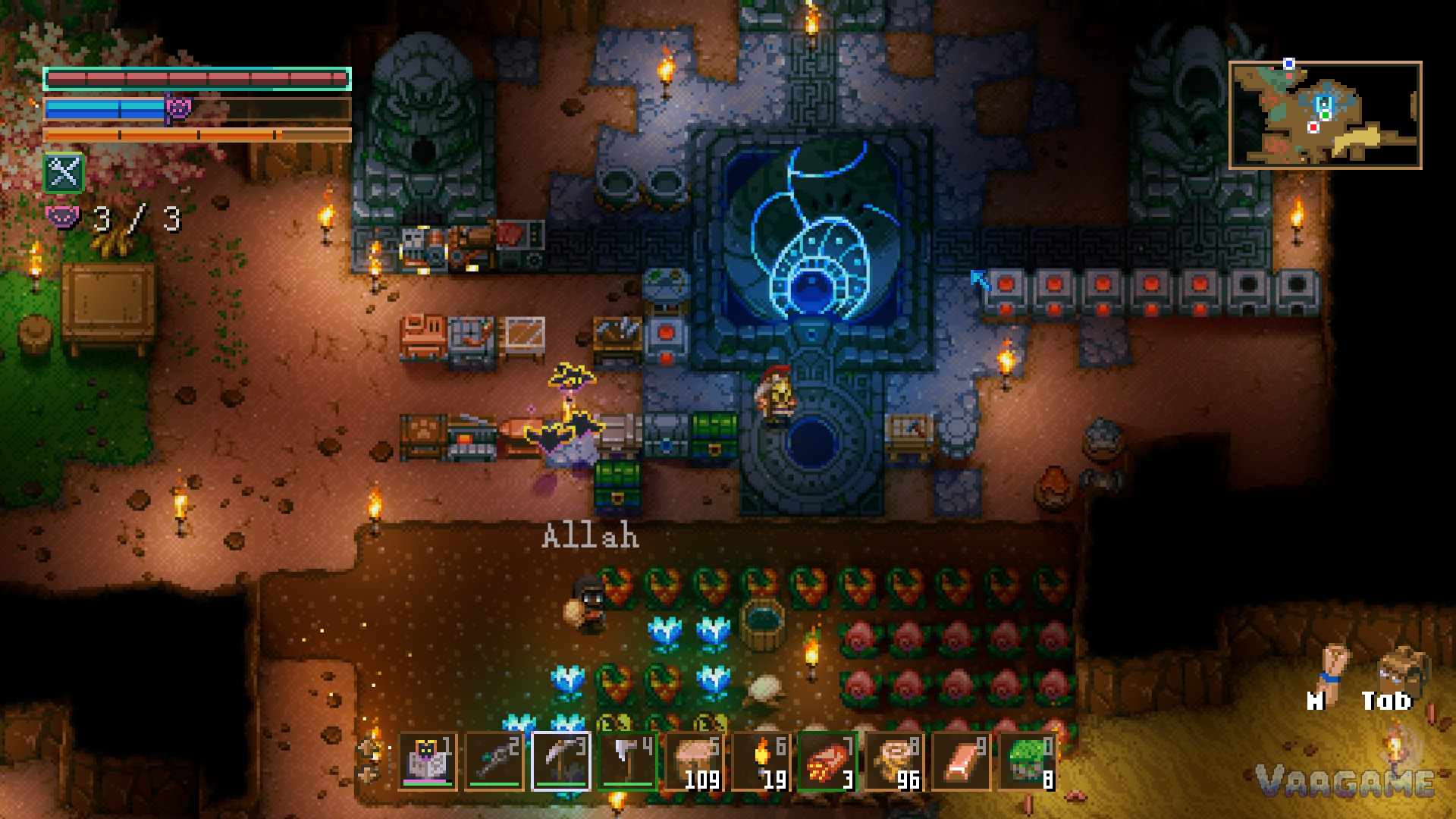
Pick the background whose first ten minutes sound like the most fun, because that is all a background decides in Core Keeper. A background is a starting kit for your character: a head start of +3 in one skill, plus a few items in your pack. It locks you into nothing. Core Keeper has no character classes, every explorer can level all 12 skills, and the official wiki states plainly that the bonuses are small, and everything a background hands you is obtainable within the first hour. The real choice is opening feel: dig faster, eat better, fight sooner, or start with nothing at all. This guide covers all seven backgrounds, what each changes in your first hour, and which fits your run.
Quick answer
No wrong pick exists: backgrounds grant a small head start only, and there are no classes to lock yourself out of
Smoothest start: Miner, with a copper pickaxe in hand from the first minute
Best crew pick: Chef, because the cooking pot is working from day one
Quietest start: Gardener or Fisherman, if your first hour is about the base and the pond
Hardest start: Nomad: no bonus, no items
At a glance
Backgrounds: 7, chosen once when you create a character
What each one grants: +3 in one skill, plus a small kit of starting items (Nomad excepted)
Skills: 12 in total, each capped at level 100, all open to every character
Talent points: 1 point per skill every 5 levels in that skill
Long-term effect: None, the head start washes out within the first hour
Changing later: Backgrounds are fixed at character creation; switching means a new character
1. What a background actually gives you
A background has exactly two parts. The first is the skill head start: three early levels in a single skill, against a cap of 100 levels per skill. The second is the item kit: two or three objects that a fresh character would otherwise spend the opening stretch crafting or finding. That is the entire system. There is no class tree behind it, no exclusive recipe, no locked region, and no background-only item anywhere later in the game.
Swipe horizontally to view all columns.
| Background | Bonus | Starting items |
|---|---|---|
Explorer | +3 Running | Small lantern, 3 food rations |
Miner | +3 Mining | Copper pickaxe, 3 food rations |
Fighter | +3 Melee combat | Copper sword, 3 food rations |
Chef | +3 Cooking | Cooking pot, 8 mushrooms |
Gardener | +3 Gardening | Copper hoe, watering can |
Fisherman | +3 Fishing | Wood fishing rod, 3 food rations |
Nomad | None | Nothing at all (a clean-slate start) |
Read the table as a menu of first hours rather than a power ranking. Most kits include food rations for the opening stretch; Chef and Gardener trade the rations for the tools of their trade, and Nomad trades everything for a blank page. Section 2 walks through each kit in play; Section 4 shows why the gaps close so quickly.
2. The first hour, background by background
Explorer: light and legs
The Explorer starts with a small lantern and three food rations. The lantern matters more than it looks: the underground is properly dark, and light is both a safety tool and the trail that leads you home. Running experience comes from travelling on foot, so an Explorer who ranges widely from the start levels the skill by playing exactly as they want to. The rations cover your hunger while you learn the map.
Pick Explorer if this is your first character and you want the most forgiving opening: light in hand, food in pack, and a head start in the one skill every explorer uses constantly.
Miner: a tier ahead underground
The Miner starts with a copper pickaxe, one material tier above the wooden pickaxe every other start crafts first. Mining experience comes from damaging walls, and progress in Core Keeper is gated by walls: harder rock demands a stronger pickaxe, tier after tier. A copper pick in the first minute means the opening dig through the starting area runs noticeably smoother, and the three head-start levels carry the skill's per-level dividend of extra mining damage with them.
Pick Miner if you want the smoothest first twenty minutes. For a solo first run, this is the closest thing the list has to a default recommendation.
Fighter: a sword before your first slime
The Fighter starts with a copper sword and three food rations. Melee combat experience is counted per hit landed, so a Fighter who wades in early levels the skill quickly, and the head start adds a small slice of melee damage through the skill's per-level dividend. The copper sword also skips the awkward phase of punching and wooden tools: your first fights use a real weapon.
Pick Fighter if you head toward trouble on purpose. Players who enjoy the combat first and the crafting second will feel this kit working from the first skirmish.
Chef: the kitchen opens on day one
The Chef starts with a cooking pot and eight mushrooms, and this is the kit that changes what your base does earliest. The cooking pot turns any two ingredients into a dish that restores more than its parts and carries buffs besides; cooking experience is earned each time you collect a finished dish, so a busy kitchen levels the skill passively. The mushrooms are your first stock, ready to cook while everyone else is still eating raw finds.
Pick Chef if you are hosting a co-op world or simply love the food system. In a crew, the player who feeds everyone is never short of a job.
Gardener: the farm starts at spawn
The Gardener starts with a copper hoe and a watering can, the two tools between a fresh character and their first plot. Till the soil, plant, water, and the farming loop is running beside the Core within minutes: harvesting mature crops by hand is what earns Gardening experience, and the head start raises your chance of bonus harvests from the very first row. The trade-off sits in the table above: this kit carries tools instead of food, so plan your first meal from foraged finds.
Pick Gardener if you build bases before you chase bosses. A self-feeding base is a long project, and this background starts it on minute one.
Fisherman: first cast, first levels
The Fisherman starts with a wood fishing rod and three food rations. Fishing experience is earned on every catch, junk included, so the skill climbs steadily from your first pond, and the head start adds fishing power that makes those early catches come easier. Fishing is the calmest route through the opening: while other starts are swinging at walls, you are levelling beside the water with your hunger covered.
Pick Fisherman if you like a relaxed opening, or if fishing is the system you already know you will sink hours into. The levels you bank early keep paying out all run long.
Nomad: the blank page
The Nomad starts with nothing: no skill bonus, no items, no rations. Your first hour is the full starter route, gathering wood from the roots around the Core and hand-crafting the torch, wooden pickaxe, shovel and workbench that other backgrounds partially skip. The gap is real and it is also small, because everything the other kits hand out can be obtained within the first hour anyway. What the Nomad sells is the feeling of earning every step.
Pick Nomad if you are a returning player, running a challenge, or starting a second character for the satisfaction of a clean slate. First-time players can finish the game on a Nomad too; they will simply work a little harder for the same first evening.
3. Pick by the run you have in mind
Match the plan in the left column to the start that serves it: the kits are small, and the differences are about feel, so advice by playstyle beats a tier list here.
Swipe horizontally to view all columns.
| Your plan | Recommended background | Why |
|---|---|---|
Smoother digging | Miner | A copper pickaxe from minute one, a tier above the wooden pickaxe other starts craft first |
Feeding a co-op crew | Chef | The cooking pot works from day one, so cooked meals and their buffs start with the world |
A farm from day one | Gardener | Copper hoe and watering can remove the crafting steps between you and your first plot |
Fighting first | Fighter | A copper sword in hand for the first fights, and melee levels counted per hit |
Seeing everything early | Explorer | A lantern for the dark tunnels and rations for long trips away from base |
A quiet opening | Fisherman | A rod and rations: Fishing levels on every catch while the base takes shape |
A clean-slate challenge | Nomad | No bonus and no items, the full starter crafting route with no help |
Crews can mix deliberately. One Chef, one Miner and one Gardener in the same world covers cooking, digging and farming from the first evening, and characters can visit other worlds freely, so a background picked for a friend's server still serves you at home. Solo players should simply pick for the activity they enjoy most, since a solo character ends up doing all of it anyway.
4. Why the choice stops mattering so fast
Four facts do the heavy lifting. First, scale: +3 is three levels against a cap of 100, and a skill earns its first talent point at five levels, so the head start alone does not even reach the first point by itself. The per-level dividends at three levels are real and tiny: +3 mining damage for a Miner, +3 fishing power for a Fisherman, a fraction of a percent of speed, damage or bonus harvests for the rest.
Second, the items expire as an advantage. The official wiki's verdict is that everything on the starting list can be obtained within the first hour: the copper pickaxe gets crafted, the cooking pot gets built, the lantern gets made. By the time your base has a furnace row and a crop plot, every background is standing in the same place holding the same tools.
Third, there is no class system underneath. All 12 skills stay open to every character forever, and each one levels by doing its own activity, so a Fighter who takes up cooking in week two loses nothing. The head-start skill is just the one that began moving first.
Fourth, the save structure forgives experiments. Worlds and characters are saved separately, and one character can visit any number of worlds. Your background belongs to the character, while your base, your world and your progress belong to the world save: starting a fresh character to try another background costs you a new first hour, and your world stays exactly where you left it.
Common myths about backgrounds
Swipe horizontally to view all columns.
| Myth | Fix |
|---|---|
Picking a background for the long game | The bonuses wash out within the first hour: pick for the opening you want to play, since every character converges afterwards |
A Miner is locked out of cooking and fishing | There are no classes: all 12 skills level on every character, and a background only decides which one started first |
Nomad ruins a first playthrough | Nomad removes the kit, and the kit is one hour of obtainable items: the run is harder for an evening, not for the whole game |
You should save your favourite background for a better world | Backgrounds belong to characters, and characters can visit any world: the pick travels with you |
FAQ
Can I change my background later?
No. The background is chosen when the character is created and there is no in-game way to swap it. Changing your mind means creating a new character, and because worlds and characters are saved separately, your world, base and progress stay untouched: the real cost is replaying one fresh first hour with the new kit.
Does my background affect achievements or the ending?
No. Backgrounds grant starting levels and starting items only, and no content, achievement or ending is locked to a background. Two characters with different backgrounds face the same bosses, the same world and the same endgame.
Is Nomad the hardest start?
It is the emptiest start, which is a smaller claim than it sounds. A Nomad skips nothing and receives nothing, so the first minutes run on hand-crafted wooden tools; once the starter route is done, a Nomad is an ordinary character with the same 12 skills and ceiling as everyone else.
Which background suits a co-op group best?
Chef, if one player wants the kitchen job: cooked food is the crew's buff supply, and the pot is otherwise a crafting step away. Beyond that, mixed crews work best, one Miner digging, one Gardener farming, one Fighter scouting, because the kits complement each other while every character still levels everything.