

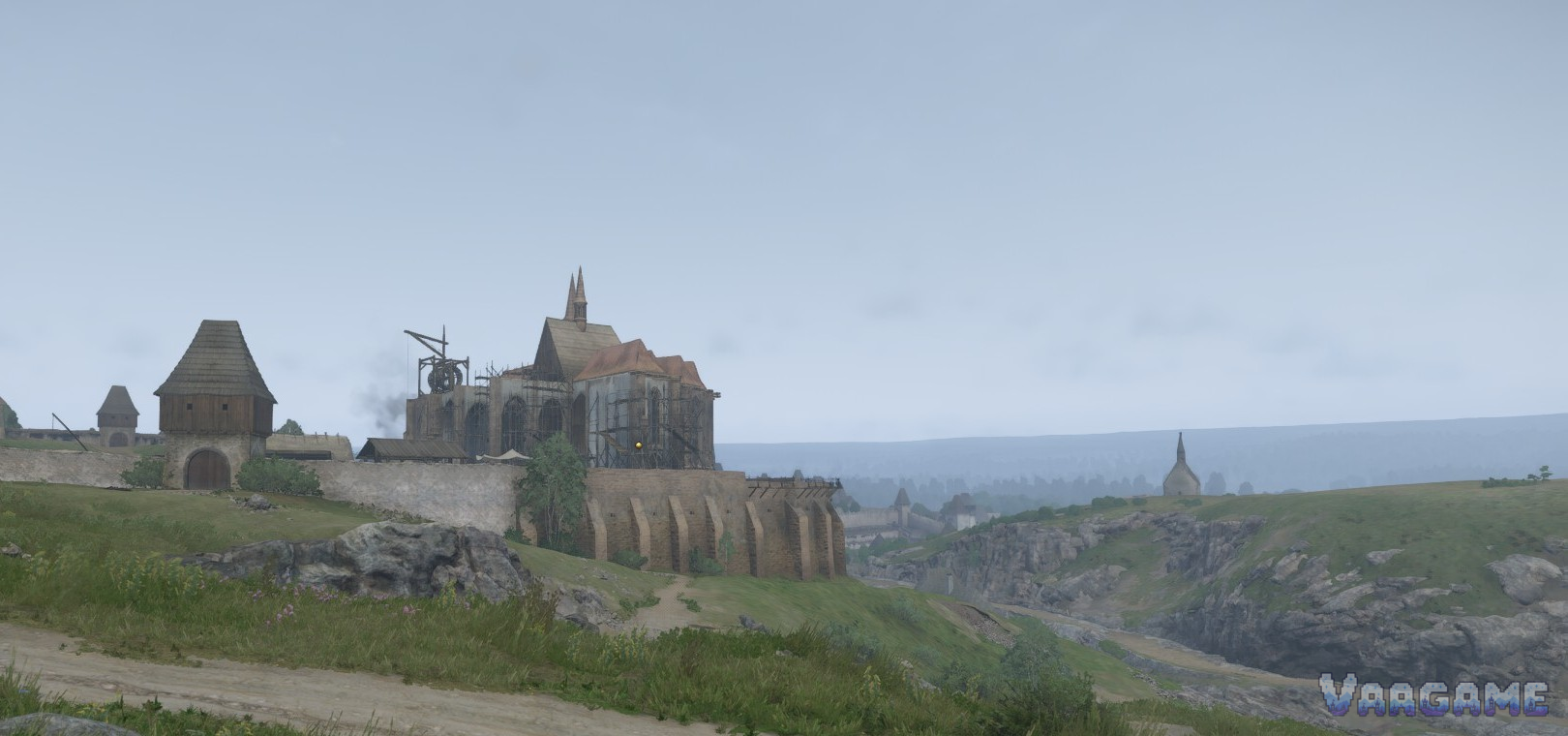
Kutna Hora did not need a game to become famous. By the time Henry rides into Kuttenberg in Kingdom Come: Deliverance 2, the real town had already spent a century turning silver into power: a royal mint, a coin that travelled across Central Europe, and a church that the miners began in 1388 and did not finish until
1905. The game sets its second region in 1403, the very year the silver city became a prize in a war between brothers. Walk the same three places in both worlds — the Italian Court, the Church of St Barbara, and Sedlec — and the two timelines line up, stone for stone.
At a glance
The game: Kingdom Come: Deliverance 2, Warhorse Studios, released 4 February 2025; Kuttenberg is its second region, modelled on real Kutna Hora.
The town: a former silver-mining town in Bohemia, about 54 km east of Prague; its historic centre, the Church of St Barbara and the Cathedral of Our Lady at Sedlec were inscribed on the UNESCO World Heritage List in 1995.
The silver line: in 1300 King Wenceslaus II issued the mining code Ius Regale Montanorum and introduced the Prague groschen; the Italian Court in Kutna Hora was the seat of the central royal mint.
The church line: construction of the Church of St Barbara began in 1388 and, after repeated interruptions, was not completed until 1905; St Barbara is the patron saint of miners.
The war line: Sigismund attacked Kuttenberg in December 1402; by the beginning of 1403 the town had surrendered and the royal treasury was seized — the historical backdrop of the game's Kuttenberg chapter.
Evidence boundary: this article is written from published sources and the official tourism board's point-by-point game-to-place guide. It contains no first-person visit account.
A city built on silver
Every story in Kutna Hora starts underground. Rich silver deposits were found here in the late 13th century, and the town grew rich on them so fast that it rivalled Prague. In 1300, King Wenceslaus II moved to bring order to that wealth: he invited the Italian lawyer Gozzius of Orvieto to draw up Ius Regale Montanorum, a mining code that also reformed the coinage, and introduced the Prague groschen, a silver coin that went on to circulate widely across medieval Central Europe.
The institution behind the coin still stands. The Italian Court (Vlassky dvur) began in the late 13th century as a fortified storehouse for silver ore and became the seat of the central mint: the workshops of the coin-makers stood around its courtyard, and the minting chamber, called the Preghaus, is where Prague groschen were struck. Its very name records the Italian experts who led the minting reform. In the game, the same building is a centre of minting and royal administration, and Henry is drawn into tensions between mintmasters and the crown. The game compresses distances and invents its own characters, but the economic logic is the town's own: whoever controlled Kutna Hora controlled the silver, and whoever controlled the silver could pay for a war.
The church the miners built
If the Italian Court is where Kutna Hora's wealth was counted, the Church of St Barbara is where it was prayed for. Formally a church rather than a cathedral, it is built on a cathedral scale and is one of the most famous Gothic churches in Central Europe. Construction began in 1388, paid for by the town's miners and townspeople, and dedicated to St Barbara, the patron saint of miners — a fitting patron for a town whose wealth came entirely from its mines. Work was interrupted again and again, by war and by the fading of the mines themselves, and the church was not completed until 1905, more than five centuries after it began.
That long interruption is exactly what the game captures. In the Central Bohemian Tourist Board's official game-to-place guide, the note on the church is simple: in the game, the Church of St Barbara still rises in scaffolding above the city. A player in 1403 sees a building site; a visitor today sees what five centuries of building, stopping and resuming finally produced. It is the same church in two time slices, and no other place in the game makes the point so plainly.
Sedlec: monastery, bone chapel, cathedral
East of the old town lies Sedlec, and here the game's tone darkens to match the place. Sedlec was a Cistercian monastery settlement, and its Cemetery Church of All Saints holds, in its lower chapel, the ossuary: a chapel in which human bones have been arranged into decorative forms, including chandeliers and pyramids. The game uses the ossuary as the backdrop for a side quest involving stolen relics and secret rituals — fiction, set in a real room.
Beside it stands the Cathedral of the Assumption of Our Lady and St John the Baptist, built in the Gothic period and rebuilt in the early 18th century. Together with the historic centre and the Church of St Barbara, it forms the UNESCO inscription of 1995: the official name is Kutna Hora: Historical Town Centre with the Church of St Barbara and the Cathedral of Our Lady at Sedlec. The game keeps the cathedral itself offstage — in the tourism board's guide, the cathedral remains unseen in the game — which is worth stating plainly, because it marks the limit of the game's map: some of the town's most important buildings are neighbours of the game world, not parts of it.
1403: the year the silver city became a prize
The game is set in 1403 for a reason. Bohemia was in the middle of a dynastic struggle: King Wenceslaus IV had been imprisoned by his brother Sigismund, who then campaigned against the towns that stayed loyal to Wenceslaus. Kuttenberg, loyal to the king and defended by its miners, was Sigismund's primary target precisely because it held the royal treasury. Sigismund attacked in December 1402; by the beginning of 1403 the town had surrendered, its miners were marched to Sigismund's encampment, and the treasury — coins, jewels, gold and silver — was seized, along with a heavy fine.
None of this is presented in the game as a history lesson. The game's Henry is a fictional character, and its plot rearranges people and timing to serve the story. But the reason Kuttenberg matters in the game is the same reason it mattered in history: it was the town where Bohemia's money was made, and in a civil war, the mint is a military objective. Stand in the courtyard of the Italian Court and that sentence stops being abstract.
Where the game and the history part ways
A travel piece built on a game owes the reader one honest paragraph. The game's map condenses real distances, its Kuttenberg region is a story setting rather than a survey, and its characters — Henry included — are inventions moving through a real year. The tourism board's guide itself notes where the game invents: Sedlec's cathedral is unseen in the game, and some locations exist in the game mainly as quest backdrops. The value of the pairing is not that the game is a reliable map. It is that the game's three anchors — the mint, the miners' church, the bone chapel — are real places whose histories explain why a game about 1403 would choose this town at all.
Next time, dressed for the return
This is not a shopping section, and it names no product and no price. It is a note on how a return visit could look: the clothing of a Bohemian town in 1403 was wool, linen and leather, cut for work — a miner's sturdy layers, a townsman's cloak, a pilgrim's plain dress — rather than armour. A future version of this article may add replica clothing and accessories, but only after individual items are identified and their sellers confirmed; no item is linked here because no item has been confirmed. What the game gives a returning visitor is not a costume to buy but a way of seeing: after Kuttenberg, the scaffolding is gone from St Barbara's, and the church the miners started looks finished for the first time.
The town after the game
Kutna Hora repays the comparison because the game chose a town whose history does the storytelling work itself. Silver made it rich, a code and a coin made it central, a church begun in 1388 took five centuries to finish, and in 1403 an army came for the treasury. The game lets a player walk through the year when all of that was at stake. The town itself, inscribed by UNESCO in 1995, lets a visitor walk through everything that came after.
Sources: UNESCO World Heritage Centre listing 732 and its 1995 inscription documents; Czech Ministry of Foreign Affairs note on the 1995 inscription; Central Bohemian Tourist Board, Kingdom Come: Deliverance II themed guide (2025); histories of the Church of St Barbara, the Italian Court and the Prague groschen; the game's Conquest of Kuttenberg codex entry and historical background summaries for the December 1402 to early 1403 campaign. This article contains no first-person visit account: the author has no first-person visit evidence on file, and all game-to-place correspondences are drawn from published sources. Internal link: the column's Peru walk, Cusco and the Valley That Was Never Lost: Walking Peru with Lara Croft (slug: cusco-sacred-valley-machu-picchu-shadow-tomb-raider).