

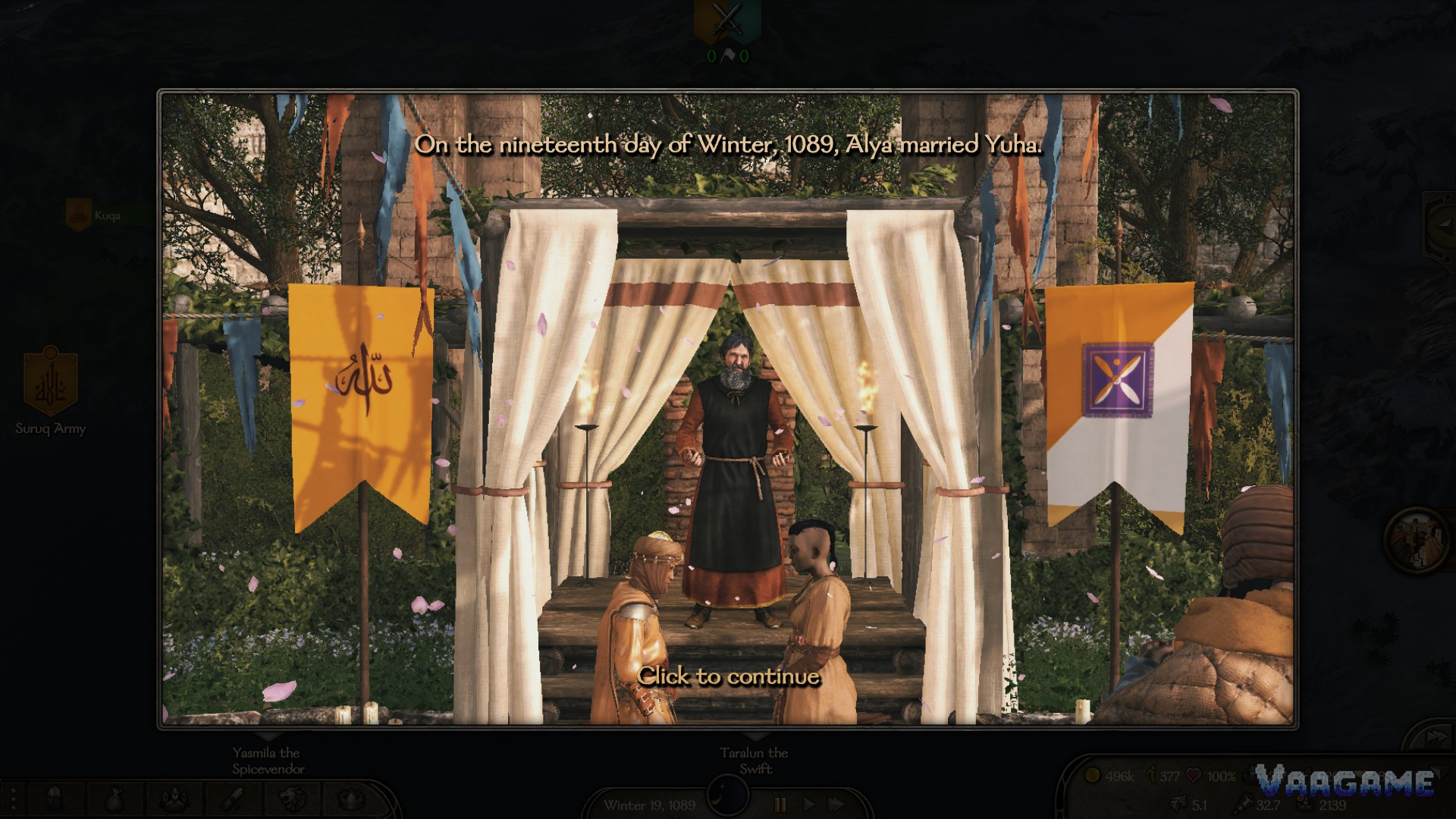
In Bannerlord, you are not really playing a character. You are playing a clan. Your character ages, can be wounded, captured, and killed, and the campaign goes on through your family. Companions run your parties and your towns, a spouse joins the clan and can do the same, and children grow up to take over when you fall. This guide covers how to recruit companions, how to marry, and how to build a family that survives your mistakes.
At a glance
Game: Mount & Blade II: Bannerlord, by TaleWorlds Entertainment
Price: $49.99 on Steam (checked October 28, 2026); prices vary by region and sale
Basis: single-player campaign, version line v1.4.x; War Sails content is noted only where it changes the topic
Scope: clan growth, companions and party roles, marriage, children and succession
Last verified: October 28,
2026. Exact figures without a reliable source are left out and marked as pending below
The clan comes first
Your clan is the unit that owns fiefs, fields parties, and votes in its kingdom. As your clan gains renown, its tier rises, and higher tiers raise your party size and the number of parties and companions you can field. That is why early-game clan growth matters more than early-game loot: a bigger clan does everything else better, from fighting to governing. Spend renown-earning effort on battles, tournaments, and quests that build the clan name, not just your purse.
Characters age and die in Bannerlord, and that is a feature, not a punishment. A campaign that lasts long enough will outlive its founder, and the clan carries on through the heir. Plan for that from the start: recruit and marry early, give family members real jobs, and never let the clan rest on a single character.
Companions: hire for skills, not for looks
Companions, often called wanderers, wait in town taverns, and each one brings a skill set: a healer, a scout, an engineer, a trader, or a fighter. Hire for the gap in your clan. A companion with high Medicine becomes your party surgeon and keeps your wounded alive; one with high Engineering builds your siege engines faster; one with Scouting keeps you from walking into ambushes. Their names and exact skill figures vary by campaign and are left out here rather than listed as if they were fixed.
Once hired, companions take party roles: Surgeon, Engineer, Scout, and Quartermaster are the four roles that shape what your party can do on the march. Later, companions can lead their own parties under your clan banner, govern your fiefs, or run caravans. A companion left idle in your party is wasted potential; a companion leading a party is a second army earning renown for your clan.
Marriage: courtship, proposal, and what a spouse does
Marriage in Bannerlord starts with courtship. Talk to unmarried nobles, build a relationship through conversation and shared interests, and when the time is right, propose. A successful proposal brings your spouse into your clan, and a spouse is not a bystander: spouses can lead parties, govern fiefs, and fight in your armies, with their own skills and equipment. Marrying into a powerful family also ties your clan to theirs, which matters in kingdom politics far beyond the wedding itself.
Choose a spouse for the clan, not just for the moment. A spouse with strong combat or leadership skills strengthens your armies; one with stewardship or trade skills strengthens your fiefs and income. And remember that a spouse can be captured, wounded, or killed like anyone else, so do not send your only heir-producing family member into every hopeless battle.
Children and succession
After marriage, children arrive over time and grow up over the years, eventually joining the clan as adult members with their own skills. This is the long game of Bannerlord: a child born early in a campaign can become a party leader, a governor, or your heir. When your character dies, the campaign continues as the heir, and the clan, its fiefs, and its parties carry on. The exact timing of births and coming of age varies by campaign and is left out here rather than stated as a fixed schedule.
Protect the line of succession the way you protect a fief. Keep at least one adult heir safe from reckless battles, marry family members into useful alliances, and give grown children commands early so they are ready when the clan needs them. A clan with one brilliant founder and no heir is a story that ends; a clan with three capable adults is a story that continues.
Family mistakes to avoid
Waiting too long to recruit companions and marry, then scrambling when your founder ages
Hiring companions for combat alone and leaving Surgeon, Engineer, and Scout roles empty
Sending your spouse and heirs into every battle as if they were expendable
Letting grown children sit idle instead of giving them parties or fiefs
FAQ
Where do I find companions?
In town taverns. Talk to the tavern keeper or look for named wanderers; each one lists skills that hint at the role they can fill, and hiring costs denars up front.
Can I marry as a female character?
Yes. Courtship and marriage work for characters of either gender, and the spouse joins the clan the same way, with the same roles available afterward.
What happens if my character dies without an heir?
That is the one failure the clan cannot survive: without an heir, there is no one to continue the campaign. Marry and raise the next generation before the founder grows old, not after.